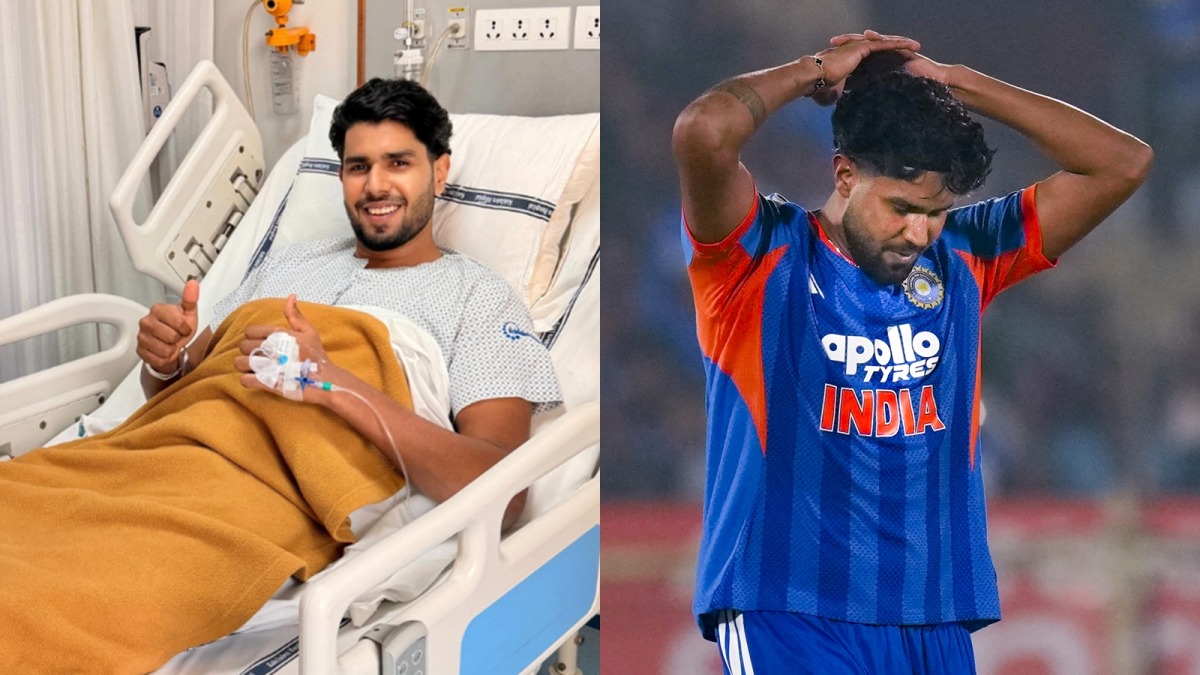
Indian fast bowler Harshit Rana’s recent hamstring injury during the UK tour has triggered significant fitness concerns. Reports indicate the 24-year-old returned from knee surgery rehab "overweight", with experts warning that the excess weight substantially increased muscle strain during his delivery stride, leading to his breakdown.
NEW DELHI — Indian fast bowler Harshit Rana’s return to international cricket has hit a major roadblock after a fresh hamstring injury raised serious concerns over his conditioning and rehabilitation protocols. According to highly placed sources within the Board of Control for Cricket in India (BCCI), the 24-year-old pacer was found to be "overweight" upon joining the squad for the T20I leg of the United Kingdom tour. The physical setback has forced national selectors and the team management, led by head coach Gautam Gambhir, to scrutinize the player's recovery regimen following his recent major knee surgery.
Breakdown Follows Aggressive Post-Surgery Comeback
Rana, who missed the entire IPL 2026 season and the subsequent ICC T20 World Cup due to a reconstructive knee operation in February, was highly anticipated to bolster India's pace attack. After completing his rehabilitation at the BCCI's Centre of Excellence (CoE) in Bengaluru, he was cleared to play and selected for the bilateral series in Ireland and England.
However, his return lasted just five T20I matches two against Ireland and three against England before his body gave way. During the third T20I clash against England at Trent Bridge, the young bowler experienced acute discomfort in his right leg. Subsequent MRI diagnostic scans officially confirmed a Grade 1 hamstring tear, immediately ruling him out of the three-match One Day International (ODI) series against England.
The Biomechanical Toll of Extra Weight on Fast Bowlers
According to sports science experts and physical trainers associated with the national team, a fast bowler's delivery stride exerts immense physical stress on the lower body. During the landing and load-up phase of the bowling action, a bowler experiences heavy braking forces equivalent to six to eight times their total body weight.
If an athlete carries even a small amount of excess weight on their frame, these forces multiply exponentially. The additional physical load places severe strain on the knee joints and hamstring muscles, dramatically increasing the risk of soft-tissue tears. Insiders note that while Rana successfully completed his knee-specific rehab, his overall weight management during his long period of inactivity was not maintained at peak athletic standards.
Strategic Implications for the 2027 World Cup Pipeline
The setback is particularly worrying for the national selection committee because Rana is viewed as a vital asset for India’s long-term ODI strategy heading into the 2027 ICC Cricket World Cup. Standing over six feet tall and possessing the ability to regularly clock speeds above 140 km/h, the team management values him as a high-potential bowling all-rounder capable of slotting in at the number eight batting position.
However, his inability to maintain optimal weight levels during non-playing rehab windows has raised doubts about his durability. Selectors have reportedly emphasized that talent alone will not guarantee a sustained spot in the national squad without a strict commitment to individual physical conditioning.
Official Sources Section
The details surrounding Harshit Rana’s medical updates, scanning results, and the corresponding team roster adjustments have been compiled from official medical bulletins and press statements issued by the BCCI media advisory desk. Additional conditioning indices and quotes were obtained from authorized personnel at the BCCI Centre of Excellence under condition of anonymity.
Quote Section
"According to officials familiar with the medical reports, Harshit was carrying unnecessary body weight when he joined the team in the UK. For a fast bowler who relies on heavy impact in his delivery stride, being overweight is a direct invitation to muscle tears. Organizers stated that he must show far greater discipline in his off-field conditioning if he expects to be a reliable option across all formats."
Why It Matters
Rana's injury highlights a systemic issue regarding how modern cricket players transition from medical clearance to match-readiness. While an athlete may pass basic clinical tests to obtain a fitness certificate, general weight management during long injury layoffs remains a distinct challenge. For India to sustain its global competitiveness, the board’s medical departments must enforce strict, non-negotiable weight and body-fat percentage thresholds prior to clearing fast bowlers for international duty.
Key Facts at a Glance
The Injury: Harshit Rana suffered a Grade 1 hamstring injury during the third T20I against England, ruling him out of the subsequent ODI leg.
Weight Concerns: BCCI sources confirm the bowler gained extra weight during his post-knee surgery rehab, returning to the team "overweight".
Mechanical Strain: Biomechanical data shows fast bowlers absorb forces up to eight times their body weight upon landing, making extra mass highly dangerous.
Long-Term Impact: The setback delays Rana's integration into the national squad's plans for the 2027 ODI World Cup.
FAQ Section
How did Harshit Rana get injured?
Rana suffered a Grade 1 hamstring injury during the third T20I against England at Trent Bridge, following an extended period of rehabilitation for a major knee surgery earlier in the year.
Why are reports linking his injury to being overweight?
BCCI sources revealed that Rana gained body weight during his knee rehabilitation. This extra physical weight increased the impact forces on his lower body during his delivery stride, putting excessive tension on his hamstring.
What are the future plans for Harshit Rana in the Indian team?
Despite his fitness struggles, the team management views Rana as a key all-round option for the 2027 ODI World Cup due to his high pace and lower-order batting abilities, provided he maintains strict physical conditioning.
Source: BCCI Official Media Advisory, Press Trust of India Sports Desk.