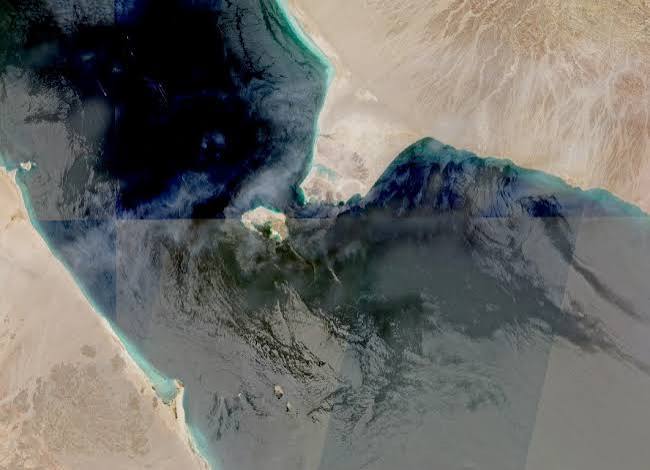
Yemen’s Houthi movement launched missile and drone attacks against two Saudi oil tankers, Encelia and Layla, in the Red Sea on July 23, 2026. The strike expands regional conflict alongside ongoing U.S. operations in Iran, creating dual maritime chokepoints that threaten key international oil transit routes.
SANAA/WASHINGTON — Yemen’s Iran-aligned Houthi movement carried out missile and drone strikes against two Saudi-linked crude oil tankers in the Red Sea on Thursday, July 23, 2026, enforcing a newly declared naval embargo against Saudi Arabian maritime traffic. The attack targeted the tankers Encelia and Layla, causing an onboard fire on at least one vessel near the Saudi port of Al Shuqaiq.
The offensive marks a major expansion of regional hostility, opening a second maritime threat corridor at the Bab el-Mandeb Strait while U.S. forces conduct a 12th consecutive night of military strikes against Iranian targets across the Persian Gulf. The simultaneous threats across both major regional energy chokepoints have disrupted commercial shipping routes and sent global crude prices higher.
Red Sea Operations and Tactical Impact on Energy Shipping
Houthi military spokesman Yahya Sarea stated in a televised address on Al-Masirah TV that the militia deployed cruise missiles, ballistic missiles, and uncrewed aerial vehicles (UAVs) against the two vessels after they violated the movement's navigation restrictions. Sarea claimed the operation forced nearly 10 commercial vessels to turn back and alter their transit plans in the Red Sea.
Reports from the United Kingdom Maritime Trade Operations (UKMTO) agency confirmed that a commercial tanker transmitted a distress call approximately 70 nautical miles southwest of Al Shuqaiq, Saudi Arabia, reporting a projectile impact and subsequent fire.
| Ship Name | Vessel Type | Location of Incident | Reported Impact |
| Encelia | Crude Oil Tanker | 70 NM Southwest of Al Shuqaiq | Hit by projectile; distress call issued |
| Layla | Crude Oil Tanker | Red Sea Transit Corridor | Targeted by drone/missile strike |
Maritime intelligence data from vessel-tracking services indicated that multiple Asia-bound crude carriers diverted course away from the Bab el-Mandeb Strait toward the Suez Canal or stood by in safe waters following the strikes.
U.S. Military Actions and Dual Chokepoint Pressures
The escalation in the Red Sea coincides with sustained engagement by U.S. Central Command (CENTCOM). U.S. forces directed precision strikes against Iranian command centers, air defense positions, and missile launch installations overnight, seeking to counter disruptions in the Strait of Hormuz.
With traffic through the Strait of Hormuz operating at roughly 11% of standard pre-conflict volumes due to Iranian transit restrictions, the addition of Houthi strikes in the Red Sea places an estimated 25% of global sea-borne oil and gas transit under direct security threat.
Official Sources Section
Statements regarding maritime incidents, military operations, and transit warnings are drawn from public advisories issued by the United Kingdom Maritime Trade Operations (UKMTO), U.S. Central Command (CENTCOM), and the European Union Naval Force Operation Aspides.
Quote Section
According to official military communications:
"The Yemeni Armed Forces carried out a qualitative military operation targeting two Saudi oil tankers that violated the blockade imposed by the Armed Forces in the Red Sea. Operations will continue until the naval embargo criteria are met." — Yahya Sarea, Houthi Military Spokesperson
According to maritime security advisories:
"Authorities are investigating reports of an unknown projectile striking a commercial vessel 70 nautical miles southwest of Al Shuqaiq. Vessels transiting the region are advised to exercise extreme caution." — Advisory Notice, UK Maritime Trade Operations
Why It Matters
The simultaneous disruption of the Bab el-Mandeb Strait and the Strait of Hormuz restricts primary maritime corridors for Persian Gulf oil exports heading to global markets. Higher war-risk insurance premiums and rerouting around the Cape of Good Hope add significant transit days and freight costs, feeding broader inflationary pressures across international energy supply chains.
Key Facts at a Glance
Tankers Targeted: Houthi forces struck two crude tankers, Encelia and Layla, off the Saudi coast.
Dual Chokepoints: Attacks in the Red Sea compound existing maritime traffic reductions in the Strait of Hormuz.
U.S. Response: U.S. Central Command executed a 12th consecutive night of military strikes targeting Iranian installations.
Shipping Rerouted: Commercial operators diverted multiple vessels away from the Bab el-Mandeb corridor.
FAQ Section
What caused the latest attack on Saudi oil tankers?
The Houthis launched missile and drone strikes following their declaration of a naval blockade on Saudi-linked maritime trade, citing regional conflict dynamics.
Which ships were involved in the Red Sea incident?
Houthi military statements identified the two targeted vessels as the Saudi-linked crude oil tankers Encelia and Layla.
How does this affect global oil shipments?
Combined threats in the Red Sea and the Strait of Hormuz disrupt sea lanes that collectively carry approximately one-quarter of global maritime petroleum traffic.
Source: United Kingdom Maritime Trade Operations (UKMTO), U.S. Central Command (CENTCOM), European Union Naval Force Operation Aspides