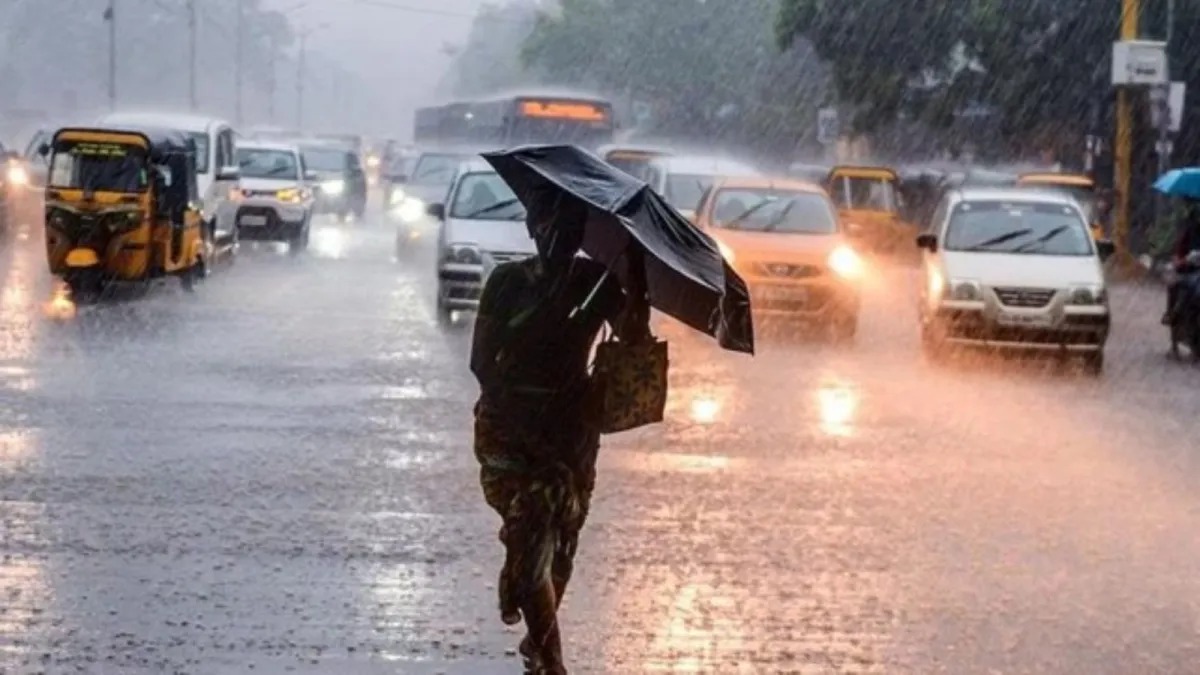
India's critical southwest monsoon has revived after a two-week stall caused by western disturbances. Weather bureau officials confirm the rain system is advancing into central parts of the country this week, covering key regions of Maharashtra and Telangana, boosting summer crop sowing and providing vital relief from severe heatwaves.
NEW DELHI — The southwest monsoon in India has officially revived after its northward advance over western regions stalled for nearly a fortnight, senior meteorologists announced today, June 22, 2026. According to representatives from the nation's apex weather bureau, atmospheric conditions have turned highly favorable, paving the way for the critical weather system to enter central parts of the country this week. The rapid acceleration of the front comes at a critical juncture for Asia's third-largest economy, where a prolonged pause in precipitation had intensified severe regional heatwaves and delayed the sowing of vital summer crops across major agricultural states.
Technical Factors Behind the Fortnight-Long Monsoon Pause
According to the daily tracking charts compiled by the India Meteorological Department (IMD), the southwest monsoon made an early entry into the southern state of Kerala on May 30 and progressed steadily into southern Maharashtra by June 8, 2026. However, its momentum abruptly halted along the western coast shortly thereafter.
Meteorological tracking indicates that the fortnight-long stagnation was primarily driven by consecutive mid-latitude western disturbances. These low-pressure weather systems, originating over the Mediterranean Sea, traveled across northern India and altered the prevailing wind patterns. The resultant dry, northwesterly winds effectively blocked the moisture-laden convective currents rising from the Arabian Sea, pinning the northern limit of the monsoon at a fixed latitude for nearly two weeks. The disruption left the country facing a significant cumulative rainfall deficit during the first half of June.
Rapid Expansion Across Central and Western Belts
The weather bureau confirmed that the stalling pattern dissolved over the weekend as the western disturbances moved eastward, allowing the seasonal low-pressure trough over the Indian subcontinent to reorganize.
The revised system has rapidly gathered momentum, expanding its coverage significantly within the last 48 hours. Weather bureau officials stated that the front has now successfully advanced into:
Additional core territories of Maharashtra, including coastal segments.
Extended agricultural zones across the state of Telangana.
Southern and central districts of Chhattisgarh.
The remaining unreached sectors of Karnataka.
Senior IMD forecasters explicitly noted that conditions remain highly favorable for the rain systems to cover the financial capital of Mumbai within the next 48 hours. Furthermore, the system is on track to advance deeply into the primary central agricultural belt—encompassing Madhya Pradesh, Odisha, Jharkhand, and Bihar—by June 23, 2026.
Macroeconomic Impact on Agriculture and Energy Demands
The revival of the southwest monsoon carries massive practical implications for India's nearly $4 trillion economy, which relies heavily on the June-to-September rainfall cycle. The monsoon delivers approximately 70% of India's total annual precipitation, feeding major river basins and replenishing underground aquifers.
Because nearly half of India's net cultivated farmland lacks independent artificial irrigation infrastructure, hundreds of millions of farmers depend entirely on timely seasonal showers to initiate the sowing of major summer-sown (Kharif) crops. These include staples such as rice, soybeans, corn, cotton, and pulses. The two-week delay had triggered concerns over shortened growing windows and potential crop yield degradation.
Additionally, the arrival of steady rains will help lower energy usage across central and northern states. Extreme heatwave conditions in these areas had driven electricity grids to peak capacity due to unprecedented demands for cooling and air conditioning.
Official Sources Section
All seasonal rainfall statistics, geographic coordinates of the northern limit of the monsoon, and upcoming weather alerts referenced in this report conform directly to the statutory press releases and long-range forecasts issued by the India Meteorological Department. Broader macroeconomic agricultural impacts are monitored through historical crop datasets curated by the Ministry of Agriculture and Farmers Welfare.
Quote Section
"According to officials with the India Meteorological Department, the systemic reorganization of wind patterns over the Arabian Sea and the Bay of Bengal has successfully re-established the monsoon's core currents. This shift guarantees a steady distribution of rainfall across the central manufacturing and agricultural belts over the coming seven days."
Why It Matters
The timely progression of the monsoon directly determines rural income levels, domestic food security, and general consumer inflation across India. A successful revival ensures that water levels in major reservoirs return to sustainable baselines, securing drinking water supplies for major urban centers while stabilizing commercial industrial activities that rely heavily on hydropower and steady water inputs.
Key Facts at a Glance
System Revival: The southwest monsoon has successfully broken its two-week stalling pattern caused by interference from western disturbances.
Geographic Target: Heavy seasonal rains are officially forecasted to advance into the central parts of the country this week.
Key Coverage: The system has recently advanced across additional sections of Maharashtra, Telangana, Chhattisgarh, and Karnataka.
Economic Urgency: The revival directly supports the summer crop sowing window for essential agricultural commodities like rice and soybeans.
Heatwave Relief: The incoming weather system will lower maximum temperatures across central and northern India, which have faced severe heat conditions.
FAQ Section
Q: Why did the monsoon stop moving forward for two weeks? A: The monsoon's advance across western India stalled because of a series of western disturbances—temperate storm systems from the Mediterranean—which introduced dry winds that blocked moist air currents from the Arabian Sea.
Q: Which states will see the most immediate rainfall this week? A: Heavy to moderate rainfall is expected to expand extensively through Maharashtra (including Mumbai), Telangana, Odisha, Chhattisgarh, Jharkhand, and Bihar.
Q: How does this development affect food prices and the economy? A: A steady, well-distributed monsoon ensures robust crop production, which keeps food supplies stable and helps prevent inflation on essential household commodities like grains and cooking oils.
Source: India Meteorological Department Press Releases, Ministry of Earth Sciences, Ministry of Agriculture and Farmers Welfare India