India and New Zealand have elevated their bilateral relationship to a Strategic Partnership, targeting a trade expansion to ₹35,000 crore by 2030. The signed roadmap accelerates Free Trade Agreement enforcement, expands Indo-Pacific maritime security coordination, and introduces fast-track customs clearances to double the flow of goods and services.
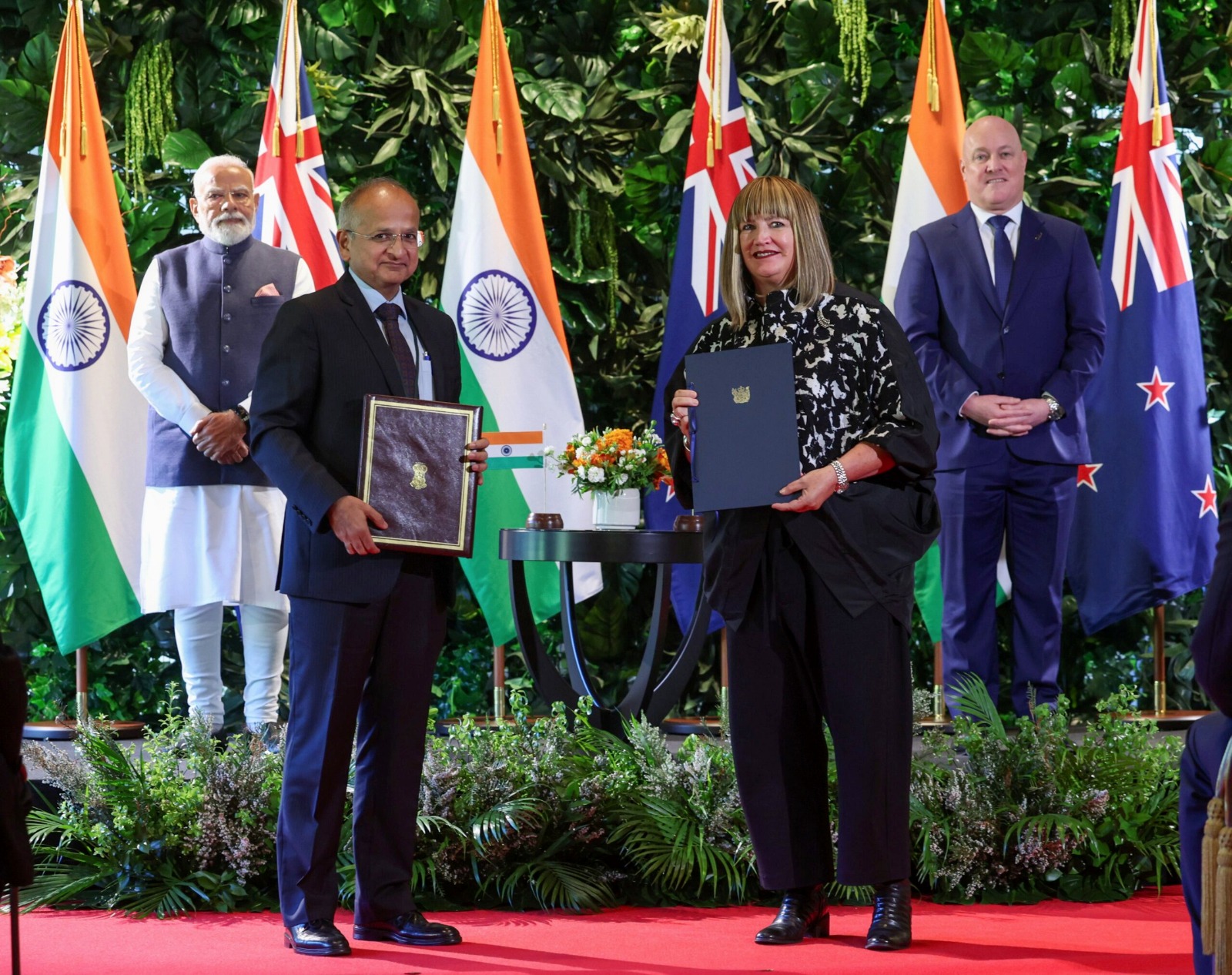
AUCKLAND — The government of India and the government of New Zealand officially elevated their bilateral relationship to a "Strategic Partnership" on July 11, 2026, establishing an ambitious roadmap to double two-way trade to ₹35,000 crore (NZD 7 billion) by the year 2030. The decision was finalized during bilateral discussions in Auckland between Indian Prime Minister Narendra Modi and New Zealand Prime Minister Christopher Luxon. The development marks a major milestone in Indo-Pacific economic and maritime alignment, aiming to remove market barriers, simplify custom protocols, and significantly accelerate supply chain resilience between both nations.
Expanding the Economic and Trade Architecture
The cornerstone of the newly signed "India-New Zealand Strategic Partnership: Roadmap to 2030" is a structured effort to enhance trade velocity across multiple sectors. Central to this plan is the swift operationalization and entry into force of the recently signed India-New Zealand Free Trade Agreement (FTA), which both leaders pledged to execute without administrative delays.
According to the joint economic text released by the leaders, the trade strategy focuses heavily on key primary industries. Cooperative action plans will be instituted to expand bilateral flow in:
Agriculture and horticulture product placement
Dairying, animal husbandry, and cold chain technology transfer
Forestry logistics and sustainable wood management systems
To minimize administrative hurdles for corporate exporters, the roadmap details plans to integrate the 2025 Authorised Economic Operators Mutual Recognition Arrangement (AEO-MRA) under the framework of the 2024 Customs Cooperation Arrangement. This operational merger will permit certified secure businesses to clear custom border nodes with expedited administrative protocols.
Deepening Maritime Security and Defense Integration
Beyond the commercial targets, the leaders enacted a series of security arrangements to guarantee a free and open Indo-Pacific corridor. The talks delivered 18 concrete outcomes, including 10 distinct bilateral agreements.
Chief among the security pacts is a new reciprocal logistics support agreement enabling the Indian Navy and the New Zealand Defence Force to share base infrastructure, refueling access, and joint maintenance capabilities. Furthermore, a dedicated annual Maritime Security Dialogue has been established to counter growing supply chain vulnerabilities and ensure uninterrupted freedom of navigation across critical ocean trade routes.
Official Sources Section
The text of the agreements and target trajectories were distributed via the Ministry of External Affairs of India and the New Zealand Ministry of Foreign Affairs and Trade. Ground implementation indices will be monitored by the respective trade promotion councils to ensure compliance with the 2030 economic timeline.
Quote Section
During an official state gathering following the negotiations, leaders expressed shared optimism regarding the long-term regional impact of the framework.
"We have decided to elevate our ties to a Strategic Partnership. We will move forward across every sector with clear goals and concrete outcomes," Prime Minister Narendra Modi announced during his address.
According to officials present at the Auckland diplomatic summit, the structural updates will inject new momentum into supply chain resilience while directly supporting India's stated objective of transforming into a developed economy by the year 2047.
Why It Matters
For global businesses and agricultural producers, the pact removes long-standing regulatory friction, notably paving the way for New Zealand to supply high-demand technical intelligence to India's farming infrastructure while receiving direct consumer electronics and industrial inputs. For defense analysts, the logistic synchronization between the two navies strengthens regional monitoring frameworks against unexpected maritime blockades or airspace disruptions.
Key Facts at a Glance
Bilateral Trade Target: Aspirational baseline set at ₹35,000 crore ($7 billion NZD) annually by 2030.
Policy Elevation: Formal transition of bilateral parameters to a comprehensive "Strategic Partnership".
Defense Agreements: Execution of a reciprocal naval logistics framework alongside an annual Maritime Security Dialogue.
Transit Infrastructure: Mutual push to establish direct, non-stop commercial aviation flights between New Delhi/Mumbai and Auckland.
FAQ Section
Q1: What is the primary focus of the India-New Zealand Roadmap to 2030?
A1: The roadmap serves as a four-year action framework targeting trade expansion, enhanced maritime security, direct transportation links, and technological collaboration across primary economic sectors.
Q2: How will the Free Trade Agreement (FTA) impact consumer businesses?
A2: The early entry into force of the FTA will systematically lower cross-border tariffs on goods, remove non-tariff trade barriers, and facilitate easier capital investments into manufacturing and tech sectors.
Q3: What customs changes are being introduced to help exporters?
A3: The operationalization of the Authorised Economic Operators Mutual Recognition Arrangement (AEO-MRA) will streamline customs processing for verified, trusted trading entities.
Source: Ministry of External Affairs of India, New Zealand Ministry of Foreign Affairs and Trade, International Trade Centre Database