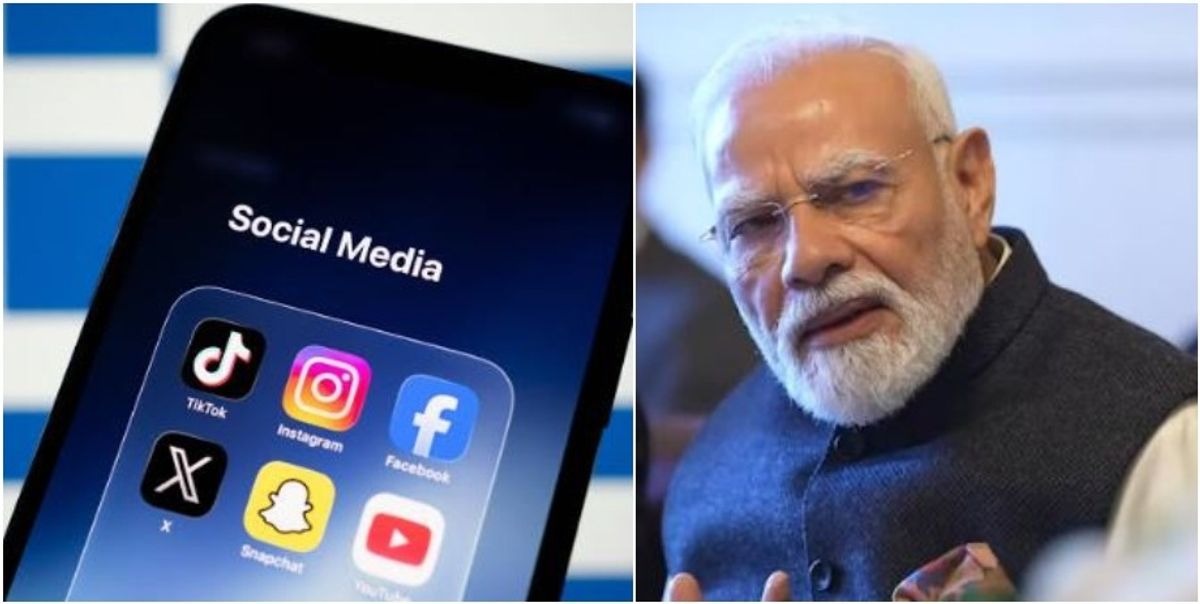
Prime Minister Narendra Modi’s praise for Australia’s under-16 social media ban has fueled speculation regarding similar restrictions in India. As the government confronts challenges related to online child safety and platform accountability, it is actively evaluating age-verification frameworks to address systemic risks across major digital social networks.
Prime Minister Narendra Modi’s recent endorsement of Australia’s age-based social media restrictions signals a potential shift in India’s approach to protecting minors online.
NEW DELHI — Prime Minister Narendra Modi has signaled that the Indian government is actively evaluating stricter age-based controls for social media platforms, following the nation’s successful bilateral summit with Australia. During the Australia-India Annual Leaders' Summit held this week, the Prime Minister praised Australia’s landmark legislation that prohibits children under 16 from accessing major social media platforms, describing the move as "highly inspiring for the world."
The Prime Minister’s remarks provide the clearest indication to date that India, home to one of the world's largest populations of young internet users, may be preparing to implement similar safeguards. The development comes as the Ministry of Electronics and Information Technology (MeitY) intensifies its scrutiny of digital platforms following a series of reports highlighting the presence of harmful content, including child sexual abuse material (CSAM), on networks like Instagram and Telegram.
Evaluating Global Models for Online Safety
Australia recently became the first nation to implement a nationwide ban on social media access for those under 16, encompassing platforms such as Instagram, Facebook, X, TikTok, YouTube, and Snapchat. While the legislation has faced implementation challenges, including the use of VPNs to bypass restrictions, PM Modi’s public acknowledgement that India is "learning a lot" from these efforts suggests a pivot toward a more preventive regulatory framework.
"The way you are bringing changes in laws related to IT and social media, and working to protect society, is highly inspiring for the world," PM Modi stated during the summit. Officials familiar with the matter noted that Indian IT ministry representatives have held multiple meetings with stakeholders and platform executives throughout 2026 to discuss age-appropriate design and robust verification mechanisms.
State-Level Momentum and Constitutional Hurdles
While the central government weighs national policy, several Indian states have already taken independent initiatives. Karnataka and Andhra Pradesh have both announced plans to restrict social media access for minors—targeting different age brackets—though these remain largely declarative in nature.
Legal experts point to a constitutional complexity: information technology and communication fall under the Union List in India, meaning Parliament holds the sole authority to legislate on nationwide telecommunications and internet regulation. Consequently, state-level bans currently lack the enforcement mechanisms required to provide a unified protection standard. "Any nationwide restriction would face significant challenges," noted an industry analyst, citing India’s 1.1 billion smartphone connections and the technical difficulties of verifying age without compromising user privacy or mandating invasive data collection.
Addressing Platform Accountability
The government's push for stricter regulation follows a series of high-profile enforcement actions. In July 2026, the Indian government issued formal directives to Meta, requiring the immediate removal of advertisements promoting child exploitation on Instagram. This was preceded by Home Ministry reports in June identifying the misuse of messaging platforms for the distribution of illicit material.
Under the Information Technology Act, 2000, social media intermediaries are required to exercise due diligence. Failure to do so risks the loss of "safe harbor" protections, which could lead to direct legal liability for the platforms.
Why It Matters
For families, businesses, and digital platforms, this shift signifies the end of a "self-declaration" era for age verification. If enacted, a national policy would likely require platforms to integrate advanced age-assurance technologies. For tech companies like Meta and Google, which count India among their largest global markets, such regulations necessitate significant structural changes to how they manage user data, AI-driven content moderation, and platform accessibility.
Key Facts at a Glance
Government Stance: PM Modi confirmed India is "learning from" Australia’s under-16 social media ban to inform domestic policy.
Regulatory Context: The central government is currently in talks with social media firms regarding mandatory age-based safeguards.
Platform Scrutiny: Increased pressure follows recent government directives for platforms to remove child-endangerment content.
Implementation Challenges: Experts cite concerns over the 43% VPN adoption rate in India and the potential for privacy breaches during age verification.
Legal Authority: While states have expressed intent to ban social media for kids, federal law retains authority over internet and IT regulations.
Frequently Asked Questions (FAQ)
Is there currently a nationwide ban on social media for children in India?
No, there is currently no federal law banning social media for children. Discussions are ongoing between the government and industry stakeholders.
How would age verification work?
The government is exploring mechanisms under the Digital Personal Data Protection (DPDP) Act, potentially involving virtual tokens linked to digital identity systems to verify age without storing sensitive biometric data.
Why are states like Karnataka and Andhra Pradesh taking independent action?
State governments are responding to growing public concern over cyberbullying and online harms, though their measures currently lack the constitutional mandate to be enforced at a national level.
Source:
The Times of India
The Hindu
Drishti IAS