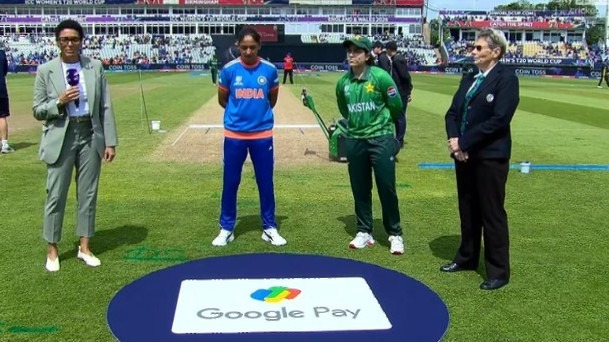
During today’s ICC Women’s T20 World Cup match in Birmingham, the Indian and Pakistani women’s cricket captains skipped the customary pre-toss handshake. This practice, observed by Indian teams across formats since last year, continues to reflect the intersection of geopolitical tensions and international sporting events between the two nations.
The highly anticipated Group 1 match of the ICC Women’s T20 World Cup 2026 between India and Pakistan commenced at Edgbaston Stadium today with a notable absence of the customary pre-match greeting. As India captain Harmanpreet Kaur and Pakistan skipper Fatima Sana met for the toss, the two leaders avoided the traditional handshake, a protocol shift that has been consistently observed by Indian cricket teams over the past year.
The match, which serves as the campaign opener for both teams in the tournament, saw India win the toss and elect to bat first on a pitch described by experts as favorable for scoring. Despite the focus on the geopolitical implications often associated with this rivalry, both captains maintained a strictly professional stance regarding the sporting nature of the event.
A Continuing Trend in Bilateral Ties
The decision to forgo handshakes is not a new development but rather a continuation of an approach adopted by Indian national teams following the terror attacks in Pahalgam last year. Since that time, Indian players have refrained from the customary post-match and pre-toss handshakes with their Pakistani counterparts across various formats, including T20Is and ODIs.
The policy was first observed when the Indian men’s team, then led by Suryakumar Yadav, avoided the gesture during the Asia Cup in Dubai. Since then, the practice has been extended to both men’s and women’s international fixtures.
Focus on the Game
Leading up to the match, Harmanpreet Kaur emphasized that her squad was solely focused on the technical aspects of the tournament. When questioned by the media on the eve of the match regarding external tensions, Kaur stated, "I think we are here for cricket, and we only talk about cricket. Cricket has been our dream from day one, and we only discuss cricket and tomorrow's game."
On the Pakistan side, captain Fatima Sana acknowledged the competitive nature of the clash, noting that her team was well-prepared for the batting-friendly conditions at Edgbaston. "We have a good bowling attack. We are going with Saira, and it will be her first World Cup game," Sana said during the toss ceremony.
Strategic Selection
The match day saw India make a tactical adjustment to their playing XI, bringing in Bharti Fulmali while omitting Yastika Bhatia. Kaur confirmed the team’s strategy to utilize a mix of three spinners and two medium-pacers to leverage the conditions. The result of today's encounter is expected to have a significant impact on the standings for Group 1, which also features formidable teams like Australia, South Africa, and Bangladesh.
Why It Matters
The persistence of the "no handshake" policy serves as a high-profile indicator of the ongoing diplomatic sensitivities between India and Pakistan. For cricket fans, the ritual—or lack thereof—highlights how geopolitical tension continues to intersect with international sport. For the athletes involved, the challenge lies in maintaining peak performance while navigating the scrutiny that accompanies one of the most intense rivalries in global sports.
Key Facts at a Glance
Event: ICC Women’s T20 World Cup 2026, Group 1 Match.
Venue: Edgbaston Stadium, Birmingham.
Captains: Harmanpreet Kaur (India) and Fatima Sana (Pakistan).
Policy: Indian teams have maintained a "no handshake" approach with Pakistan since last year following the Pahalgam terror attack.
Toss Result: India won the toss and elected to bat first.
FAQ
Why did the captains not shake hands?
The teams are continuing a policy adopted by Indian cricket teams to avoid customary handshakes with Pakistani players following the Pahalgam terror attack and subsequent national security developments last year.
Is this the first time this has happened in the Women's T20 World Cup?
No, this approach has become standard for Indian teams in both men's and women's cricket during matches against Pakistan over the past year.
How does this impact the game?
The players and captains have maintained that their focus remains entirely on the game of cricket and tournament objectives, despite the attention surrounding pre-match protocols.
Source: The Times of India, NDTV Sports, Deccan Herald