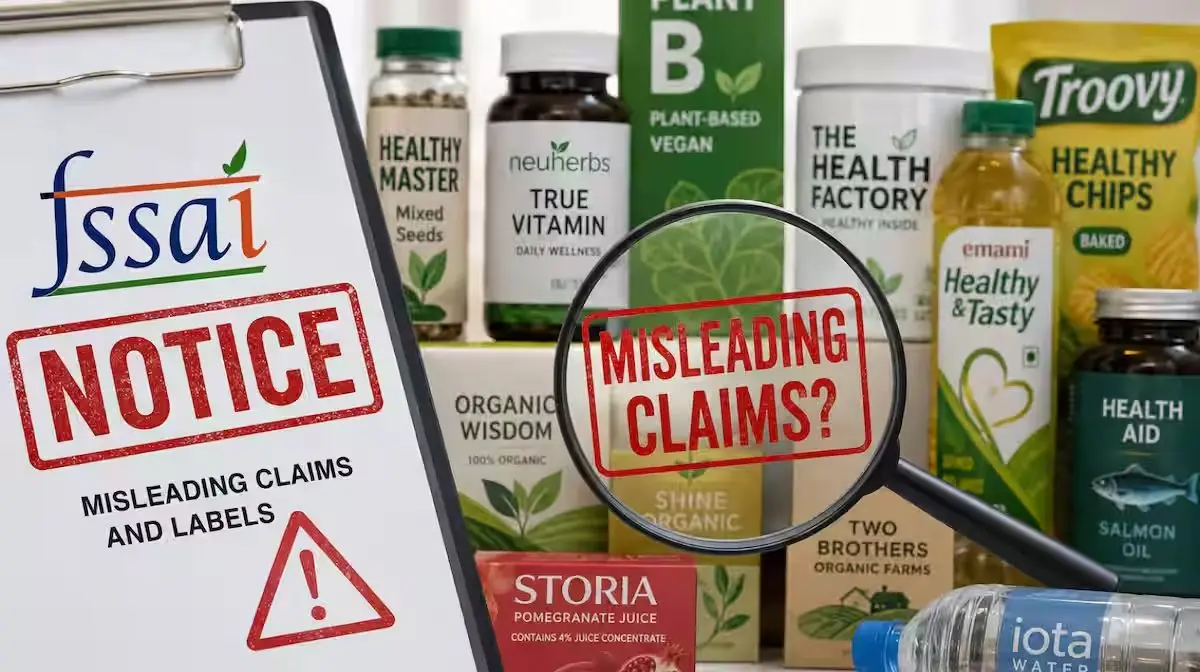
The FSSAI has issued notices to 14 food brands, including Emami Healthy & Tasty and Two Brothers Organic Farms, for misleading labeling. The regulator flagged deceptive "healthy" and "organic" claims, noting that several products failed to meet legal standards for nutrition and certification, potentially deceiving consumers about their true composition.
NEW DELHI — The Food Safety and Standards Authority of India (FSSAI) has initiated a nationwide crackdown on food business operators (FBOs) for using brand names, trade names, and product claims that allegedly mislead consumers. In a series of notices issued on June 14, 2026, the regulator highlighted that several popular brands are failing to comply with the Food Safety and Standards (Labelling and Display) Regulations, 2026.
This enforcement action is part of the FSSAI's intensified efforts to ensure that nutritional labeling accurately reflects the true composition of food products, preventing companies from using marketing buzzwords to create health halos around items that may not meet the defined criteria.
Brands Flagged for Deceptive Marketing
The FSSAI scrutiny targeted a range of categories including cooking oils, snacks, breads, vitamins, and beverages. Among the prominent companies receiving notices are Emami Healthy & Tasty, The Health Factory, Troovy, Healthy Master, and Two Brothers Organic Farms.
The regulator’s findings suggest a consistent pattern of labeling that may deceive the average shopper:
Misleading "Organic" Claims: Brands such as Organic Wisdom, Shine Organic, Two Brothers Organic Farms, and World of Organic were cited for using "organic" in their trade names without possessing the necessary NPOP/PGS certification or the FSSAI’s mandatory Jaivik Bharat logo.
"Healthy" Marketing: Troovy’s range of chips and Healthy Master’s branding were flagged for using terms like "healthy" despite the presence of additional ingredients that potentially invalidate such claims. Similarly, Healthy Choice’s Poha and Emami Healthy & Tasty were noted for trade names that potentially mislead consumers about the product's inherent nutritional profile.
Unsupported Nutritional Claims: The Health Factory’s "Zero Maida" bread and pizza bases were scrutinized for claims that appear to contradict the actual product composition, which includes chakki fresh atta and wheat gluten. Additionally, Storia Juice Pomegranate was flagged for implying it was 100% juice despite containing only 4% pomegranate concentrate.
Regulatory Non-Compliance
The FSSAI has directed all flagged operators to strictly adhere to established labeling and display regulations. In specific cases, such as PLAN B, the regulator noted that products were marketed as "plant-based vegan" without obtaining the requisite prior approval or vegan endorsement required on their FSSAI license. Neuherbs also faced scrutiny for its "True Vitamin" trade name, which the regulator stated is neither defined nor recognized under current safety standards.
Quote Section
"According to officials, these food business operators have been directed to strictly comply with the established labeling and display regulations to prevent consumer deception. Organizers stated that the trade names used by these brands are likely to mislead consumers about the nature or health benefits of their products, appearing to be in contravention of the Food Safety and Standards Act, 2006."
Why It Matters
For the Indian consumer, this crackdown addresses a growing concern regarding "nutrition marketing," where terms like "natural," "whole grain," or "healthy" are used to influence purchasing decisions without scientific backing. By enforcing stricter compliance, the FSSAI aims to ensure that labels serve as an honest guide to product contents rather than a tool for marketing manipulation. This development is expected to force manufacturers to reformulate products or update their packaging to meet rigorous transparency standards.
Key Facts at a Glance
Regulatory Basis: Actions taken under the Food Safety and Standards Act, 2006.
Primary Concerns: Use of uncertified "organic" labels, misleading "healthy" tags, and exaggerated nutritional content.
Scope: 14 companies served notices, covering products from bread and oils to packaged drinking water.
Mandatory Standards: Regulators emphasize the need for official certifications, such as the Jaivik Bharat logo, to validate organic claims.
FAQ
Why did the FSSAI issue these notices?
The FSSAI issued these notices because the brand and trade names used by these companies allegedly mislead consumers regarding the true nature, composition, or certification status of their products, violating established labeling norms.
What happens if a brand continues using these claims?
FBOs are required to strictly comply with labeling regulations. Failure to do so may lead to further legal action, including the potential removal of products from the market or fines for non-compliance under the FSS Act.
How can I verify if a food product is actually healthy or organic?
Consumers should check for the official FSSAI license number on the packaging. For "organic" products, look for the Jaivik Bharat logo and valid certification body details. Always verify the ingredient list, as manufacturers are required to list ingredients by weight.
Source: Food Safety and Standards Authority of India (FSSAI), The New Indian Express, Times of India