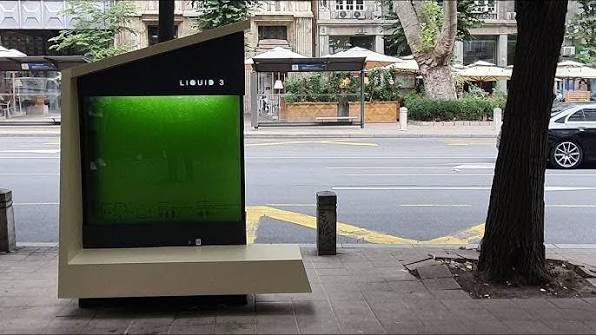
Researchers at CSIR-CIMFR have launched SALT, India's first mobile "liquid tree" that uses microalgae to purify urban air. The compact, portable system acts as a bioreactor to absorb carbon dioxide and release oxygen, providing a practical solution for high-pollution areas where traditional tree planting is not possible.
DHANBAD — Researchers at the Council of Scientific and Industrial Research–Central Institute of Mining and Fuel Research (CSIR-CIMFR) have officially launched SALT (Smart Algal Liquid Tree), India’s first mobile air-purification system powered by microalgae. This innovation serves as a compact, technological supplement to traditional greenery, specifically engineered to operate in densely populated urban areas where space for conventional tree planting is limited.
The system functions as a bioreactor, housing microalgae in an enclosed water-based unit. These microscopic organisms leverage the natural process of photosynthesis to absorb carbon dioxide from the surrounding atmosphere and release oxygen. Unlike stationary urban plantations, the SALT system is mobile, allowing for flexible deployment across various locations, including transport hubs, industrial facilities, and crowded public spaces.
How the 'Liquid Tree' Technology Works
The core functionality of SALT lies in its use of microalgae—highly efficient photosynthetic organisms. According to developers, these organisms can perform carbon capture at a rate significantly higher than many land-based trees. Because the system is contained within an enclosed unit, it eliminates the need for soil and is less susceptible to pests, harsh weather conditions, or the logistical challenges that often hinder the growth of trees in polluted urban centers.
The unit is designed for continuous operation. It can utilize natural sunlight during the day and is equipped to operate with artificial lighting and external power sources—including solar—when light is unavailable. This adaptability ensures that the air-purification process remains active even in environments with limited natural light or during nocturnal hours.
Strategic Deployment and Urban Sustainability
"The primary purpose of this innovation is to combat poor air quality in densely populated and space-constrained urban areas where there is no room to plant large trees," one of the researchers involved in the development stated. The technology has already undergone preliminary testing with installations at the CSIR-CIMFR campus in Dhanbad and at Northern Coalfields Limited in Singrauli, Madhya Pradesh.
Scientists maintain that SALT is not intended to replace natural forests or traditional urban greenery, which provide broader ecological benefits. Instead, it is positioned as a specialized tool for high-pollution hotspots where biological planting is physically impossible or impractical.
Official Sources
The development of SALT was led by the CSIR-Central Institute of Mining and Fuel Research (CSIR-CIMFR). The organization has emphasized that this project aligns with broader national efforts to address urban air quality through biotechnological innovation and engineering.
Why It Matters
For city planners and environmental health advocates, SALT offers a localized solution to rising pollution levels in metropolitan areas. By providing a scalable, mobile, and low-maintenance method for carbon sequestration and oxygen release, the system addresses the critical shortage of green cover in India's rapidly expanding urban landscape.
Key Facts at a Glance
Technology: An enclosed bioreactor using microalgae to perform photosynthesis.
Mobility: Designed as a portable unit, allowing for deployment in various high-pollution areas.
Operational Flexibility: Compatible with solar power and artificial lighting for continuous, 24/7 air purification.
Primary Application: Intended for crowded urban spaces where planting conventional trees is not feasible.
Frequently Asked Questions
Does SALT replace the need for planting real trees?
No. Researchers emphasize that SALT is a technological supplement meant to be used in areas where it is physically impossible to plant trees. It cannot replicate the holistic ecological benefits of a forest.
How does the maintenance of SALT compare to a regular tree?
SALT is designed to be low-maintenance as it is an enclosed, soil-less system that is not vulnerable to typical urban threats like pests or limited nutrient availability in the ground.
Where has SALT been deployed so far?
The system has been successfully tested at the CSIR-CIMFR campus in Dhanbad and at Northern Coalfields Limited in Singrauli, Madhya Pradesh.
Source: CSIR-Central Institute of Mining and Fuel Research, Business Standard