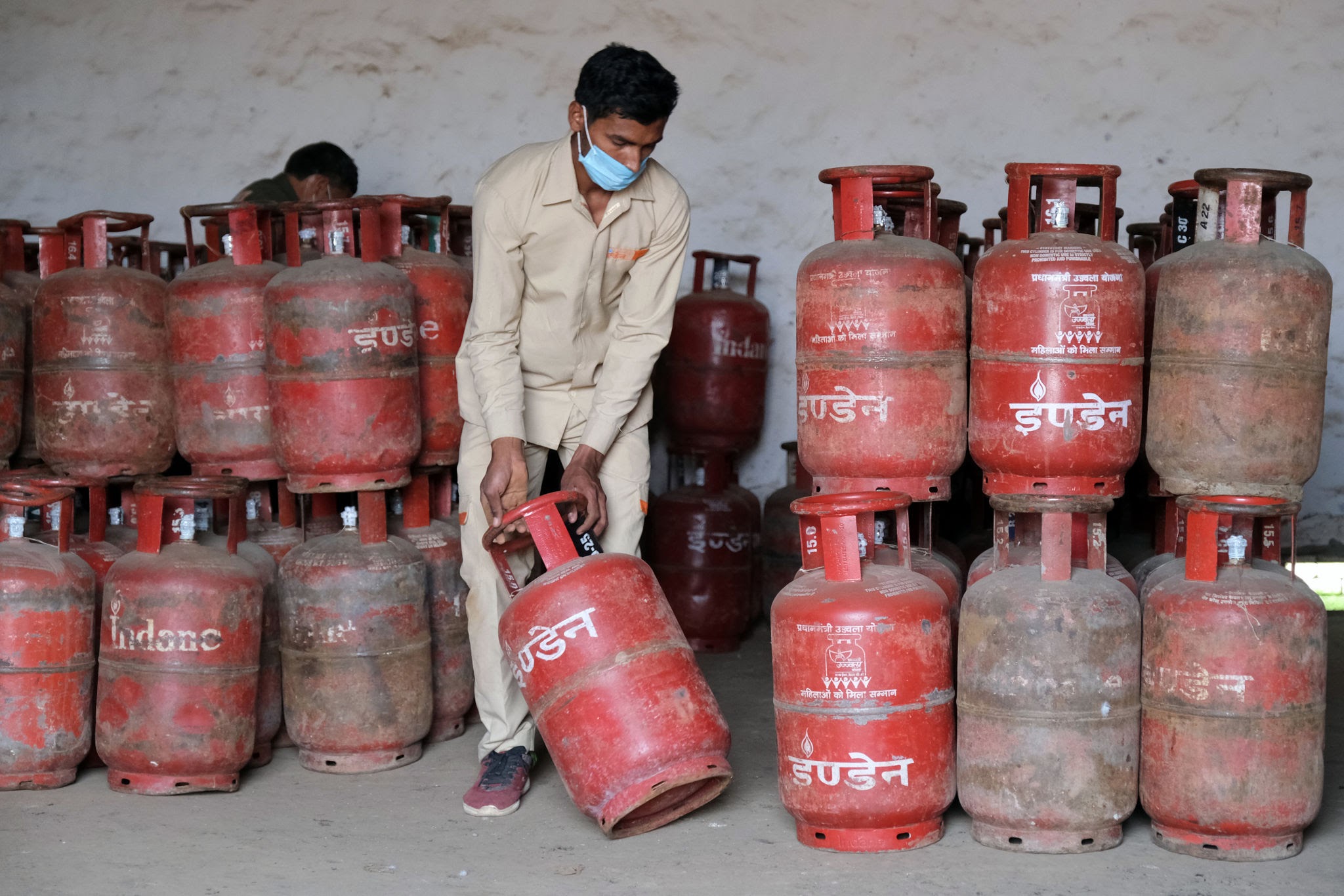
Indian Oil Corporation has increased the price of a domestic 14.2 kg LPG cylinder by 29 rupees, bringing the total cost to 942 rupees in Delhi. The price adjustment, published on the official website, reflects growing infrastructure and import overheads as the government mandates state refiners to secure a 30-day emergency buffer stock.
NEW DELHI — Indian Oil Corporation has officially raised the retail price of its 14.2 kg domestic liquefied petroleum gas cylinder by 29 rupees, bringing the total cost to 942 rupees in Delhi. The state-run energy enterprise updated the retail tariff structure directly on its official web portal on Sunday, establishing an immediate pricing adjustment across consumer supply networks in the national capital region. This upward pricing revision marks a key adjustment in consumer utility expenses amid ongoing energy supply evaluations and strategic storage directives issued by federal authorities.
Technical Tariff Breakdown & Market Impact
The fresh price hike impacts millions of households relying on state-subsidized and retail cooking fuel networks. According to data published on the Indian Oil Corporation Portal, the previous benchmark rate for the standard 14.2 kg domestic cylinder in Delhi stood at 913 rupees. The implementation of the 29-rupee increase pushes the consumer acquisition cost to exactly 942 rupees per unit.
Market analysts report that the adjustment runs alongside a series of broader industrial pricing re-alignments executed by India’s prominent public sector oil marketing companies (OMCs). While commercial 19 kg cylinders have faced steeper, independent volatility due to geopolitical conditions in West Asia, domestic household cylinder revisions remain strictly regulated and highly sensitive to retail inflation calculations.
The immediate impact will be felt directly by urban and suburban households across Delhi and adjacent national capital sectors, forcing residents to accommodate higher recurring utility bills within their monthly budgets.
Supply Chain Dynamics and Strategic Reserves
The modification in retail pricing coincides with a major administrative push by the Union Government to fortify India's energy infrastructure. The Ministry of Petroleum and Natural Gas recently conducted comprehensive reviews addressing fuel logistics, import continuity, and emergency stockpiles.
Official briefings from the ministry indicate that state-run refiners—including Indian Oil Corporation, Bharat Petroleum Corporation Limited, and Hindustan Petroleum Corporation Limited—are working under active state directives to expand their commercial reserves. Joint Secretary Sujata Sharma outlined during a recent inter-ministerial briefing that oil marketing companies must systematically establish a minimum 30-day buffer stock for LPG to withstand external import bottlenecks.
Currently, domestic Indian refineries generate roughly 50,000 to 52,000 tonnes of LPG daily. With national consumption requirements hovering near 72,000 tonnes per day, India relies heavily on sea-borne imports to balance the structural deficit. The expenses incurred in maintaining higher strategic volumes, combined with global import premiums, continue to filter down into the retail pricing matrices of public sector fuel retailers.
Official Sources Section
The adjusted pricing tables were verified directly through data feeds hosted on the Indian Oil Corporation commercial portal. The underlying operational guidelines and import dependencies conform to statements issued during inter-ministerial press briefings hosted by the Ministry of Petroleum and Natural Gas. All figures related to refining capacities and strategic emergency mandates mirror the formal data disclosures presented by state energy planners.
Quote Section
"According to officials familiar with pricing mechanisms, regular monthly evaluations of fuel distribution costs, import freight variations, and local operational overheads dictate regular changes in the retail tariff layout."
"Ministry representatives stated that while domestic refining output continues to function at optimum parameters, strategic stockpiling operations are critical to shield national distribution channels from sudden geopolitical blockades."
Why It Matters
The 29-rupee hike directly influences the disposable income metrics of everyday urban consumers. For lower- and middle-income families, a baseline shift in essential cooking utilities exerts immediate pressure on broader food preparation budgets. Furthermore, because retail energy costs serve as a core foundational metric for consumer price indices, repeated upward shifts in baseline fuel lines can complicate broader monetary interventions aimed at capping local retail inflation.
Key Facts at a Glance
New Domestic Rate: The retail price of a 14.2 kg LPG cylinder rises to 942 rupees in Delhi.
Quantum of Hike: Public sector retailer Indian Oil Corporation raised the tariff by exactly 29 rupees.
Deficit Management: Local refineries yield up to 52,000 tonnes daily against a nationwide demand of 72,000 tonnes, necessitating a deep import fallback.
Storage Directive: The Ministry of Petroleum and Natural Gas has mandated a strict 30-day minimum emergency backup volume for all active OMCs.
Frequently Asked Questions
What is the new price of a domestic LPG cylinder in Delhi?
The new price for a standard 14.2 kg domestic LPG cylinder in Delhi is 942 rupees, following the latest tariff update from Indian Oil Corporation.
Why did Indian Oil Corporation increase the cooking gas tariff?
Prices are adjusted based on global import dynamics, ocean freight margins, local operational overheads, and the incremental capital required to maintain national strategic fuel reserves.
Does India produce enough LPG to satisfy entire domestic consumer demand?
No. Indian refineries produce approximately 50,000 to 52,000 tonnes of LPG daily, while the national demand stands at roughly 72,000 tonnes per day, leaving a structural deficit covered via imports.
Are other public sector oil marketing companies raising prices too?
Yes. Indian fuel retailers typically align retail pricing tables closely across identical geographical zones to maintain market parity and absorb structural procurement costs collectively.
Sources: