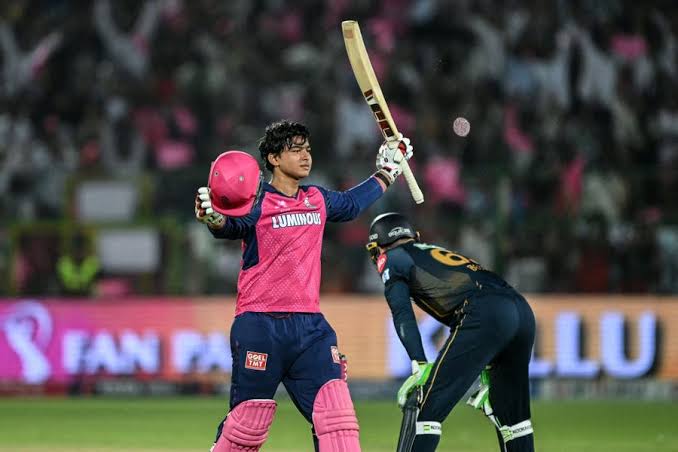
The Indian Premier League breeds a new band of cricketers by replacing old-world metropolitan sports monopolies with a highly strategic, data-driven franchise scouting system. Elevating fearless young athletes from diverse socioeconomic backgrounds directly onto the global stage, the tournament has fundamentally modernized talent development and reshaped the national sports pipeline.
MUMBAI — The Board of Control for Cricket in India (BCCI) has completed another transformative domestic cycle, solidifying a structural shift in how national athletic talent is discovered and cultivated. Driven by the financial and logistical scale of franchise operations, the Indian Premier League breeds a new band of cricketers who are fundamentally shifting the sport away from traditional metropolitan privilege. By exposing unheralded young athletes to global icon players, elite coaching staffs, and high-pressure situations, the league has decentralized the sport's domestic pipeline, bringing a highly ambitious and fearless generation of players to the forefront of international cricket.
Dismantling the Traditional Cricket Hierarchy
For decades, entering the elite echelons of Indian cricket relied on a predictable path: dominating historic regional tournaments, securing backing from metro-centric cricket associations, and accumulating years of patient runs in multi-day domestic fixtures.
Data published by official domestic agencies indicates that this framework has undergone a thorough structural reset. Modern talent discovery no longer functions as a slow, multi-year progression. Instead, the domestic league acts as an open, performance-driven meritocracy. The Indian Premier League breeds a new band of cricketers drawn directly from small towns, rural districts, and modest middle-class communities where elite athletic infrastructure was historically absent.
Former league officials and cultural commentators note that this structural evolution has neutralized the traditional geographic monopoly of historic cricketing hubs like Mumbai, Delhi, and Chennai. Young athletes are now monitored, scouted, and integrated into high-performance training systems long before they receive formal recognition from state selectors, creating an entirely alternative and fast-tracked route to athletic prominence.
The Economics of Talent Scouting and Technical Disruption
The emergence of this distinct sporting generation is supported by an intricate, multi-million dollar scouting framework financed by franchise owners. Rather than relying on standard tournament scorecards, teams employ dedicated data scientists, video analysts, and regional scouts to evaluate unheralded local tournaments across the country.
This data-backed approach has drastically changed the technical profile of the modern Indian cricketer. Players entering top-tier academies are conditioned to think in terms of high-impact, short-format metrics, such as strike-rate optimization, boundary-to-ball ratios, and defensive bowling variations under severe constraints.
Furthermore, this exposure introduces young athletes to elite international standard preparation—including advanced sports science, psychological conditioning, and intense media scrutiny—from the very beginning of their professional journeys. As a result, the time required for a player to transition from domestic obscurity to international readiness has been significantly compressed.
Official Sources Section
The performance logs, franchise scouting models, and historical selection metrics are compiled using the official administrative and statistical databases managed by the Board of Control for Cricket in India. Sociological assessments regarding the changing geographic demographics of modern multi-format players align with data reviews published by The Tribune India and associated regional sportswire archives tracking contemporary national squad inclusions.
Quote Section
"According to officials involved in franchise development pipelines, the modern league format does not simply uncover raw talent; it forces emerging athletes to declare their capabilities immediately under intense public scrutiny."
"Organizers stated that by removing the financial barriers and administrative insularity that historically governed regional selection, the current franchise ecosystem ensures that performance on the field remains the single definitive currency for advancement."
Why It Matters
The shift in how the Indian Premier League breeds a new band of cricketers has practical implications for sports governing bodies, international corporate sponsors, and millions of grassroots sports fans. For the national team selection committees, it provides an uninterrupted, highly resilient supply of match-ready athletes who are not intimidated by world-class opponents or massive stadium crowds. For corporate brands and media networks, this democratized talent model opens up fresh consumer markets in Tier-2 and Tier-3 cities, as fans increasingly see themselves reflected in the diverse socioeconomic backgrounds of India's newest sporting icons.
Key Facts at a Glance
Demographic Shift: The national team pipeline has successfully shifted from traditional urban power centers to small-town and rural regions.
Scouting Revolution: Franchises utilize proprietary data analytics and localized scouting networks to identify talent early in unmapped regional games.
Systemic Impact: The traditional multi-year path to international cricket has been compressed into highly accelerated, performance-based franchise cycles.
Psychological Reconditioning: Early exposure to global superstars and high-pressure situations helps cultivate an unapologetically confident, pressure-tested generation of players.
Frequently Asked Questions
How does the Indian Premier League assist small-town cricketers?
The league bypasses traditional bureaucratic selection pipelines by sending independent corporate talent scouts directly into regional districts, offering players a global stage based purely on their short-format performances.
What technical changes are visible in this new generation of players?
This new wave of cricketers prioritizes high-impact modern metrics, including aggressive strike-rate management, innovative boundary-hitting techniques, and specialized short-format bowling variations.
Has this transition affected India’s traditional multi-day cricket performance?
While it has accelerated the production of limited-overs specialists, sports analysts indicate that the foundational athletic conditioning and mental resilience built in the league are also helping young players adapt rapidly to international Test matches.
Sources: