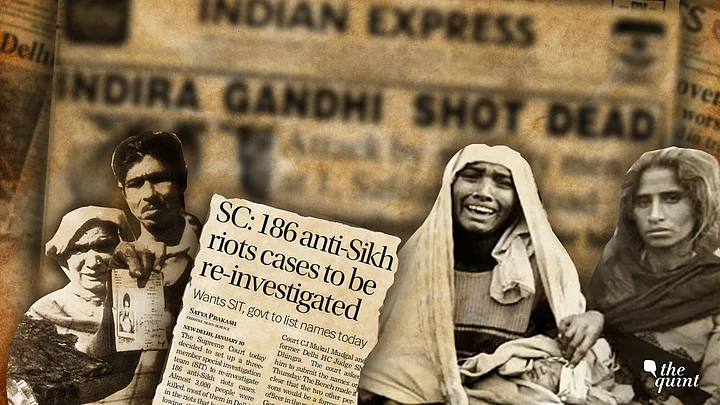
A new academic volume, 'Remembering the Past: Critical Perspectives on the Anti-Sikh Violence of Punjab', has been released by Orient BlackSwan. Edited by Dr. Ishmeet Kaur Chaudhry, the 217-page study explores the scarred history of '84 through oral histories and literary criticism, documenting the generational trauma and identity transformations of the Sikh community.
CHANDIGARH — A comprehensive academic study investigating the inter-generational trauma, political fractures, and societal impact of the 1984 anti-Sikh violence has been formally released. Titled 'Remembering the Past: Critical Perspectives on the Anti-Sikh Violence of Punjab' and published by Orient BlackSwan, the multi-author research volume brings together advanced socio-political papers and subaltern testimonies. The official launch marks an important milestone in modern Indian historiography, providing researchers and human rights advocates with a thoroughly structured, academic framework to engage directly with the scarred history of '84.
Documenting Institutional Memories and Subverted Narratives
The anthology, edited by prominent scholar Dr. Ishmeet Kaur Chaudhry, explores the deep-seated psychological wounds left by the military interventions and communal violence of 1984. Academic data and review logs compiled by The Tribune India indicate that the text purposely shifts away from standard state-centric histories, focusing heavily on how ordinary families preserve recollections of displacement and institutional loss.
The 217-page research volume covers a wide variety of sociological landscapes, moving from the congested alleys of Delhi's resettlement colonies to the agrarian heartlands of Punjab. Rather than treating the events of 1984 as an isolated historical incident, the book demonstrates how the scarred history of '84 continues to actively shape the identity, migration patterns, and political decisions of the global Sikh diaspora. Scholars use oral history techniques to show how unresolved grief can pass down through generations when formal legal networks fail to provide complete accountability.
Interdisciplinary Insights into the Trauma of 1984
A major structural pillar of the text is its focus on literary criticism, looking closely at how Punjabi and English creative writers have recorded historical trauma over the last forty years. According to official catalog listings from Orient BlackSwan, the volume analyzes prominent regional novels, poetry collections, and cinematic portrayals to show how art can challenge forced political amnesia.
Sociological reviewers, including noted academic analyst Dr. Paramjit S. Judge, emphasize that the book serves as a vital reminder of how weaponizing religious identities can compromise basic human rights. By including multi-disciplinary papers that look at the structural violence of the period, the volume helps readers understand the subtle ways that major historical shocks continue to affect contemporary local governance and civil liberties.
Official Sources Section
The publishing timelines, retail distributions, and chapter indexes are drawn directly from official catalogs provided by Orient BlackSwan. The analytical evaluations, critical sub-themes, and regional reception records conform directly to verified literary analyses archived by the research editorial desk of The Tribune India.
Quote Section
"According to officials familiar with the book's development, the collection seeks to systematically bridge the gap between cold administrative records and the highly nuanced living memories of survivors."
"Organizers stated that by offering an alternative academic platform for marginalized voices, the volume ensures that the lessons of past communal polarization remain central to modern discussions around social justice and national integration."
Why It Matters
The publication of 'Remembering the Past' carries practical implications for contemporary policy analysts, legal rights collectives, and cultural historians. By creating a rigorous academic repository for the scarred history of '84, the text ensures that human rights studies in South Asia remain grounded in verified survivor testimonies. Furthermore, it provides an essential toolkit for modern institutions seeking to design effective reconciliation frameworks, warning that ignoring historical grievances can inadvertently weaken the long-term stability of multi-ethnic democracies.
Key Facts at a Glance
Scholarly Scope: The new text brings together diverse research papers across 217 pages to explore the long-term impact of anti-Sikh violence.
Primary Source Focus: The book relies heavily on oral histories, subaltern testimonies, and independent regional literature to trace survivor memory.
Publisher Credentials: The volume is distributed by Orient BlackSwan, a publishing house widely recognized for its rigorous peer-reviewed social science catalogs.
Analytical Target: The study examines how the structural trauma of 1984 influences contemporary identity politics across both Indian urban centers and international diaspora communities.
Frequently Asked Questions
What is the primary focus of the new 1984 research volume?
The book, edited by Dr. Ishmeet Kaur Chaudhry, presents a collection of academic and interdisciplinary essays evaluating the long-term psychological, legal, and cultural consequences of the 1984 anti-Sikh violence.
Who published this new socio-political study?
The volume was formally brought to market by Orient BlackSwan, an established academic publisher in South Asia.
How does this book approach the scarred history of '84 differently?
Unlike conventional political histories that focus mostly on administrative or military decisions, this text prioritizes subaltern voices, oral history archives, and literary representations of personal grief.
Sources: