The iconic blue color of Indian Railways' traditional coaches was chosen for its practical ability to conceal dust and grease during long cross-country transits. As the network modernizes, these legacy steel cars are being replaced by advanced red-and-grey LHB models, signaling a major nationwide leap in rail safety and speed.
NEW DELHI — For decades, the familiar blue train coaches of Indian Railways have been a defining feature of the country’s vast landscape. Whether pulling into a bustling metropolitan junction or thundering through rural level crossings, these distinctive passenger cars are instantly recognizable to millions of daily commuters. However, a closer look at the history of the national carrier reveals that the choice of this specific shade goes far beyond aesthetic preference, serving as a critical indicator of manufacturing history, maintenance protocols, and technological shifts.
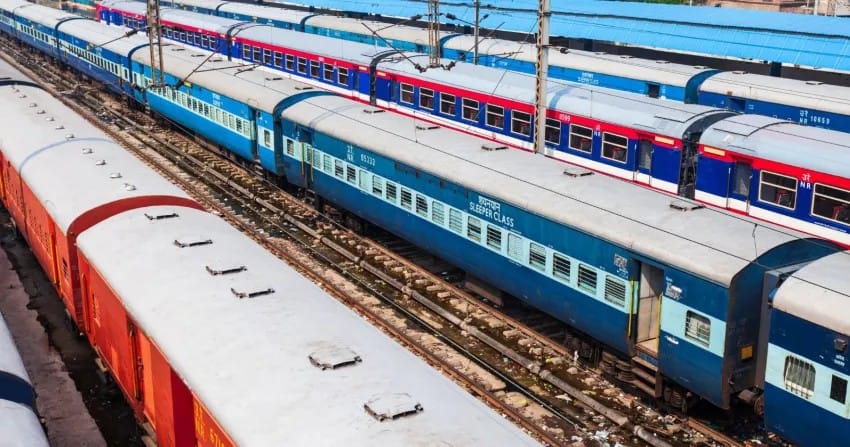
The classic blue train coaches most travelers associate with Indian rail networks are formally known as Integral Coach Factory (ICF) coaches. Manufactured in Chennai since the 1950s, these all-steel structures gradually phased out older wooden and transitional models to establish the definitive visual identity of the network. Today, as the organization modernizes its fleet, the science and strategy behind the iconic paint choice remain an essential chapter in industrial history.
The Practicality Behind the Blue Paint Selection
Indian Railways has not explicitly tied the choice of its standard livery to a single administrative directive. Instead, railway engineering experts point out that the implementation of the blue palette was heavily dictated by field practicality and long-term asset management.
A primary reason for utilizing dark blue across the standard passenger fleet is its ability to mask environmental wear. Over thousands of kilometers of continuous transit across diverse geographic zones, locomotives and rolling stock are exposed to heavy dust, mechanical grease, coal ash, and extreme weather. Lighter shades require highly frequent washing cycles to maintain a professional appearance. The standard blue tone effectively hides surface weathering and grime between scheduled operational maintenance windows, streamlining turnaround times at major cleaning depots.
Additionally, from a logistical perspective, the formulation of the blue paint proved highly cost-effective and easy to replicate across multiple regional workshops, ensuring uniform touch-ups during periodic overhauls.
Engineering Shifts Dictate New Fleet Colors
Passengers across India have increasingly observed that newer long-distance express routes are shedding the traditional blue design in favor of red, silver, or bright white combinations. This visual transition directly corresponds to an underlying overhaul of manufacturing technology.
The Ministry of Railways has been systematically replacing legacy ICF models with Linke Hofmann Busch (LHB) coaches. Developed originally alongside German engineers, these modern variants are distinctively painted in red and silver-grey. The color variation functions as an immediate visual marker for station staff and passengers, signaling completely different technical capabilities.
Unlike the traditional blue train coaches, LHB units are constructed with stainless steel and aluminum, making them significantly lighter and capable of hitting higher operational speeds. Crucially, they feature advanced anti-climbing technology, an engineering safety mechanism that prevents individual train cars from piling on top of one another in the event of an emergency derailment or collision.
Official Sources Section
According to historical manufacturing logs from the Integral Coach Factory, the standardized introduction of steel rolling stock necessitated a unified livery that could simplify national inventory tracking. Operational statements from regional zones indicate that color-coded rolling stock serves as a crucial shorthand for yard masters to quickly categorize, shunt, and assemble rakes based on speed limits and braking systems.
Quote Section
"According to officials familiar with historical design choices, the visual distinction between various train types was deliberately updated over the years to manage passenger expectations and help station staff instantly differentiate older fleet stock from high-speed assets."
Why It Matters
For daily passengers, businesses, and investors tracking India’s infrastructure budget, the gradual retirement of blue train coaches signals a multi-billion dollar safety upgrade across the network. While the blue livery represents a nostalgic era of homecomings and shared journeys, the transition to modern color profiles reflects an urgent pivot toward international safety standards, reduced transit times, and enhanced energy efficiency.
Key Facts at a Glance
Manufacturing Legacy: The classic blue train coaches represent the traditional steel Integral Coach Factory (ICF) design manufactured in Chennai since the 1950s.
Maintenance Advantage: Dark blue was strategically deployed because it hides iron dust, grease, and track grime far better than lighter colors.
Safety Transition: Newer red-and-grey trains signify the implementation of German-engineered LHB technology featuring anti-climbing safety mechanisms.
Modern Branding: Next-generation trainsets like the Vande Bharat Express sport white-and-blue liveries, marking a shift toward aerodynamic engineering and premium branding.
FAQ Section
Why are the older Indian passenger trains painted blue?
The dark blue color scheme was adopted primarily for ICF coaches because it effectively masks dust and grease, reducing cosmetic maintenance costs over long journeys across variable climates.
What is the difference between a blue coach and a red coach in India?
Blue coaches belong to the older ICF fleet, which has lower speed thresholds. Red coaches indicate modern LHB technology designed for higher speeds and superior crash safety.
Will the blue train coaches be completely phased out?
Yes, as part of modernization safety mandates, Indian Railways is systematically replacing legacy ICF blue coaches with safer, faster LHB coaches across all major express lines.
Source: Official historical records from the Ministry of Railways and fleet transition announcements via the Integral Coach Factory (ICF).