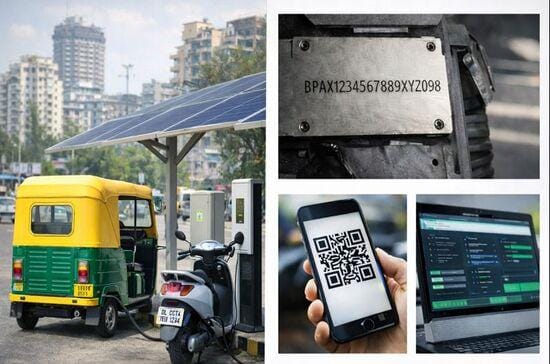
India’s proposed "Battery Pack Aadhaar" system mandates a unique 21-character digital identity for EV batteries to track safety and recycling. However, domestic automakers are requesting a delayed rollout to resolve significant supply chain fragmentation, raw material tracking issues, and complex cloud-based dynamic data integration challenges.
NEW DELHI — The Union Ministry of Road Transport and Highways (MoRTH) is facing collective pushback from the electric vehicle (EV) industry following its landmark proposal to introduce a mandatory "Battery Pack Aadhaar" traceability system. While the policy aims to establish end-to-end transparency, domestic EV makers and battery manufacturers are actively seeking an extension to the proposed implementation timeline, citing severe operational complexities, technical integration delays, and upstream data compilation challenges across the global supply chain.
The development comes after the government released detailed draft guidelines for the implementation of a 21-character alphanumeric Battery Pack Aadhaar Number (BPAN) and associated QR code systems. The rule applies to all L, M, and N category electric vehicles, alongside industrial battery packs exceeding a 2 kWh capacity. While the state views the regulation as a vital step toward safety, standardized recycling, and curbing the circulation of sub-standard components, industry representatives argue that forcing an immediate rollout could disrupt manufacturing lines and temporarily choke retail EV supply.
The Technical Burden of Dynamic Data Integration
Under the draft framework proposed by the central government, battery producers and importers are not merely required to print a static tracking number on the casing. Instead, the framework demands the integration of a highly complex multi-tier data architecture.
The technical mandate divides information into two primary segments:
Static Data: Capturing the Battery Manufacturer Identifier (BMI), material composition, cell chemistry, and factory origin.
Dynamic Data: Requiring live tracking of real-time operational parameters, including State of Health (SoH), thermal performance, and charge-discharge cycles.
EV original equipment manufacturers (OEMs) state that syncing individual Battery Management Systems (BMS) to seamlessly upload continuous dynamic telemetry data directly onto centralized government portals requires extensive software updates and infrastructural testing. Widespread factory-level implementation across hundreds of components is expected to take considerable time.
Supply Chain Realities and Circular Economy Pressures
A significant reason automakers are requesting more time involves India’s deep structural dependency on imported battery materials. India currently maintains a heavy import reliance on essential critical minerals such as lithium, cobalt, and processed nickel, much of which undergoes midstream chemical refinement in localized international hubs before arriving in domestic factories.
Tracing the exact origin of these raw materials to generate verified, auditable material composition records demands severe compliance updates from global upstream miners. Furthermore, the guidelines state that any secondary modification—such as recycling, cell replacement, or second-life repurposing for stationary energy storage—will void the existing identity and require the issuance of a completely new BPAN. EV makers argue that the domestic recycling ecosystem is still evolving and unequipped to handle such rapid bureaucratic tracking.
Official Sources Section
According to the official draft guidelines issued by the Ministry of Road Transport and Highways (MoRTH), the government intends to utilize the Automotive Industry Standard (AIS) route through the Automotive Industry Standards Committee (AISC) to refine the standardization process. This pathway is intended to ensure structured stakeholder consultation, technical validation, and national uniformity.
The government’s primary intent remains to align India with international benchmarks, such as the European Union’s upcoming Battery Passport rules under Regulation (EU) 2023/1542, set to become legally binding in February 2027.
Quote Section
"According to officials involved in the draft committee, prioritizing electric vehicle applications is crucial given their rapid market expansion and long-term environmental footprint. However, the committee acknowledges that practical implementation aspects across the entire battery lifecycle must be adequately addressed through collaborative testing before strict enforcement begins."
Why It Matters
For everyday consumers, a rushed implementation of the Battery Pack Aadhaar could lead to immediate price increases for electric two-wheelers and passenger cars as compliance costs scale up. However, over the long term, the system will prevent the hazardous practice of mixing battery cells of different vintages into a single module, drastically lowering the risk of vehicle fires. For global investors and domestic exporters, compliance with these rigorous digital tracking laws is a necessity to unlock export readiness into stringent western markets like the European Union.
Key Facts at a Glance
The Core Proposal: India plans to mandate a 21-character alphanumeric unique identity called the Battery Pack Aadhaar Number (BPAN) for end-to-end EV battery tracking.
Safety Catalyst: The policy was driven heavily by the urgent need to address thermal runaway risks and track defective cell batches across manufacturers.
The Industry Request: EV makers are calling for a deferred rollout window to properly adapt their current supply chains, hardware designs, and internal database architectures.
Global Alignment: The digital framework mirrors the EU's 2027 Battery Passport mandate, making it essential for Indian EV makers targeting international export markets.
FAQ Section
What is the primary purpose of India's Battery Pack Aadhaar?
The system is designed to provide complete traceability for electric vehicle batteries from raw material extraction, through consumer usage, to second-life applications and eventual disposal or recycling.
Why do EV manufacturers want the deadline extended?
Manufacturers require extra time to align their international raw material supply chains, re-engineer battery packs to securely hold the digital tags, and test the cloud server infrastructure required to stream dynamic safety data.
Will this change make electric vehicles safer for consumers?
Yes. The digital passport will allow regulators to instantly identify and execute targeted recalls of specific defective manufacturing batches, while stopping companies from mixing hazardous old and new cells inside individual packs.
Source: Ministry of Road Transport and Highways (MoRTH), NITI Aayog, Automotive Industry Standards Committee (AISC).