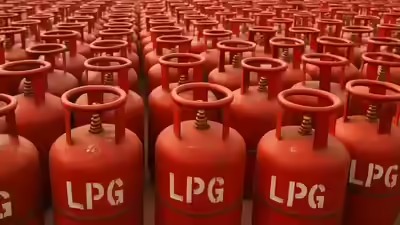
An Indian government official confirmed that state oil retailers are incurring a revenue loss of 700 rupees per 14.2 kg LPG cylinder, along with under-recoveries of 27 rupees per liter on diesel and 3 rupees per liter on gasoline, as public refiners shield consumers from global fuel price volatility.
In a major disclosure revealing severe fiscal strain within the national energy sector, an Indian government official confirmed on Monday that state-owned oil marketing companies are sustaining heavy under-recoveries across all primary fuel categories. According to the updated figures, state retailers are absorbing a significant revenue loss of 700 rupees on every standard 14.2 kg domestic LPG cylinder sold. Furthermore, supply chain distortions and surging international energy costs have driven retail cost mismatches for vehicular fuels, with state retailers registering a revenue loss of 3 rupees per liter on gasoline and a staggering 27 rupees per liter on diesel.
Escalating Under-Recoveries Threaten Energy Balance Sheets
The localized pricing disclosures provided by the Ministry of Petroleum and Natural Gas highlight an expanding operational gap between global refined product benchmarks and subsidized domestic pump rates.
State-controlled refiners—predominantly Indian Oil Corporation, Bharat Petroleum Corporation, and Hindustan Petroleum Corporation—have actively frozen or limited retail price transmission to shield the public from international inflation shocks.
Market experts point out that the financial bleeding is most critical within the diesel and cooking gas ecosystems. Because diesel serves as the primary fuel source for India's massive overland logistics networks and mechanized agricultural sectors, the current revenue loss of 27 rupees per liter creates severe financial friction for state retailers.
This multi-billion-rupee deficit has drastically escalated the cumulative daily under-recoveries borne by the country's public oil marketing corporations, even as global benchmark crude oil trades in a volatile corridor.
Structural Drivers Behind the Fuel Deficit
The current price imbalances reflect wider geopolitical complications and strategic defensive interventions managed by central planning authorities:
LPG Import Hurdles: Severe maritime transit disruptions across the Strait of Hormuz have restricted localized shipments, forcing domestic refiners to ramp up costly emergency internal production to maintain a baseline supply of 53,000 tonnes per day.
The Diesel Arbitrage Problem: The heavy state absorption of the 27 rupee per liter loss has led to an unintended price arbitrage against unregulated industrial wholesale distributors. This imbalance has forced the government to issue temporary anti-hoarding control orders under the Essential Commodities Act to prevent bulk buyers from draining retail pumps.
Excise Duty Pressures: While the central government previously reduced central excise duties to protect the consumer economy, the sustained high international costs mean the state must continue absorbing substantial monthly losses to support public energy marketing networks.
Official Government Perspective
Administrative monitors have confirmed that shielding vulnerable households and preserving low-cost agrarian transit remains an essential policy requirement, despite the resulting fiscal imbalances.
"According to officials, the current graduated price support is fully intended to protect the end-use retail consumer, particularly the millions relying on household cooking gas," a senior ministry representative noted during a media briefing in the capital. "While state retailers' revenue loss on LPG stands at 700 rupees per 14.2 kg cylinder, the state has no immediate plans to abruptly alter the retail subsidy architecture. We are closely monitoring the 27 rupees per liter under-recovery on diesel to curb industrial arbitrage while ensuring steady fuel access for everyday motorists."
According to formal statements issued via the Press Information Bureau (PIB), specialized quotas have been introduced to restrict bulk purchasers from buying highly subsidized retail diesel in large quantities.
Why It Matters
The widening under-recoveries absorbed by state-backed entities carry profound consequences for national economic stability. For public consumers and logistics operators, these interventions act as an essential buffer against immediate transport cost inflation. However, for equity markets and public sector investors, a prolonged revenue deficit limits the capital expenditure capabilities of these major energy firms, potentially deferring necessary green-energy transitions and long-term oil refinery expansions.
Key Facts at a Glance
Cooking Gas Deficit: State retailers take a sharp revenue loss of 700 rupees on every standard 14.2 kg household LPG refill.
Diesel Strain: Public oil marketing firms are bearing a massive sub-surface gap of 27 rupees per liter on high-speed diesel.
Gasoline Mismatch: The retail under-recovery for petrol has stabilized at a lower level of 3 rupees per liter.
Regulatory Backstop: The government has enforced strict supply caps at retail stations to prevent industrial users from exploiting subsidized fuel pricing.
Frequently Asked Questions
What does "revenue loss" or "under-recovery" mean for Indian oil companies?
Under-recovery represents the financial shortfall incurred by state-run oil marketing companies when they are required to sell essential fuels to domestic consumers at regulated prices that are lower than international market costs.
Why is the financial loss so much higher on diesel than on gasoline?
Diesel is heavily utilized in commercial freight, public transport, and agricultural equipment. To prevent cascading inflation across food and retail sectors, the government keeps domestic diesel prices highly insulated from global price surges.
How is the massive 700-rupee loss on LPG cylinders affecting supply?
To maintain continuous domestic availability despite high import expenses, Indian refiners have boosted internal LPG production by 60%, even as state companies absorb the cost difference to keep household cooking gas affordable.
Will these retail fuel losses lead to imminent price hikes at the pump?
While minor adjustments occur based on macro conditions, the government's primary focus remains on consumer stability, using targeted regulatory controls and fiscal measures to manage the deficit without passing the full cost onto retail consumers.
Source: Ministry of Petroleum and Natural Gas (India), Press Information Bureau (PIB) Delhi, Indian Oil Corporation Limited Disclosures