India's electric vehicle push has encountered a significant slowdown, with national EV penetration reaching just 8.5% in the 2025–26 fiscal year. Drastic subsidy cuts under the newer ₹10,900-crore PM E-DRIVE scheme, combined with a severe shortage of functional public chargers, have slowed down mass-market adoption and endangered India's 2030 climate goals.
NEW DELHI — India’s ambitious transition to electric mobility is facing a critical slowdown. Despite the rollout of high-budget central manufacturing subsidies and aggressive green transit targets, the domestic adoption of electric vehicles (EVs) has failed to scale at the pace anticipated by policymakers. According to institutional data released by the Ministry of Heavy Industries and analyzed in the annual JMK Research sector card on April 9, 2026, total national EV penetration reached just 8.5% of overall vehicle registrations for the 2025–26 financial year. The current slow trajectory raises serious doubts about India's ability to achieve its flagship "EV30@2030" target, which mandates that 30% of all newly registered automobiles be fully electric by 2030.
Subsidy Cliff Triggers Market Friction for Commercial Operators
The core programmatic driver behind India's electric vehicle push underwent a massive transition when the long-running FAME II (Faster Adoption and Manufacturing of Hybrid and Electric Vehicles) framework was replaced by the ₹10,900-crore PM E-DRIVE (Electric Drive Revolution in Innovative Vehicle Enhancement) scheme.
While independent studies by the Council on Energy, Environment and Water (CEEW) initially praised the new scheme for delivering 1.13 million vehicles at half the per-unit subsidy cost, the policy shift created unexpected market friction.
By halving the fiscal demand incentives down to a base of ₹5,000 per kilowatt-hour (kWh), the central government inadvertently triggered a sharp contraction in critical heavy commercial segments. Data monitored via the national PM E-DRIVE portal confirmed that funding caps for the L5 category of commercial electric three-wheelers were exhausted as early as December 26, 2025.
Immediately following the expiration of these demand incentives, passenger three-wheeler registrations fell sharply from their December peak of 78,057 units, placing immense economic stress on lower-income informal transport operators who cannot absorb the un-subsidized retail prices.
Extreme Infrastructure Gap and Low Charger Uptime Discourage Buyers
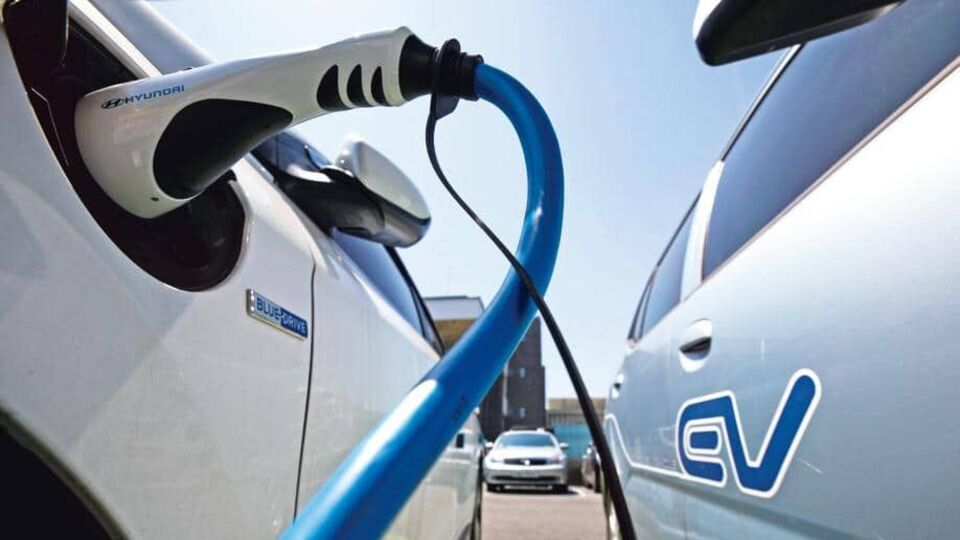
A deeper structural breakdown published by the federal think tank NITI Aayog highlights that the primary roadblock to large-scale electric vehicle push success is the severe lack of reliable, accessible public charging infrastructure.
While the total number of public charging installations across the country technically nudged past 27,000 terminals by March 2026, the network remains profoundly insufficient to eliminate regional "range anxiety" for highway travelers and urban apartment residents.
Current Domestic EV Market Segmentation
Electric Two-Wheelers (E2Ws): Remains the largest volume driver, commanding a dominant 57.8% share of total EV sales.
Electric Passenger Three-Wheelers (E3Ws): Holds a 29.0% market share, though growth collapsed after subsidy funding caps were met.
Electric Goods & Freight Vehicles: Surged 172% year-on-year, but still sits at a minuscule 1.4% total segment penetration.
Electric Buses: Up 48% year-on-year, though zero buses have been physically deployed under the latest PM E-DRIVE tenders.
The infrastructure deficit is further exacerbated by critical quality flaws. A sector policy review paper released by the Observer Research Foundation (ORF) revealed that public charge point operators (CPOs) face crippling land acquisition barriers, high municipal commercial power costs, and extremely low structural uptime.
Outside a handful of wealthy, high-adoption states like Delhi, Goa, and Karnataka, drivers regularly encounter broken, non-functional, or offline charging hubs. This lack of reliability damages consumer confidence, keeping private passenger car adoption heavily restricted.
Official Sources Section
The performance parameters, spending audits, and legislative metrics tracking India's electric vehicle push are gathered from these official state organizations:
Ministry of Heavy Industries (MHI): Official operational guidelines for the PM E-DRIVE portal and corporate disbursement registers under the PLI Auto Scheme.
NITI Aayog: Strategic directive publications detailing the Electric Vehicles in India framework and macro mobility metrics.
Press Information Bureau (PIB): Parliamentary written submissions clarifying electric bus allocations and state-wise subsidy disbursements as of March 17, 2026.
Quote Section
"The shift from FAME II to PM E-DRIVE marks an important inflexion in India's EV policy. Delivering vehicles with lower per-unit incentives suggests that parts of the market are beginning to stand on their own. At the same time, the variation in outcomes across vehicle categories underscores why the next phase must focus on infrastructure readiness."
— Karthik Ganesan, Fellow and Director, CEEW
Why It Matters
The sluggish scaling of India’s electric vehicle push has serious macro-economic and civil consequences. India currently imports over 80% of its raw crude oil, leaving its state exchequer highly vulnerable to global supply chain shocks. Furthermore, tailpipe emissions from internal combustion engines (ICE) remain a major driver of hazardous urban air pollution across tier-1 cities. Without an accelerated, reliable transition to mass electromobility, India faces prolonged public health emergencies and severe challenges in meeting its international net-zero carbon reduction commitments by 2070.
Key Facts at a Glance
Penetration Shortfall: National EV penetration reached only 8.5% in the 2025–26 fiscal year, far below the milestones needed to hit the 30% target by 2030.
Subsidy Reduction: The PM E-DRIVE framework cut consumer demand incentives in half compared to FAME II, dropping the baseline allocation to ₹5,000/kWh.
Commercial Gridlock: The commercial L5 electric three-wheeler subsidy portal was locked down completely on December 26, 2025, halting segment momentum.
Uneven Geography: Just five states—Uttar Pradesh, Maharashtra, Karnataka, Tamil Nadu, and Rajasthan—account for nearly 50% of all cumulative EV sales.
Bus Deployment Delays: Despite a government allocation of 13,800 electric buses under PM E-DRIVE, parliamentary records show zero actual e-bus deployments by state transit bodies as of mid-March 2026.
FAQ Section
Why is India's electric vehicle push struggling to scale despite high-budget schemes?
While government schemes have heavily subsidized the initial purchase price of two-wheelers, they have failed to build a sustainable underlying ecosystem. EV growth is blocked by inadequate charging stations, low charger uptime, high upfront battery replacement costs, and sudden subsidy reductions for commercial vehicle categories.
What is the difference between the old FAME II and current PM E-DRIVE schemes?
FAME II focused on high per-vehicle subsidies to kickstart early consumer interest. The current ₹10,900-crore PM E-DRIVE scheme offers roughly half the cash subsidy per vehicle, shifting its budget toward public charging infrastructure (₹2,000 crore) and adding mass-transit segments like electric cargo trucks and ambulances.
Is the 30% EV adoption target for 2030 still achievable for India?
At the current expansion rate of 8.5% penetration, reaching 30% by 2030 is highly unlikely without sweeping policy corrections. Industrial bodies like NITI Aayog state that the country must pivot from voluntary financial incentives to strict clean-air manufacturing mandates for automakers to bridge the gap.
Source: Official scheme statistics updated by the Ministry of Heavy Industries, national mobility data managed by the Ministry of Road Transport and Highways, research reports archived by the Council on Energy, Environment and Water, and data logs compiled by the Vahan Dashboard.