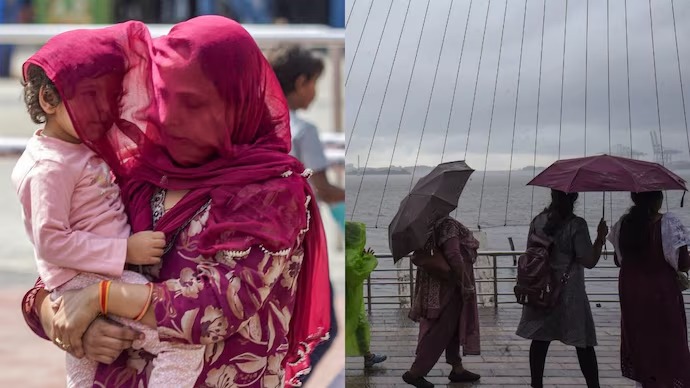
India faces a stark meteorological contrast today, June 7, 2026, as the southwest monsoon brings heavy, potentially flood-inducing rainfall to the south and northeast, while Northwest and Central India brace for an intense heatwave with temperatures soaring up to 43°C in the coming days.
India is currently experiencing a striking contrast in weather patterns, with the southwest monsoon bringing heavy rainfall to southern and northeastern states while vast regions of Northwest and Central India remain under the influence of an intense, persistent heatwave. According to the India Meteorological Department (IMD), as of June 7, 2026, the monsoon has made significant progress, advancing into parts of Maharashtra, Karnataka, Andhra Pradesh, Goa, Tamil Nadu, and the northeastern states.
The arrival of the monsoon marks a crucial turning point for agricultural and water-stressed regions, but weather officials have cautioned that the excess rainfall brings associated risks. The IMD has issued alerts for isolated heavy to very heavy rainfall across these regions, warning that the torrential downpours may lead to localized flooding, waterlogging in urban areas, and landslides in vulnerable hilly terrains.
Meteorological Divide: Heavy Rain vs. Intense Heat
The meteorological divide currently characterizing the country is defined by two distinct air masses. In the south and northeast, the life-giving moisture of the monsoon currents is fueling widespread rainfall. In contrast, Northwest and Central India are grappling with dry, hostile conditions.
Southern and Northeastern Regions
The IMD reports that the monsoon is advancing rapidly, with heavy to very heavy rainfall expected over Kerala, Karnataka, Tamil Nadu, and the northeastern states throughout the coming week. The forecast suggests that coastal areas and the Western Ghats will bear the brunt of the initial monsoon surge, necessitating vigilance from local administrations and residents regarding potential transit disruptions and infrastructure impact.
Northwestern and Central India
While the south prepares for rain, Northwest and Central India face an escalating heatwave. Temperatures are projected to climb, with maximum readings frequently hitting the 38°C to 43°C range. The IMD has placed specific pockets of Haryana, Chandigarh, Delhi, Punjab, and Uttar Pradesh under heatwave alerts from June 8 to June 11. Health authorities in these regions have issued advisories for residents to maintain stringent hydration and minimize outdoor exposure during peak afternoon hours.
Quote Section
According to officials at the India Meteorological Department, the current weather pattern represents a transitional phase where the monsoon’s advancement is effectively separating the country into two climatic zones. Organizers and state authorities have been advised to monitor real-time updates and prioritize public safety as the region navigates this period of high variability.
Why It Matters
The weather across India significantly impacts various sectors, including agriculture, energy consumption, and transportation. For farmers in the south, the monsoon onset is vital for the Kharif sowing season. Conversely, the heatwave in the north is expected to drive a surge in electricity demand due to cooling requirements and poses health risks to vulnerable populations. Commuters and travelers should remain alert, as heavy rain often disrupts transit in urban centers, while heatwave conditions can affect road and rail operations in northern states.
Key Facts at a Glance
Monsoon Progress: The southwest monsoon is active over Maharashtra, Karnataka, Andhra Pradesh, Goa, Tamil Nadu, and the Northeast.
Rainfall Alert: Isolated heavy to very heavy rainfall (7–20 cm) is expected in Kerala, Karnataka, Tamil Nadu, and the Northeast through mid-June.
Heatwave Alert: Northwest and Central India (including Delhi, Punjab, Haryana, and UP) are under heatwave warnings from June 8 to June 11, with temperatures reaching up to 43°C.
Urban Impact: Residents in low-lying coastal and urban areas are advised to watch for waterlogging and potential landslides.
FAQ
When is the monsoon expected to reach Delhi-NCR?
The IMD forecasts the arrival of the monsoon in the National Capital Region between June 25 and June 30, 2026.
What precautions should those in heatwave-affected areas take?
Health officials recommend staying hydrated, consuming cooling liquids, and avoiding outdoor activity during the hottest parts of the day (12 p.m. to 4 p.m.).
Is the heatwave expected to subside soon?
The IMD predicts a gradual rise in temperatures until June 11, followed by a slight decrease of 2–3°C as monsoon-related cloud cover eventually moves northwest.
How can I check real-time weather updates?
Citizens are encouraged to visit the official IMD website or follow local disaster management dashboards for live alerts.
Summary:
India faces a stark meteorological contrast today, June 7, 2026, as the southwest monsoon brings heavy, potentially flood-inducing rainfall to the south and northeast, while Northwest and Central India brace for an intense heatwave with temperatures soaring up to 43°C in the coming days.
Source: India Meteorological Department, Ministry of Earth Sciences