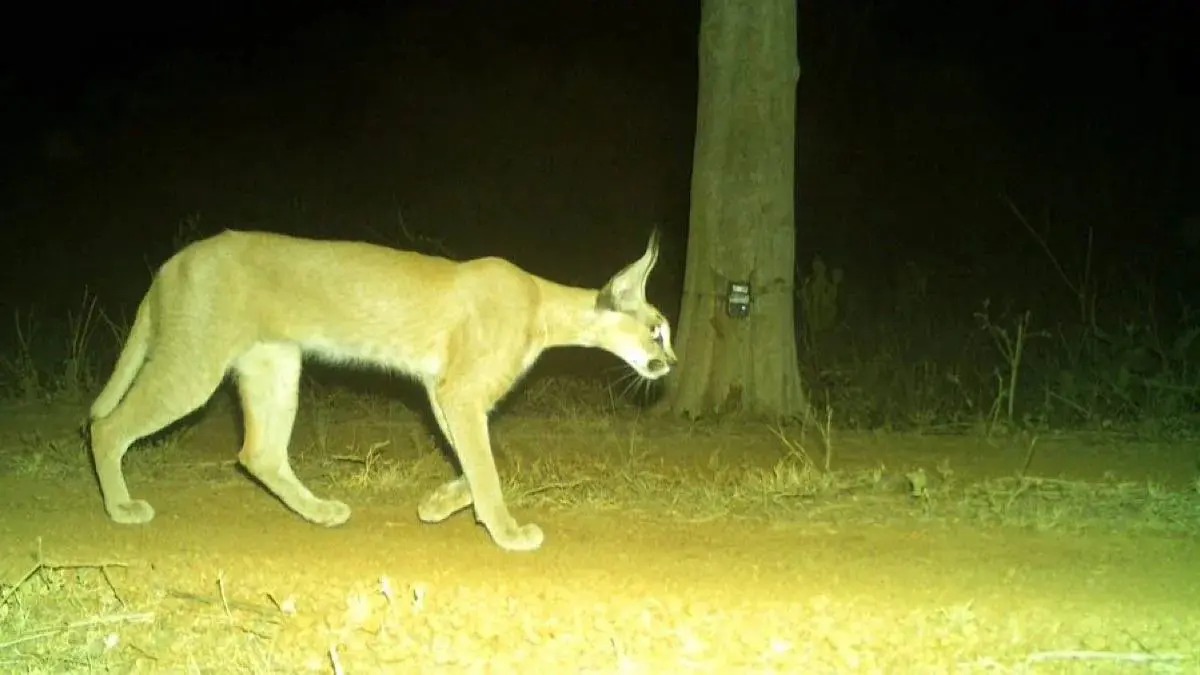
The sighting of a rare Caracal in Kuno National Park, captured via camera traps, marks a milestone in India's wildlife conservation. The return of the elusive wild cat after decades validates the success of Project Cheetah in restoring grassland ecosystems and improving habitat security for endangered species in Madhya Pradesh.
SHEOPUR, MADHYA PRADESH — In a significant development for Indian wildlife conservation, a rare Caracal has been sighted in Kuno National Park after an absence of several decades. The presence of the elusive wild cat was confirmed through a recent camera-trap survey, providing new evidence of the park's recovering biodiversity and its emerging status as a critical hub for endangered species.
The discovery, which was formally shared by Madhya Pradesh Chief Minister Dr. Mohan Yadav on World Environment Day, marks the fourth endangered species to return to the Kuno forest landscape since the inception of the ambitious Project Cheetah. The Caracal, a medium-sized feline known for its distinctive long, black-tufted ears and remarkable hunting agility, has been largely absent from the region for years due to habitat loss and the fragmentation of grassland corridors.
Ecological Significance of the Sighting
The return of the Caracal is being viewed by wildlife experts as a positive indicator of a functioning ecosystem. Historically found across parts of Central and Western India, the species—often referred to as the "flying cat" for its ability to leap to hunt birds in mid-air—is currently listed as critically endangered within India.
According to forest officials, the sighting is directly linked to the intensive habitat management programs implemented following the introduction of African cheetahs. Project Cheetah, initiated under the guidance of Prime Minister Narendra Modi, has focused heavily on restoring vast tracts of savannah-like grasslands, which serve as primary habitat for both the cheetah and the Caracal. The availability of water through solar-powered systems and improved protection measures has created a more hospitable environment, allowing rare predators to reclaim their ancestral ranges.
Kuno’s Role as a Conservation Model
Kuno National Park has gained international recognition for its role in wildlife rehabilitation. Field directors for the project have noted that while the African cheetah served as the initial catalyst, the park’s restoration has triggered a "ripple effect" in biodiversity. Beyond the Caracal, park surveys have recently confirmed the presence of other rare species, including the Indian wolf and the Asiatic wild dog (Dhole), further validating the effectiveness of the current conservation model.
State authorities emphasize that the objective of Project Cheetah extends beyond the single species, aiming to secure the long-term viability of the entire forest landscape. By prioritizing grassland preservation and prey base management, the park has become a successful example of how intensive intervention can foster the return of lost ecological balance.
Quote Section
According to officials, the reappearance of the Caracal is a landmark event that validates the state’s multi-species conservation strategy. Madhya Pradesh Chief Minister Dr. Mohan Yadav stated, "The return of the Caracal is not only evidence of the thriving biodiversity of the Kuno region but also reflects the positive outcomes of the state government's efforts toward wildlife conservation."
Why It Matters
The return of a top predator like the Caracal signals a healthy, balanced ecosystem, providing a significant boost to India's biodiversity goals. For conservationists and researchers, it offers a rare opportunity to study the species in a protected environment and refine strategies for habitat connectivity. For the local community and tourism sector, the diversification of Kuno’s wildlife profile enhances the park's value as a premier destination for ecological study and responsible nature-based tourism.
Key Facts at a Glance
Rare Return: The Caracal has been sighted in Kuno National Park for the first time in several decades.
Survey Method: The presence of the cat was captured during a recent systematic camera-trap survey.
Conservation Catalyst: The species is the fourth endangered animal to reappear in the park following the commencement of Project Cheetah.
Habitat Restoration: Sighting attributed to improved grassland conditions, water availability, and stricter protection of thorn scrub forests.
FAQ
Why is the Caracal considered a "rare" species in India?
The Caracal is critically endangered in India, primarily due to the loss of its natural scrub and grassland habitats and declining prey populations.
What other rare species have been spotted in Kuno recently?
Along with the Caracal, park officials have reported the return of the Indian wolf, the Asiatic wild dog (Dhole), and the forest owlet.
Is the Caracal sighting linked to the Cheetah project?
Yes. Conservationists believe that the habitat management and protection efforts initiated for Project Cheetah have successfully restored the environment, making it suitable for other native species to return.
What is the significance of the "tufted ears" on a Caracal?
The long, black-tufted ears are a hallmark of the species, believed to aid in sensing sound and communicating within dense shrub environments.
Source: Madhya Pradesh Forest Department, Press Information Bureau, Project Cheetah