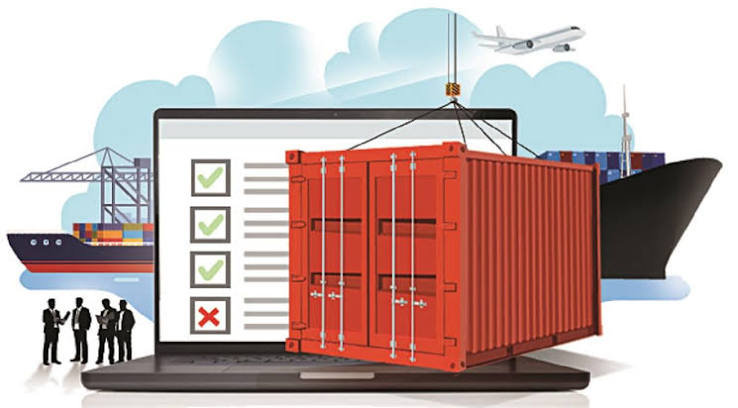
India’s newly announced Customs Integrated System (CIS) aims to modernize trade by replacing fragmented, manual processes with a unified, AI-driven digital platform. By streamlining cargo clearance and expanding non-intrusive scanning, the government seeks to reduce port dwell times, lower transaction costs, and boost India's global manufacturing and export competitiveness.
NEW DELHI — The Indian government is rolling out a new Customs Integrated System (CIS) to fundamentally modernize its trade and border administration, aiming to transition from a manual, officer-dependent process to a seamless, AI-driven digital environment. Announced by Union Minister of Finance & Corporate Affairs Nirmala Sitharaman during the Union Budget 2026-27, the initiative seeks to integrate disparate platforms into a single, scalable digital backbone over the next two years.
The development marks a critical shift for India’s logistics and manufacturing sectors, as the country works to reduce dwell times at major ports and integrate more deeply into global supply chains. By consolidating systems like the Indian Customs Electronic Gateway (ICEGATE) and the Risk Management System (RMS) under one roof, the government aims to create a unified “single window” for all regulatory approvals required for cargo clearance.
A Unified Digital Backbone
The primary objective of the Customs Integrated System is to eliminate the procedural friction that has historically plagued importers and exporters. Currently, the clearance of goods—particularly sensitive items like food, drugs, and animal products—requires coordination between various government agencies, often leading to delays.
According to government announcements, the new system will operationalize the clearance of these high-priority products by April 2026. Furthermore, the government is expanding the use of non-intrusive scanning technology. By leveraging advanced imaging and artificial intelligence (AI), the authorities aim to conduct risk assessments that will eventually allow for the scanning of every container across all major ports, minimizing the need for physical inspections.
Impact on Business and Trade
For businesses and investors, the shift to a trust-based, technology-enabled framework is intended to replace the adversarial, suspicion-heavy customs culture of the past. The government stated that this overhaul is designed to reduce the "operational friction" that has traditionally acted as a non-tariff barrier to trade.
The initiative also addresses long-standing industry demands for faster, time-bound resolutions. As India moves toward a more transparent, predictable environment, the government expects the CIS to lower transaction costs, which have often eroded the competitiveness of Indian exports. Industry experts note that as India finalizes various Free Trade Agreements (FTAs) with global partners, the modernization of customs administration is essential to ensure these pacts deliver tangible operational benefits.
Official Sources
The initiative is a cornerstone of the Union Budget 2026-27 as detailed by the Ministry of Finance. The Central Board of Indirect Taxes and Customs (CBIC) is overseeing the implementation of the platform, which will serve as the primary interface for trade-related digital clearances.
Why It Matters
The Customs Integrated System is expected to transform India into a more reliable node in global trading networks. By reducing the reliance on physical checks and streamlining documentation, the government aims to boost the ease of doing business, support small enterprises entering e-commerce markets, and provide the certainty required for "just-in-time" manufacturing.
Key Facts at a Glance
Unified Platform: The CIS will merge fragmented platforms such as ICEGATE, RMS, and ICES into one scalable system.
AI Integration: Advanced imaging and AI will be used for real-time risk assessment, targeting 100% container scanning at major ports.
Priority Clearance: Clearance processes for food, drugs, and wildlife products are slated to be operational on the new system by April 2026.
Industry Support: The rollout includes measures to remove value caps on courier exports to support small businesses and artisans.
FAQ
What will happen to the existing ICEGATE portal?
The new Customs Integrated System will integrate current platforms, including ICEGATE, into a single, unified interface for all customs-related activities.
When will the full system be operational?
The government plans to roll out the full platform within two years, with specific modules for high-priority cargo operationalized as early as April 2026.
How does this affect small businesses?
Small businesses and start-ups will benefit from simplified procedures and the removal of the ₹10 lakh value cap on courier exports, allowing easier access to global e-commerce markets.
Will this reduce physical checks?
Yes, the government is shifting toward non-intrusive, AI-based scanning to minimize routine physical examinations of cargo, thereby reducing dwell times.
Source: Ministry of Finance, Press Information Bureau, CBIC