India's Nifty 50 index pared early intraday gains on June 25, 2026, to trade up 0.42% around 24,113. While a 1.8% drop in global Brent crude prices to $72.49 lifted aviation and auto stocks, late-session derivatives expiry volatility limited the index's overall advance at the Mumbai exchange.
The benchmark equity index scales down from early session highs as derivative expiry volatility offsets the tailwinds of falling global crude oil prices.
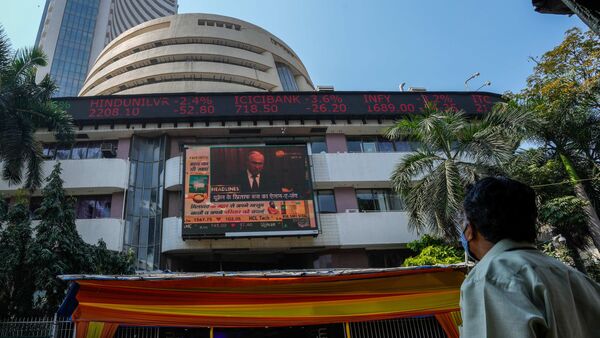
MUMBAI — India’s benchmark Nifty 50 index pared a portion of its early intraday gains during late afternoon trading on June 25, 2026, holding onto a moderate advance of 0.42% to trade around the 24,113 level. The market reversal occurred at the National Stock Exchange (NSE) in Mumbai, driven by localized cross-index volatility and profit-taking ahead of the weekly derivatives expiry window.
This market behavior is highly significant for domestic market participants today, as it reveals an ongoing tug-of-war between strong macroeconomic indicators—such as plunging energy prices—and technical options-hedging pressures.
Intraday Volatility Ahead of Derivatives Expiry
The trading session kicked off with significant upward momentum, following a global market rebound and a sharp decline in commodity pricing. The Nifty 50 index opened the day in positive territory at 24,125.85, eventually rallying to an intraday high of 24,261.60 during early afternoon trading, a gain of nearly 1%. However, as the session progressed into the afternoon, institutional traders trimmed their long exposure, causing the index to hit an intraday low of 24,107.80 before stabilizing near its current 0.42% gain.
According to real-time equity dashboard metrics compiled by the National Stock Exchange of India, this afternoon cooling period was heavily influenced by the weekly BSE Sensex options expiry. Market analysts noted that systematic cross-index unwinding between 2:00 PM and 3:15 PM IST triggered temporary selling pressure, which prevented the headline index from closing at its high for the day.
Softening Crude Oil Prices Support Market Floors
Despite the late-session retraction, the underlying sentiment in Indian equities remained structurally protected by a macro-driven retreat in global energy costs. Brent crude futures slipped 1.8% to trade around $72.49 per barrel, erasing risk premiums accumulated during recent geopolitical tensions in the Middle East. The normalisation of oil tanker transit routes through the vital Strait of Hormuz acted as the main catalyst behind this commodity price decline.
For an import-dependent economy like India, which imports over 80% of its crude requirements, lower oil prices directly alleviate corporate input cost pressures and ease broader fiscal deficit concerns. The cooling energy complex provided a solid defensive buffer for industrial sectors, successfully keeping the India VIX fear gauge suppressed at a relatively stable 12.93 level, down more than 3% during the session.
Sector Performance and Investor Impact
The mixed trading session directly impacted investor portfolios across several core industrial segments:
Automobiles and Aviation: Sectors heavily exposed to fuel and input logistics led the broader market rally. InterGlobe Aviation (IndiGo) surged 4.61% to ₹5,447.00, while Maruti Suzuki advanced 4.51% to ₹13,845.00, buoyed by expanding profit margin projections.
Banking and Finance: Private financial heavyweights provided essential structural support, with ICICI Bank and HDFC Bank gaining 2.08% and 1.37%, respectively.
Energy and Metals: Conversely, public sector energy counters acted as a major drag on the benchmark index. Coal India fell 1.82% to ₹433.70, while ONGC lost 1.60% to slide to ₹236.15, as falling oil prices dented upstream realization margins.
Official Sources Section
The financial parameters, index levels, and individual equity valuations referenced throughout this market report have been verified using automated transaction registries provided by the National Stock Exchange of India Ltd. and statutory compliance feeds published by the Securities and Exchange Board of India. Global commodity benchmarks were cross-referenced against energy trading logs issued by the Intercontinental Exchange (ICE).
Quote Section
"According to market strategists and retail research briefs from Geojit Financial Services, the biggest positive driver for the domestic equity ecosystem is Brent crude consistently falling below the $73 mark, which offsets foreign institutional investor outflows and stabilizes long-term retail portfolio valuations."
Why It Matters
The ability of the Nifty 50 index to defend its key support thresholds above the 24,000 mark demonstrates strong structural resilience within the Indian corporate sector. For institutional investors and retail consumers, a falling crude oil environment reduces the immediate risk of domestic imported inflation. This dynamic helps maintain corporate profit margins outside the energy production sector, even when short-term derivative expiries introduce temporary volatility to the trading floor.
Key Facts at a Glance
Index Trajectory: The Nifty 50 index climbed to an intraday high of 24,261.60 before paring gains to trade up 0.42%.
Expiry Impact: The late-afternoon price contraction coincided directly with cross-index weekly options expiry dynamics.
Macro Catalyst: Global Brent crude prices fell 1.8% toward $72.49 per barrel as shipping corridors normalized.
Volatility Index: The India VIX slipped by more than 3% to settle near a calm baseline of 12.93.
Top Gainer: InterGlobe Aviation (IndiGo) led the benchmark constituents, climbing 4.61%.
FAQ Section
Q1: Why did the Nifty 50 index pare its early morning gains? A1: The index scaled back from its intraday highs due to typical afternoon volatility and profit-taking linked to the weekly derivatives expiry window on the domestic exchanges.
Q2: How are falling international oil prices affecting Indian stocks? A2: Lower crude prices reduce raw material and shipping costs for local companies, boosting margins for aviation and auto sectors, though they negatively impact upstream oil producers like ONGC.
Q3: What were the key support and resistance zones during today's session? A3: The index maintained a firm baseline above its critical psychological support zone of 24,000, while meeting tough technical resistance near the 24,260 level.
Source: National Stock Exchange of India Ltd., Securities and Exchange Board of India