India’s Nifty 50 index rose 0.27% on June 18, 2026, closing at 24,153.20. The market rebounded from morning lows as optimism surrounding a US-Iran peace agreement offset a hawkish policy stance from the US Federal Reserve. Max Healthcare led gainers, while Jaiprakash Associates was officially delisted.
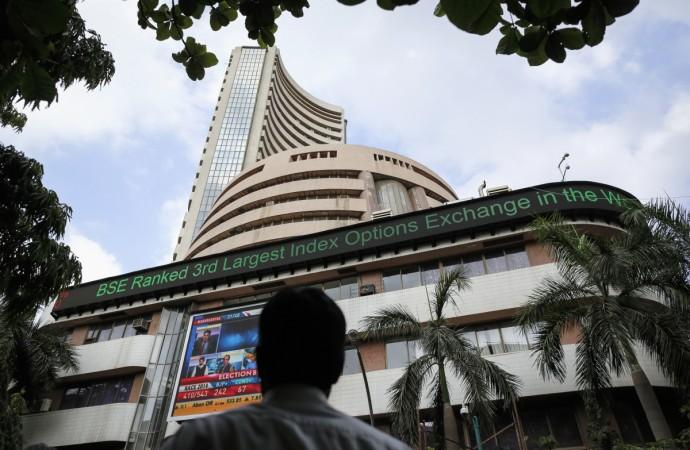
MUMBAI — India's benchmark equity index, the Nifty 50, closed higher today, June 18, 2026, advancing 0.27% to settle at 24,153.20 points. Trading on the National Stock Exchange (NSE) commenced on a volatile note, with the index sliding into negative territory during early hours before staging a afternoon recovery. Market analysts attributed the resilience to positive geopolitical developments in Europe, which helped offset local corporate friction and a hawkish monetary update from the United States central bank overnight.
Geopolitical Breakthrough Counteracts Hawkish US Federal Reserve
The domestic trading session unfolded against a backdrop of conflicting international economic catalysts. Sentiment strengthened significantly across Asian markets following verification from the White House that a formal Memorandum of Understanding (MoU) had been signed between the US and Iran during an international assembly in France. The agreement is widely projected by maritime logistics firms to facilitate the structured reopening of the Strait of Hormuz, easing global energy supply chain anxieties.
Conversely, the market's upward trajectory faced strong resistance from macro tightening fears. The US Federal Reserve concluded its policy meeting on Wednesday, keeping benchmark interest rates unchanged but introducing a hawkish bias. The central bank indicated that further interest rate hikes, rather than cuts, remain under active consideration for later in 2026 to curb sticky inflationary pressures.
Sector Performance and Leading Corporate Movers
Hospitality, healthcare, and state-backed defense enterprises led the afternoon recovery on the NSE, while heavy-weight information technology and automotive stocks limited broader market gains.
Max Healthcare Institute: Led individual gainers on the Nifty 50, surging 5.03% to close at an last traded price of ₹1,077.80 per share.
Trent Limited: The retail major advanced 2.33% to finish the session at ₹3,175.00 against its previous close.
Bharat Electronics Limited (BEL): The state-run defense manufacturer gained 2.12% to settle at ₹428.75 following fresh order pipeline projections.
Tata Motors Passenger Vehicles: Suffered the sharpest intraday correction, dropping over 8% to hit a low of ₹361.70 due to localized structural adjustments.
Infosys: Spearheaded losses among major IT exporters, declining 2.18% to ₹1,132.50 as a consequence of the hawkish outlook on US corporate tech spending.
Delisting of Jaiprakash Associates Takes Effect
A major point of domestic focus during Thursday's session was the official delisting of Jaiprakash Associates Limited (JAL) from both the NSE and the Bombay Stock Exchange (BSE), effective June 18, 2026. The administrative exit follows the final approval from the National Company Law Tribunal (NCLT) Allahabad Bench, which formalized the Adani Group’s ₹14,535-crore insolvency resolution plan. According to official corporate filings, the approved resolution framework entirely wipes out the existing equity structure, leaving an estimated 6.5 lakh retail shareholders without financial compensation.
Financial Impact on Market Stakeholders
The steady behavior of the Nifty 50 provides immediate short-term stability for retail mutual fund investors and domestic institutional investors (DIIs) who have aggressively capitalized on market dips. However, foreign portfolio investors (FPIs) maintained a cautious stance throughout the day, evaluating how higher-for-longer US interest rates might influence emerging market capital allocations and the valuation of large-cap Indian technology equities.
Official Sources Section
The underlying market data and corporate events reported in this briefing are based on official daily closing summaries published by the National Stock Exchange of India, regulatory corporate disclosures submitted to the Securities and Exchange Board of India (SEBI), and official legal transcripts released by the National Company Law Tribunal (NCLT).
Quote Section
"According to officials tracking institutional fund flows at Mumbai-based brokerage desks, the market's recovery from its morning low of 24,036.95 points demonstrates strong domestic liquidity buffers, though extended tech-sector corrections could cap near-term index milestones."
Why It Matters
For everyday savers and retail market participants, the Nifty 50's positive close indicates that domestic economic indicators remain strong enough to insulate local portfolios from external interest rate shocks. For energy importers and industrial consumers, the US-Iran diplomatic progress signals a highly anticipated cooling mechanism for crude oil import bills, which directly correlates to lowered domestic manufacturing input costs over the upcoming quarter.
Key Facts at a Glance
Closing Metric: The Nifty 50 index finished higher by 0.27%, closing officially at 24,153.20 points.
Intraday Volatility: The index rebounded from a session low of 24,036.95 to hit an intraday high of 24,157.45.
Global Catalyst: A signed peace MoU between the US and Iran eased energy shipping anxieties in the Middle East.
Corporate Delisting: Jaiprakash Associates was formally removed from public boards following its acquisition by the Adani Group.
FAQ Section
Q: Why did the Nifty 50 decline in early trade before recovering?
A: The index initially reacted negatively to the US Federal Reserve's hawkish warning regarding potential interest rate hikes. It later bounced back as investors shifted focus to declining crude oil pressures stemming from the US-Iran interim peace deal.
Q: What happens to retail investors holding shares of Jaiprakash Associates after June 18?
A: Under the NCLT-approved resolution plan, the company’s existing equity shareholding has been entirely cancelled as part of the Adani Group's takeover, meaning public equity holders receive no cash compensation.
Q: How did the banking sector react to recent regulatory updates?
A: Major financial institutions like State Bank of India (+1.54%) traded higher, supported by structural changes from the Reserve Bank of India (RBI) allowing competitive deposit mobilization aimed at easing local banking liquidity constraints.
Source: Official market analytics provided by the National Stock Exchange of India, judicial records from the National Company Law Appellate Tribunal, and global economic updates verified by the White House press desk.