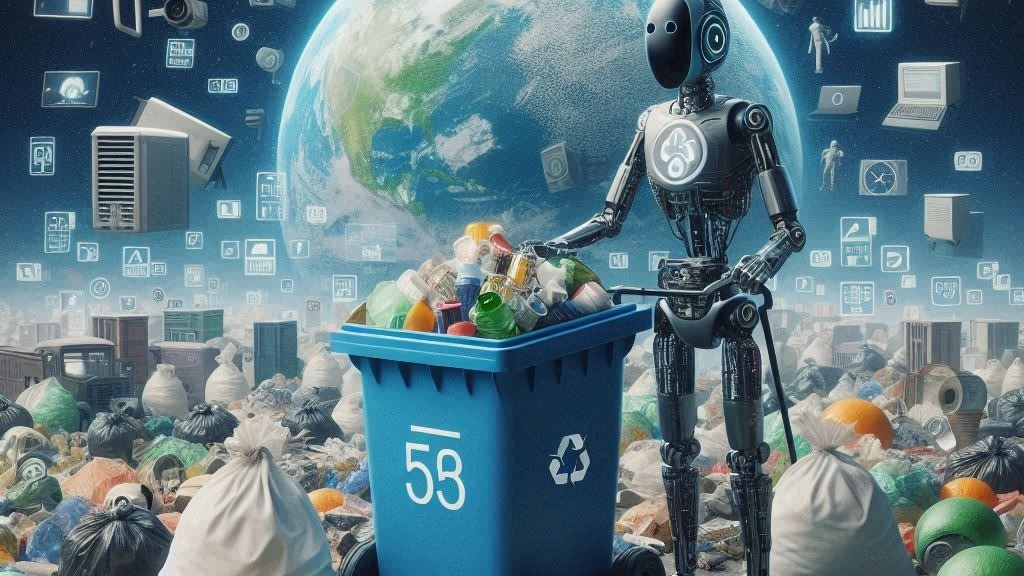
The Indore Municipal Corporation has partnered with IIM Indore to build an AI-powered smart waste and water management model. Executed across three scientific phases beginning August 2026, the two-year initiative will deploy predictive AI and IoT sensors to optimize solid waste routes, manage sewerage systems, and expand treated wastewater reclamation.
INDORE — The Indore Municipal Corporation (IMC) has formally approved a comprehensive two-year technical and research partnership to build an AI-powered smart waste and water management model. Announced on July 4, 2026, following a decisive Mayor-in-Council meeting chaired by Mayor Pushyamitra Bhargava, the municipality will collaborate directly with the Indian Institute of Management Indore (IIM-I) to integrate predictive artificial intelligence (AI) and Internet of Things (IoT) frameworks into the city’s civic ecosystem.
This technological integration aims to modernize Indore's municipal capabilities, shifting from reactive sanitation systems to automated, data-driven forecasting. As urban migration strains existing resources, the deployment of this model addresses critical future demands for solid waste collection, sewerage tracking, and treated wastewater recycling.
A Three-Phase Framework for Smart Sanitation
The joint initiative between the civic administration and the Center of Excellence at IIM Indore will be executed in three distinct, scientific phases spanning from August 2026 through September 2027.
Phase 1: Waste Optimization and Water Reclamation (August – December 2026)
The opening phase focuses on conducting a scientific evaluation of Indore’s centralized solid waste management infrastructure, which currently processes massive daily volumes at the Devguradia trenching ground. Researchers will analyze the operational efficiency of door-to-door garbage collection fleets and transport logistics using spatial data analytics. Simultaneously, the phase will establish comprehensive viability mappings for reusing treated wastewater across industrial and municipal sectors, reducing the city's reliance on fresh groundwater.
Phase 2: IoT Integration and Sewerage Monitoring (September 2026 – March 2027)
The second phase introduces live field testing of an IoT-based sewerage monitoring system. By deploying physical sensors and multi-parameter probes across the municipal sewer lines, the network will stream real-time data regarding flow rates, volume capacities, and initial blockage formations. Concurrently, the phase focuses on building a centralized digital database of waste management innovations and drafting modern financial sustainability models for operating public utility facilities.
Phase 3: AI Forecasting and Decision Support (April – September 2027)
The final phase centers on the development and deployment of an AI-based forecasting and decision-support system. Machine learning algorithms will be trained on municipal datasets to project long-term sanitation requirements, identify micro-trends in waste generation at the ward level, and automate resource allocation. This phase also prioritizes institutional capacity building, training municipal staff to interpret automated system readouts.
Impact on Citizens, Businesses, and Sustainability
The introduction of the Indore AI-powered smart waste and water management model has distinct practical implications for multiple stakeholders within the city:
For Citizens: Real-time monitoring significantly lowers the incidence of sewage overflows and reduces public health risks. Enhanced route optimization ensures consistent, predictable morning waste collection schedules across all wards.
For Businesses and Industries: Industrial units stand to benefit from a stabilized supply of high-grade treated wastewater, reducing corporate procurement costs for water resources while improving corporate environmental compliance.
For Municipal Investors: The transition toward automated IoT tracking reduces manual engineering inspections, leading to lower operational expenditures, prolonged equipment lifespans, and higher transparency in civic spending.
Official Sources Section
The administrative directives, timeline structures, and project goals outlined in this report are based on official public releases confirmed by the Indore Municipal Corporation and authorized project briefs detailing the institutional collaboration issued by the Center of Excellence at the Indian Institute of Management Indore. Additional infrastructure blueprints were validated through the technical documentation archives of Indore Smart City Development Limited.
Quote Section
"Our goal is to take Indore’s established sanitation model to new heights through technology, research, and innovation. This partnership with IIM Indore will develop smart, AI-based solutions that will make the city's sanitation system more scientific, transparent, and sustainable. We are confident that the model developed here will also serve as a blueprint for other cities across the country."
— Pushyamitra Bhargava, Mayor of Indore
Why It Matters
Indore has secured the title of India's cleanest city under the Swachh Survekshan national rankings for multiple consecutive years. However, projections indicate that localized waste generation could soon scale toward 2,000 tons per day, threatening to overextend static, centralized systems. By building a decentralized, AI-driven infrastructure model, the city is aggressively addressing the challenges of urban scale before they result in structural failures, setting a benchmark for smart city projects across developing nations.
Key Facts at a Glance
Institutional Partnership: A two-year technical collaboration signed between the Indore Municipal Corporation and IIM Indore.
Core Technologies: Integration of Internet of Things (IoT) fluid sensors, spatial data diagnostics, and automated AI forecasting engines.
Targeted Operations: Comprehensive optimization of door-to-door garbage collection networks and real-time monitoring of urban sewerage frameworks.
Project Duration: Active implementation structured across three successive operational phases starting August 2026 and concluding late 2027.
FAQ Section
How will artificial intelligence improve waste collection in Indore?
AI algorithms will continuously evaluate historical and real-time transit data from collection vehicles. This allows the system to dynamically optimize collection routes based on daily traffic patterns, fuel consumption metrics, and localized waste volume fluctuations across individual wards.
What is the primary purpose of the IoT sewerage monitoring system?
The IoT network uses physical sensors embedded in the sewage infrastructure to measure fluid pressures, velocity, and wastewater chemical consistency. This enables the municipal command center to receive automated warnings about potential blockages or overflows before they disrupt public areas.
How does this project support the circular economy?
The model actively evaluates the scalability of treated wastewater recycling. By matching treated output with municipal and industrial cooling needs, the city minimizes groundwater depletion and turns processed wastewater into an active economic resource.
Source: Official regulatory announcements from the Mayor-in-Council, Indore Municipal Corporation; institutional research project declarations, Indian Institute of Management Indore.