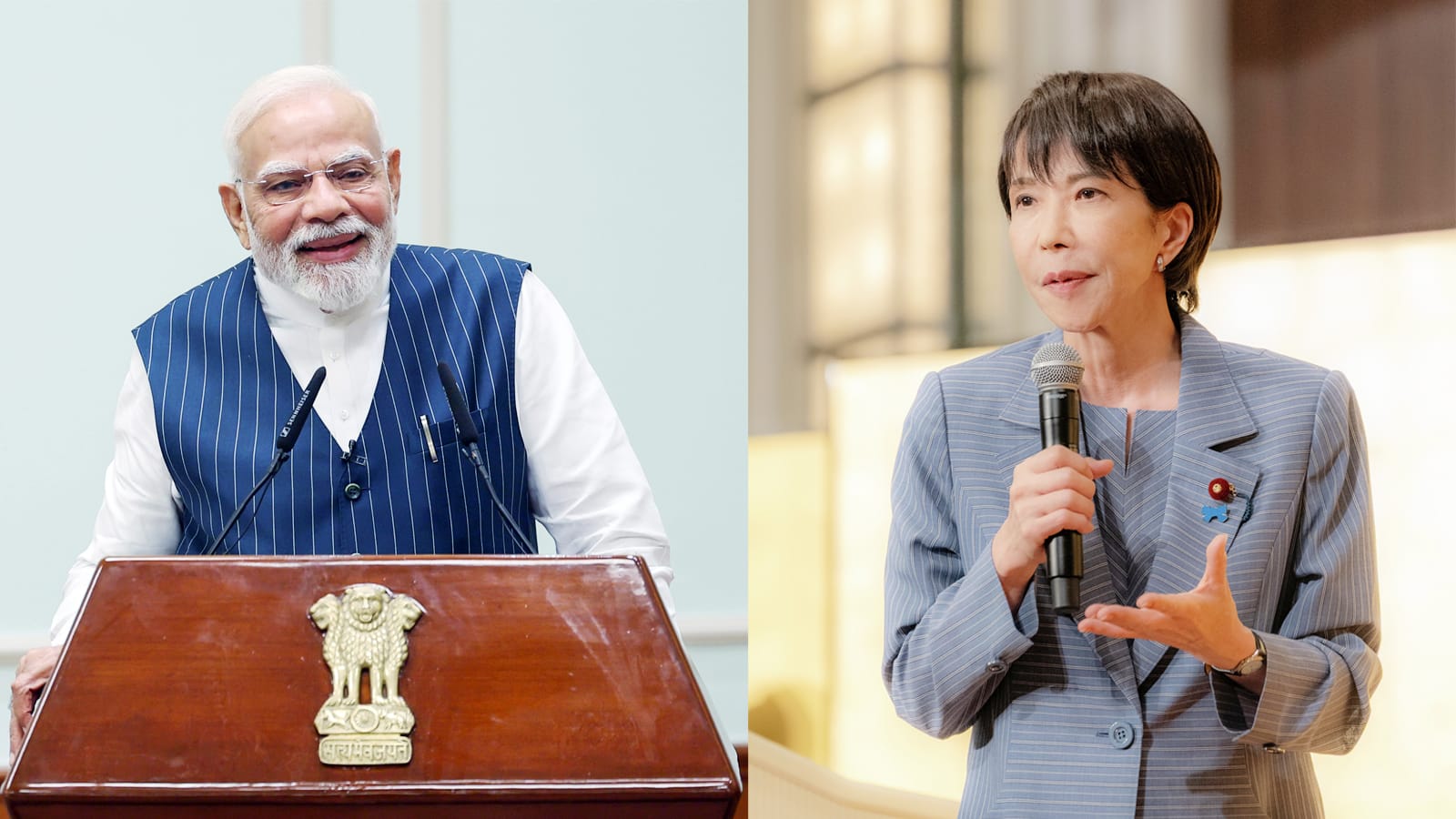
Japanese Prime Minister Sanae Takaichi will travel to New Delhi from July 1 to July 3, 2026, for the 16th India-Japan Annual Summit. Meeting with Prime Minister Narendra Modi, the high-level visit aims to strengthen bilateral defense ties, secure maritime pathways, and advance technological investment within the Indo-Pacific region.
The Ministry of External Affairs (MEA) confirmed on Friday that Japanese Prime Minister Sanae Takaichi will undertake a three-day official visit to New Delhi from July 1 to July 3, 2026. Accepting an official invitation from Indian Prime Minister Narendra Modi, Takaichi's arrival marks her first formal trip to India since assuming office in October 2025. This diplomatic milestone will facilitate the 16th India-Japan Annual Summit, an event designed to expand economic collaboration, review shared geopolitical strategies, and fortify bilateral trade in the Indo-Pacific region.
16th India-Japan Annual Summit Relocated to Capital
The highly anticipated leadership summit was initially slated to occur in Guwahati, the largest metropolitan hub in India's northeastern state of Assam. However, following a series of bilateral logistics evaluations, administrative officials altered the itinerary to anchor all high-level diplomatic deliberations exclusively within New Delhi.
According to a press statement released by the Ministry of External Affairs (MEA), the revised schedule ensures optimal framework coordination for both delegations. The structural adjustments focus on enhancing the "shuttle diplomacy" paradigm—a long-standing tradition of reciprocal annual leadership visits that underpins the robust framework of the India-Japan Special Strategic and Global Partnership. This upcoming New Delhi convention follows Prime Minister Narendra Modi’s state visit to Tokyo in August 2025 for the 15th iteration of the annual summit.
Advancing Indo-Pacific Security and Economic Cooperation
Geopolitical analysts observe that the scheduled dialogue arrives at a critical juncture for both Asian economies. Japan is seeking to accelerate its partnerships across Asia amid evolving international trade architectures and expanding regional assertiveness from neighboring manufacturing powers.
The bilateral discussions between Prime Minister Takaichi and Prime Minister Modi will cover the full spectrum of security coordination, tech-sharing frameworks, and supply chain resilience. The alignment of India's Act-East Policy and its principle-driven SAGAR (Security and Growth for All in the Region) vision with Japan’s Free and Open Indo-Pacific (FOIP) doctrine forms the core architecture of their diplomatic engagement. The leaders are poised to establish deep structural roadmaps regarding joint defense manufacturing, maritime safety exercises, and infrastructure investments across South Asia.
Implications for Corporate Investors and Consumers
The upcoming bilateral discussions carry significant practical value for multinational corporations, digital innovators, and industrial enterprises operating across both countries. Japan remains one of India's largest direct foreign investors, funding multi-billion dollar transportation developments, including the high-speed Mumbai-Ahmedabad rail corridor, alongside widespread clean-energy projects.
For consumers and corporate entities, further integration means streamlined intellectual property exchanges and enhanced technology transfers in artificial intelligence, semiconductor production, and green energy solutions. The leaders are expected to solidify a framework for economic security that insulates trade pathways from global supply bottlenecks. This institutional backing is intended to minimize operational risks for Japanese manufacturing conglomerates expanding their physical production bases inside the Indian industrial corridors.
Official Sources Section
All administrative frameworks, specific dates, and programmatic adjustments regarding the bilateral visit are sourced directly from authenticated public communications issued by national agencies. Primary documentation was supplied by the Ministry of External Affairs of India via their media release division, supplemented by the formal press briefings hosted by Japan's Chief Cabinet Secretary Minoru Kihara at the Prime Minister's Office of Japan.
Quote Section
"We want to further strengthen our strategic relationship with India by promoting cooperation for economic security and economic growth," Japan's Chief Cabinet Secretary Minoru Kihara stated during a press conference detailing the foundational objectives of Prime Minister Takaichi's upcoming itinerary.
Why It Matters
The absolute policy continuity between New Delhi and Tokyo provides a predictable foundation for regional trade and security configurations. As global market paradigms experience structural shifts, the formalization of joint economic security frameworks ensures that defense cooperation, tech innovation, and cross-border investments face minimal bureaucratic disruption. By locking in long-term supply chain partnerships, both nations look to safeguard domestic industry growth against sudden global macroeconomic adjustments.
Key Facts at a Glance
Official Timeline: The Japanese PM to be in Delhi next week from July 1 to July 3, 2026, for a comprehensive three-day state visit.
Institutional Context: This marks the 16th India-Japan Annual Summit and represents Prime Minister Takaichi's maiden official journey to India since taking office.
Geopolitical Sync: Deliberations will formally bridge India's Act-East policy models with Japan's updated Free and Open Indo-Pacific (FOIP) strategic visions.
Strategic Re-Route: The summit venue transitioned from its preliminary location in Guwahati to central government facilities in New Delhi.
Frequently Asked Questions (FAQ)
What is the primary purpose of the Japanese PM's visit to New Delhi next week?
The primary purpose is to participate in the 16th India-Japan Annual Summit, where the two leaders will review bilateral cooperation and address economic security, defense ties, and regional stability.
Why was the summit location changed from Guwahati to New Delhi?
According to official press briefings, the location was adjusted to New Delhi to streamline administrative workflows and balance logistical parameters for both traveling diplomatic delegations.
When did the last India-Japan Annual Summit take place?
The 15th India-Japan Annual Summit took place in Tokyo, Japan, in August 2025 during an official visit by Indian Prime Minister Narendra Modi.
Which sectors are expected to benefit most from this bilateral meeting?
Trade, defense manufacturing, semiconductor technology, infrastructure development, and renewable energy sectors stand to gain the most from the upcoming economic agreements.
Source: Ministry of External Affairs of India Press Releases, Official Communications of the Prime Minister's Office of Japan.