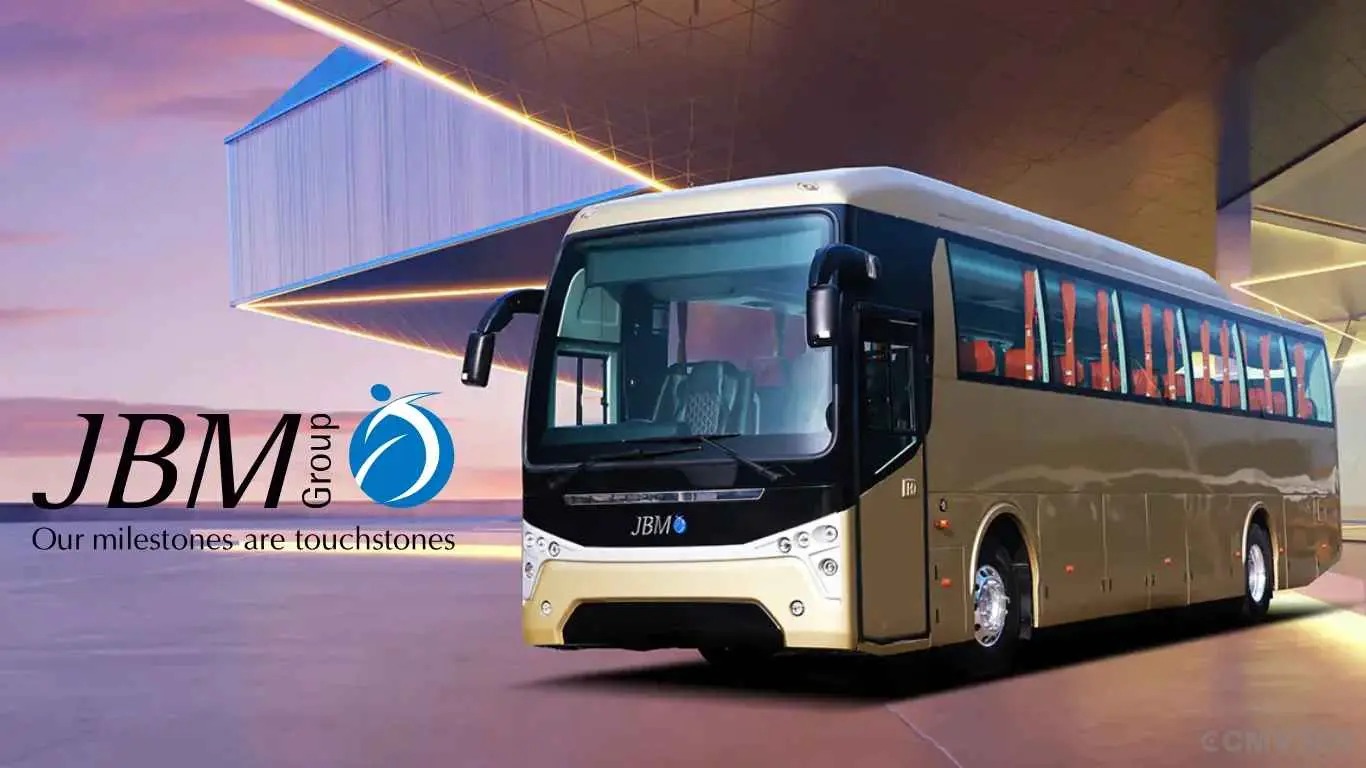
JBM Auto has captured a 49% share of India's electric bus market as of May 2026, driven by record registrations and high demand for its integrated EV platforms. Led by MD Nishant Arya, the company is expanding its manufacturing capacity to support India’s goal of widespread public transport electrification.
JBM Auto Ltd. has solidified its position as India’s leading electric bus manufacturer, capturing a significant 49% market share in May 2026. This milestone, backed by 157 new vehicle registrations, underscores the company's aggressive expansion and the rapid adoption of sustainable public transit solutions across the country. Following a transformative fiscal year 2026, the company continues to leverage its robust manufacturing capacity to meet growing demand from state transport undertakings and private operators.
Strengthening Market Leadership
The surge in May 2026 registrations—rising from a 33% market share in April—highlights the firm’s operational scale. According to official data from the Vahan portal, JBM Auto now holds the highest number of electric bus registrations in the industry. This performance is supported by the company’s extensive manufacturing infrastructure in the National Capital Region (NCR), which houses one of the world’s largest integrated electric bus production facilities outside of China, boasting an annual capacity of 20,000 units.
The company's growth is inextricably linked to the broader national push for decarbonization. As India moves toward its goal of 60% electric vehicle (EV) penetration in the bus segment by 2030, JBM Auto has positioned itself as a primary provider of end-to-end electric mobility solutions, covering everything from vehicle manufacturing to the development of allied charging infrastructure.
Operational Excellence and Strategy
JBM Auto’s business model focuses on "Gross Cost Contracting" (GCC), a framework that allows state transport undertakings to procure, operate, and maintain electric buses without initial capital investment. By managing both the vehicle and the charging ecosystem, the company minimizes entry barriers for municipal transit authorities.
The firm’s recent quarterly results for Q4 FY26 reflect this operational success, with consolidated net profit jumping 11.91% to ₹74.24 crore and revenue from operations growing by 12.55% to ₹1,852.27 crore compared to the previous year.
Official Perspective
In a recent statement regarding the company's trajectory, Nishant Arya, Vice Chairman and Managing Director of JBM Auto, emphasized the company’s alignment with national sustainability goals.
"Our growth reflects a clear focus on decarbonizing public transport while aligning with global benchmarks in sustainable mobility," stated Arya. "Our aim is not only to reduce emissions but also to enhance everyday mobility by making it smarter, safer, and more accessible. We are honored to lead India’s transition toward electric mobility, contributing significantly to the vision of a carbon-neutral nation."
Why It Matters
For citizens and municipal authorities, JBM Auto's scaling production means faster deployment of non-polluting public transport, contributing to improved air quality in major urban centers. For investors, the company’s consistent increase in market share and healthy order book of over 10,000 buses suggest a strong long-term outlook. Furthermore, as the company expands its footprint into luxury coaches and tarmac buses, it is diversifying its revenue streams while maintaining its dominance in city-based public transit.
Key Facts at a Glance
Market Share: JBM Auto achieved a 49% market share in India’s electric bus segment in May 2026.
Production Capacity: The company operates a facility with an annual capacity of 20,000 electric buses.
Environmental Impact: JBM electric buses have clocked over 400 million e-kilometers, saving an estimated 1 billion kilograms of CO₂ emissions.
Financial Performance: Consolidated Q4 FY26 revenue reached ₹1,852.27 crore, reflecting a 12.55% year-on-year increase.
Diversified Portfolio: Beyond city buses, JBM Auto captures 79% of the electric tarmac bus market and over 50% of the intercity luxury coach market.
FAQ
What is the Gross Cost Contracting (GCC) model used by JBM Auto?
The GCC model allows transport operators to procure buses and charging infrastructure while being paid based on the number of kilometers traveled, removing the need for state agencies to make large upfront capital investments.
What is the total order book for JBM Auto?
The company currently maintains a robust order book of more than 10,000 electric buses across various Indian states.
Why did JBM Auto's market share increase in May 2026?
The increase is attributed to strong registration volumes and the integration of Telangana’s vehicle registration data into the national Vahan portal, providing a more comprehensive view of the market.
Source: JBM Auto Ltd, Vahan Portal, Business Standard, Angel One, Hindustan Times Auto