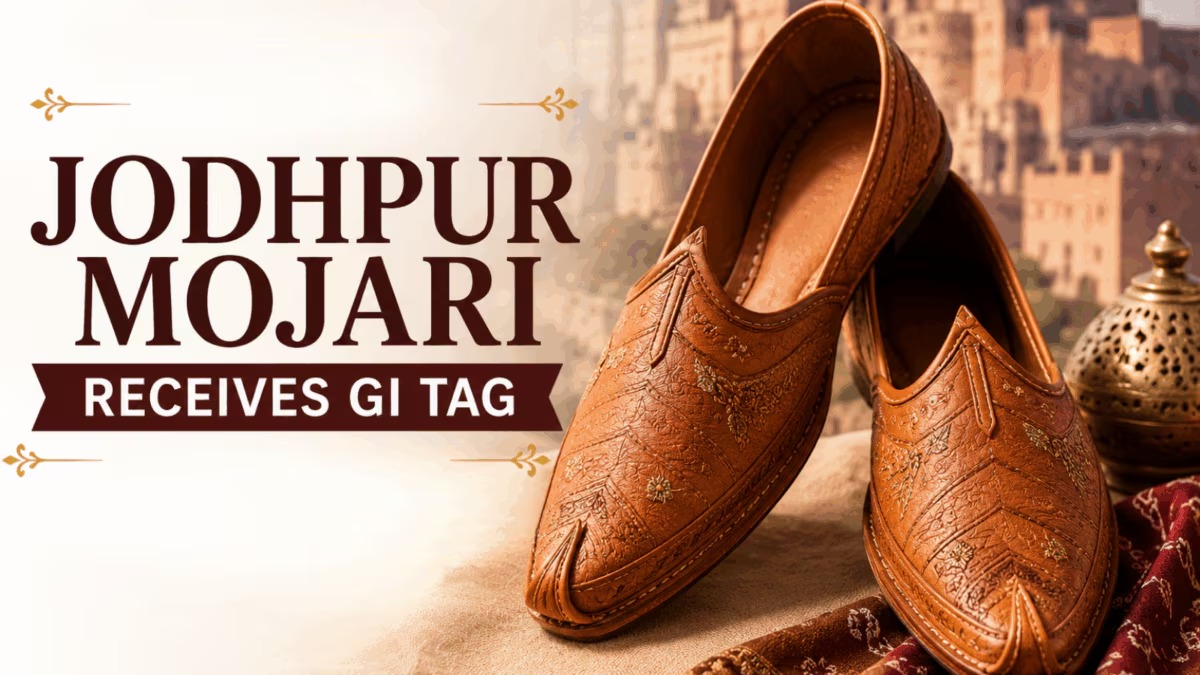
Rajasthan’s iconic 200-year-old Jodhpuri Mojari craft has officially received a Geographical Indication (GI) tag. This recognition safeguards the heritage footwear’s authenticity, preventing imitation and boosting the livelihoods of over 35,000 local artisans while opening new avenues for global exports and premium market expansion in the Marwar region.
Official recognition provides legal protection and a global branding boost for Rajasthan’s historic handcrafted footwear industry.
JODHPUR — The centuries-old craft of Jodhpuri Mojari, the traditional handcrafted leather footwear native to Rajasthan, has been officially awarded the Geographical Indication (GI) tag. This milestone, granted by the Geographical Indications Registry in Chennai, offers formal protection to the unique heritage of the Marwar region’s artisan community and is expected to significantly enhance the craft's domestic and international market presence.
The GI certificate was formally presented on July 9, 2026, to the Jodhpur Handicraft Exporters Association and the Gram Vikas Seva Sansthan, the organizations that spearheaded the application process, which began in early 2021 with the support of the Union Ministry of Textiles.
A Tradition Rooted in Royal Heritage
The craft of creating Jodhpuri Mojari dates back nearly 200 years. Originally patronized by the royals of Marwar, these intricately designed slip-on shoes were historically crafted by the Jinagar community, who were traditionally saddle and leather-sheath makers. Over the centuries, the craft evolved into an iconic form of footwear characterized by its comfortable fit and detailed embroidery.
Today, the industry is a vital economic pillar for the region. According to industry data, the craft is practiced in over 5,000 households across Jodhpur, involving approximately 400 manufacturers and over 35,000 artisans. The domestic market for Jodhpuri Mojari is currently valued at roughly ₹100 crore, with an additional ₹10 crore in annual exports.
Impact on Artisans and the Market
The GI tag serves as a collective community right, protecting the authentic Jodhpuri Mojari from imitation and fraudulent use of the name. Industry representatives believe this legal framework will provide the necessary "armor" for artisans against the influx of mass-produced, machine-made lookalikes that have previously diluted the market value of handcrafted goods.
"This recognition is historic," said Bharat Dinesh, President of the Jodhpur Handicraft Exporters Association. "The GI tag gives our traditional craft a distinct identity globally and is expected to boost local artisans, streamline the handicraft industry, and accelerate export growth."
Official Sources
Quote Section
"According to officials, this GI tag provides legal protection to the craft, preventing unauthorized use and ensuring that the economic and cultural value of the traditional skill is reserved for the original producers of the region."
Why It Matters
For consumers and investors, the GI status guarantees authenticity and quality. Beyond its cultural significance, the tag is projected to double the industry's business within two years by expanding export opportunities and attracting interest from e-commerce platforms seeking high-quality, heritage-linked products.
Key Facts at a Glance
Origin: The craft dates back nearly 200 years in the Marwar region of Rajasthan.
Economic Scale: The Jodhpuri Mojari industry supports over 35,000 artisans across 5,000 households.
Collective Right: Unlike a trademark, the GI tag is a community-owned mark representing the region's collective heritage.
Market Value: The domestic sector is valued at ₹100 crore, with an export value of ₹10 crore.
FAQ
What is a GI tag?
A Geographical Indication (GI) tag is a legal sign used on products that have a specific geographical origin and possess qualities or a reputation that are due to that origin.
Why is the Jodhpuri Mojari GI tag significant?
It protects the traditional craftsmanship from imitation, ensures better pricing for artisans, and provides a distinct global brand identity.
Who owns the GI tag for Jodhpuri Mojari?
The tag belongs collectively to the Jodhpur Handicraft Exporters Association and the Gram Vikas Seva Sansthan, rather than any individual.
How long does a GI tag last?
A GI registration is valid for 10 years, after which it can be renewed.
Source: The Indian Express, ETV Bharat, ABPLive