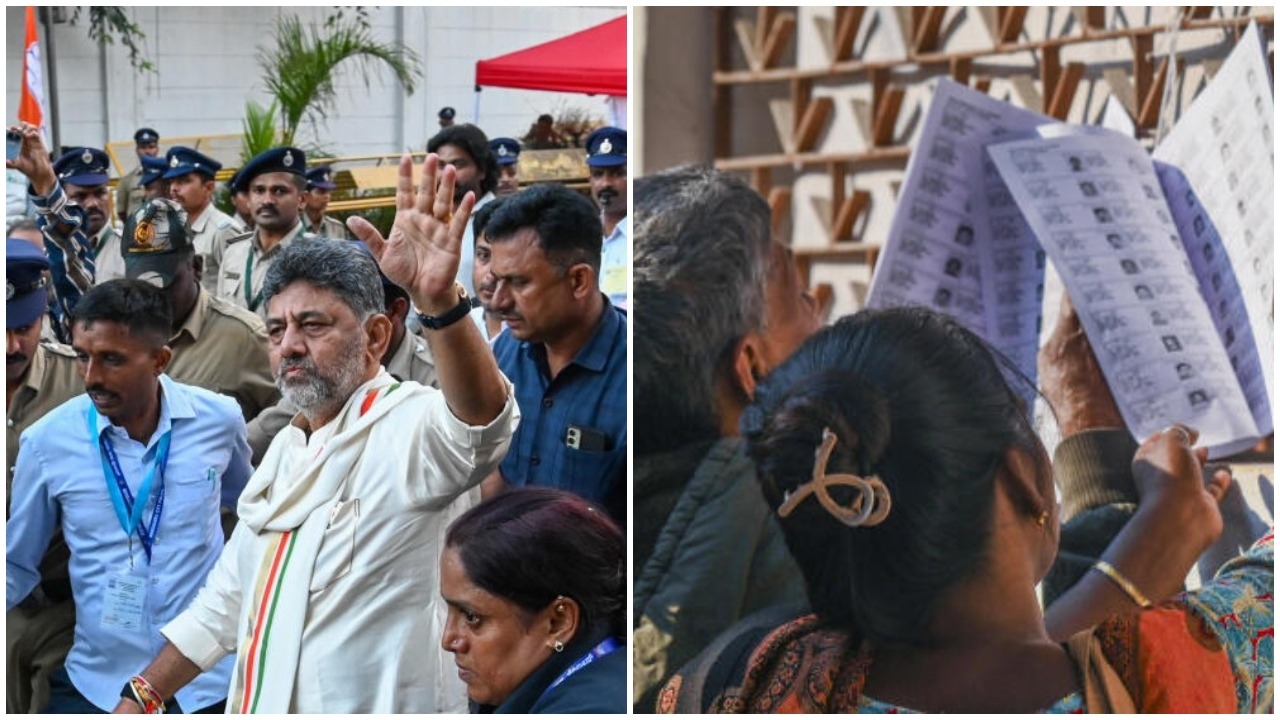
The Karnataka government has released comprehensive guidelines to issue Permanent Residence Certificates (PRCs) under the Sakala Act to assist citizens ahead of the Election Commission’s Special Intensive Revision. Validated by Tahsildars across 49,320 help desks, the time-bound framework protects voter registration and prevents arbitrary deletions from electoral rolls.
BENGALURU — The Government of Karnataka has officially notified comprehensive operational guidelines for the issuance of Permanent Residence Certificates (PRCs) across the state. Announcing the policy shift on Monday, June 29, 2026, Chief Minister D.K. Shivakumar confirmed that the rapid rollout is strategically designed to help citizens smoothly navigate the Election Commission of India’s (ECI) upcoming Special Intensive Revision (SIR) of electoral rolls. By bringing PRCs under the strict statutory mandate of the Karnataka Sakala Services Act, 2011, the administration aims to prevent large-scale voter disenfranchisement ahead of the intensive house-to-house enumeration process.
Overcoming the ECI Documentation Bottleneck
The immediate catalyst for the state's intervention stems from a structural disconnect between local administrative documents and federal election protocols. Previously, Karnataka’s rural bodies directed Panchayat Development Officers (PDOs) to issue standard residential certificates to voters lacking high-tier address proof. However, official guidelines issued by the Election Commission explicitly stated that ordinary residential certificates do not meet its rigid criteria, accepting only permanent residence or domicile certificates issued by a competent state revenue officer.
To bridge this documentation gap before the nationwide verification drive begins on June 30, the state has formally designated Tahsildars and Deputy Tahsildars as the sole competent authorities empowered to sign off on valid PRCs. To ensure accountability, Assistant Commissioners will function as the primary appellate authority, while Deputy Commissioners will serve as the final revisional authority to handle contested rejections within a strict 30-to-60-day window.
Digital Integration and Multi-Channel Facilitation Networks
To maximize accessibility for vulnerable demographics, the government has integrated the application pipeline into existing digital service gateways:
Online Channels: Citizens can directly file applications and track approvals through the state's unified Seva Sindhu Portal or the dedicated Atal Jana Snehi Kendra platform.
Decentralized Counters: Physical applications will be accepted across established citizen service networks, including Bengaluru One, Karnataka One, and Grama One hubs.
Ward-Level Help Desks: Local bodies are legally mandated to establish 49,320 localized Help Desk-cum-Facilitation Counters at every gram panchayat and urban ward office within seven days.
Database Verification: To reduce red tape, the issuing authorities will cross-reference pre-filled applications with authenticated state repositories, including the Kutumba family database, educational registries, and existing electoral logs.
Rigorous Eligibility Criteria and Compliance Checks
The freshly enacted guidelines outline clear historical and legal connections required to establish permanent residency in Karnataka. Applicants must satisfy at least one of the following primary metrics: birth within the state, continuous physical residence or education in a recognized regional institution for at least 10 academic years up to Class 12, or verified ownership of immovable residential property. Alternatively, active public service for a minimum of seven years or marriage to a permanent resident will qualify an individual.
The order explicitly balances inclusivity with systemic legal security. Where documentary proof remains incomplete, local authorities are authorized to finalize decisions based on on-site inquiries and credible oral testimonies. However, the state has warned that any submission of fraudulent details or forged records to obtain a PRC will immediately invite criminal prosecution under the Bharatiya Nyaya Sanhita (BNS).
Official Sources Section
The administrative parameters, technology links, and verification protocols are managed under the statutory jurisdiction of the Revenue Department of Karnataka and the Chief Electoral Officer, Karnataka. Institutional delivery timelines are tracked via the official Sakala Mission Portal.
Quote Section
"Starting Tuesday till July 29, Booth-Level Officers (BLOs) will come home and give you an enumeration form," Chief Minister D.K. Shivakumar stated during a press briefing at the state secretariat. "Failure to enroll during this Special Intensive Revision could result in the direct deletion of your names from the electoral rolls. If you lose the right to vote, you risk losing access to crucial government benefits. The right to vote is fundamentally the right to live, and our administration is setting up these facilitation centers to protect every genuine citizen."
Why It Matters
The rapid implementation of the PRC framework has vital practical implications for millions of migrant workers, long-term tenants, and marginalized communities across Karnataka. Because the upcoming SIR framework requires precise documentation to preserve voter enrollment, having a legally airtight certificate prevents arbitrary name deletions by booth-level officers. For businesses and public institutions, processing these records under the Sakala Act guarantees a transparent, corruption-free turnaround, ensuring administrative transparency while preserving the democratic fabric of the state.
Key Facts at a Glance
Policy Catalyst: Launched to align documentation with the ECI's rigid Special Intensive Revision (SIR) mandates.
Legal Shielding: Brought under the Karnataka Sakala Services Act, 2011, to enforce strict, time-bound delivery.
Network Scope: Spans 49,320 decentralized help desks across all municipal wards and gram panchayats.
Competent Authority: Exclusively limited to Tahsildars and Deputy Tahsildars to satisfy federal election compliance.
Verification Window: House-to-house enumeration commenced on June 30 and runs through July 29, 2026.
FAQ Section
What is the main difference between a regular residential certificate and a Permanent Residence Certificate (PRC)?
A standard residential certificate simply states a person's current address based on basic documents like a rental agreement or utility bill. A PRC requires proof of a long-term connection to the state, such as living or studying in Karnataka for at least 10 years or holding immovable property.
Can tenants living in rented houses apply for a Permanent Residence Certificate?
Yes. Chief Minister D.K. Shivakumar clarified that tenants and individuals who do not own a home can obtain their residency certificates by presenting their Aadhaar card, current electoral roll data, or other valid identity papers to local authorities.
What happens if a citizen misses the Special Intensive Revision (SIR) window?
If an eligible voter fails to submit the completed enumeration form to the visiting Booth-Level Officer before the July 29 deadline, they risk having their name removed from the official draft electoral rolls, which will be published on August 5, 2026.
Source: Revenue Department of Karnataka, Chief Electoral Officer, Karnataka, Sakala Mission Portal, Deccan Herald State Bureau.