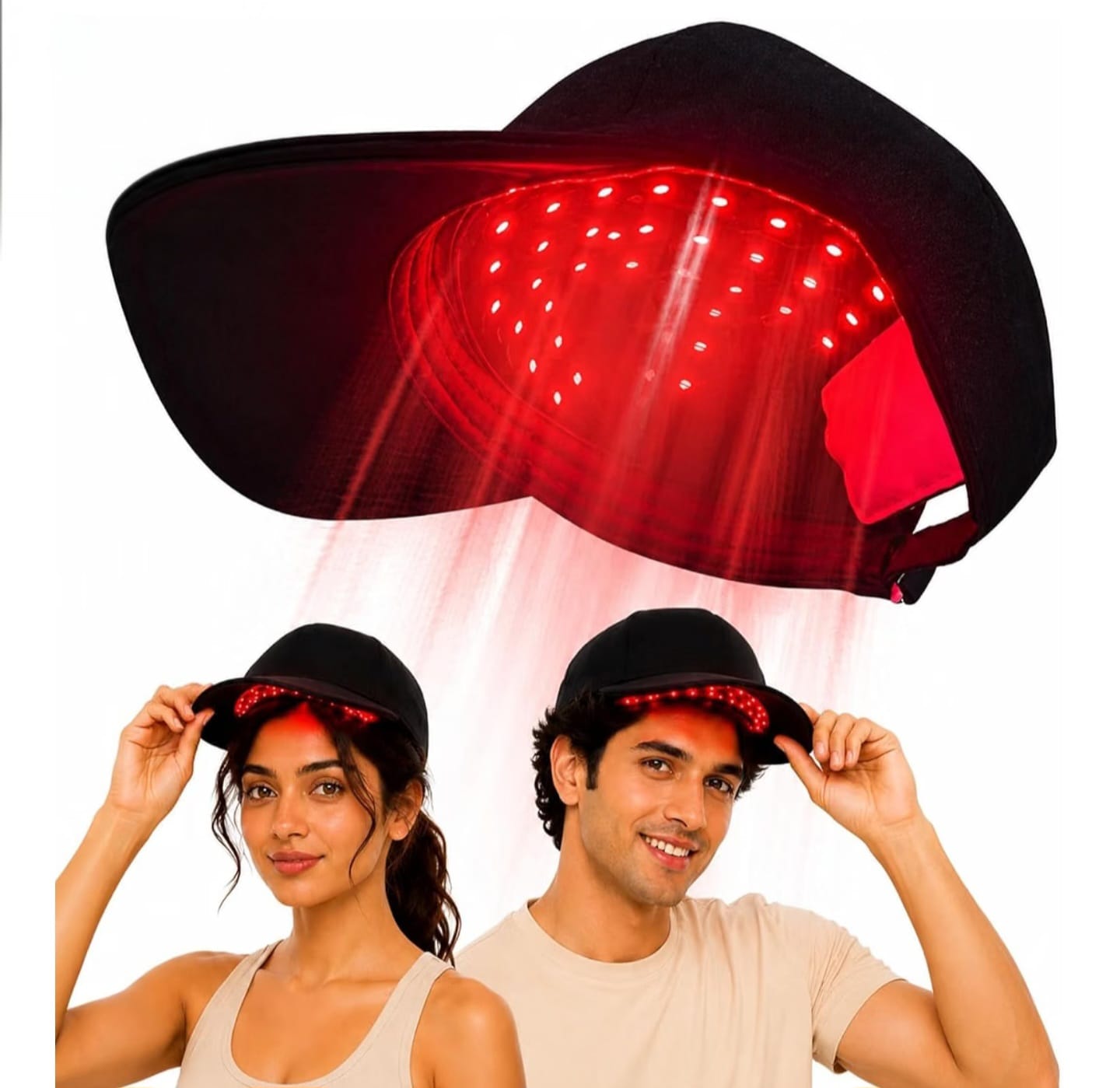
Hair-growth laser caps are trending as non-invasive home treatments for pattern thinning,driven by photobiomodulation technology.While dermatological studies confirm modest,statistically significant gains in hair density for early-stage hair loss over months of consistent use,specialists emphasize that these devices require active follicles and are most effective when paired with professional medical diagnoses.
As consumer demand for non-invasive aesthetic treatments accelerates, hair-growth laser caps and helmets have emerged as a dominant trend in personal wellness. Utilising low-level laser therapy (LLLT), these wearable devices promise to stimulate cellular activity within hair follicles and combat pattern baldness without the need for systemic medications. However, medical professionals emphasize that while the underlying technology is backed by credible clinical data, consumer expectations often outpace what the devices are biologically capable of delivering.
Understanding Low-Level Laser Therapy (LLLT)
The technology behind hair-growth caps relies on photobiomodulation, a process where specific wavelengths of red or near-infrared light are directed at the scalp. According to clinical researchers, the absorbed light energy increases adenosine triphosphate (ATP) production within the mitochondria of cellular structures.
This biochemical boost is theorized to enhance microcirculation in the scalp, reduce localized inflammation, and prolong the anagen (growth) phase of the hair cycle while reactivating miniaturized follicles. Regulatory bodies typically clear these devices through the 510(k) pathway, which establishes that a device is safe and substantially equivalent to existing products, though dermatologists note that clearance does not automatically equate to guaranteed efficacy for every user.
Clinical Efficacy and Realistic Expectations
Independent systematic reviews and meta-analyses published in dermatological journals indicate that LLLT can produce statistically significant improvements in hair density over extended periods. Clinical trials tracking patients with androgenetic alopecia demonstrate average gains ranging from roughly 17 to 25 hairs per square centimeter after consistent use spanning six to twelve months.
Medical experts stress that these results represent modest, gradual improvements rather than miraculous transformations. Dermatologists caution that laser caps are primarily effective for individuals with active, living follicles—such as those in the early to moderate stages of male or female pattern hair loss—and will not restore hair to a completely bald scalp.
Impact on Consumers and Patients
For consumers navigating thinning hair, laser caps offer a convenient, hands-free alternative to topical solutions or daily oral medications. However, financial investment remains a significant factor, with retail prices ranging from several hundred to over a thousand dollars per device.
Specialists advise patients to seek a formal professional diagnosis before purchasing, as hair loss stemming from scarring alopecias, autoimmune conditions like alopecia areata, or systemic nutritional deficiencies will not respond to photobiomodulation and may worsen if underlying causes are left untreated.
Official Sources and Expert Insights
According to official medical announcements, dermatological association guidelines, and peer-reviewed clinical literature, low-level laser therapy is recognized as a viable adjunctive or standalone treatment option.
Organizers stated that while consumer adoption of wearable wellness tech continues to expand, prospective users should coordinate device use with a qualified physician to ensure comprehensive care. Regulatory filings confirm that commercial devices must adhere to strict manufacturing safety standards, though efficacy outcomes continue to be evaluated through ongoing post-market clinical studies.
"The technology genuinely works, for a specific group of people, to a modest degree, over a long period. It is not a cure, it will not restore a bald scalp..."
Why It Matters
Evaluating the real-world utility of hair-growth laser caps prevents consumers from misallocating financial resources and helps patients avoid delaying necessary medical interventions for progressive hair disorders. Understanding that LLLT requires strict long-term adherence—often multiple sessions per week for months—ensures that users approach the therapy with realistic milestones.
Key Facts at a Glance
Mechanism: Utilizes photobiomodulation (typically 650 nm wavelengths) to stimulate cellular energy and blood flow in scalp tissue.
Target Audience: Best suited for early-to-moderate androgenetic alopecia in individuals with active hair follicles.
Timeline: Visible reductions in shedding and minor density increases typically require 3 to 6 months of consistent use.
Safety Profile: Generally well-tolerated with a low incidence of minor side effects such as temporary scalp warmth or dryness.
Frequently Asked Questions
Do laser caps work for complete baldness?
No. Dermatologists confirm that laser caps require living, miniaturized hair follicles to function; they cannot regrow hair on areas of the scalp that have been completely bald for extended periods.
Can laser caps be combined with other hair loss treatments?
Yes. Medical professionals frequently recommend integrating LLLT devices into a multimodal treatment plan that may include topical minoxidil or oral medications for enhanced results.
How long do you need to use a laser cap per session?
Treatment protocols vary by manufacturer, typically requiring sessions lasting between 6 to 30 minutes, performed three times a week or daily.
Are these devices FDA-approved?
Most commercial devices secure FDA 510(k) clearance, which verifies device safety and substantial equivalence rather than acting as an absolute guarantee of clinical effectiveness.
Source: American Academy of Dermatology, National Institutes of Health Clinical Database, U.S. Food and Drug Administration 510(k) Premarket Notifications, Journal of Biophotonics