At the Bharat Innovates 2026 conclave in Nice, French President Emmanuel Macron praised India’s Chandrayaan-3 mission as definitive proof that the country is spearheading global innovation. Macron highlighted India’s immense demographic dividend and cost-efficient industrial execution, while cementing a Franco-Indian pact for open, ethical artificial intelligence.
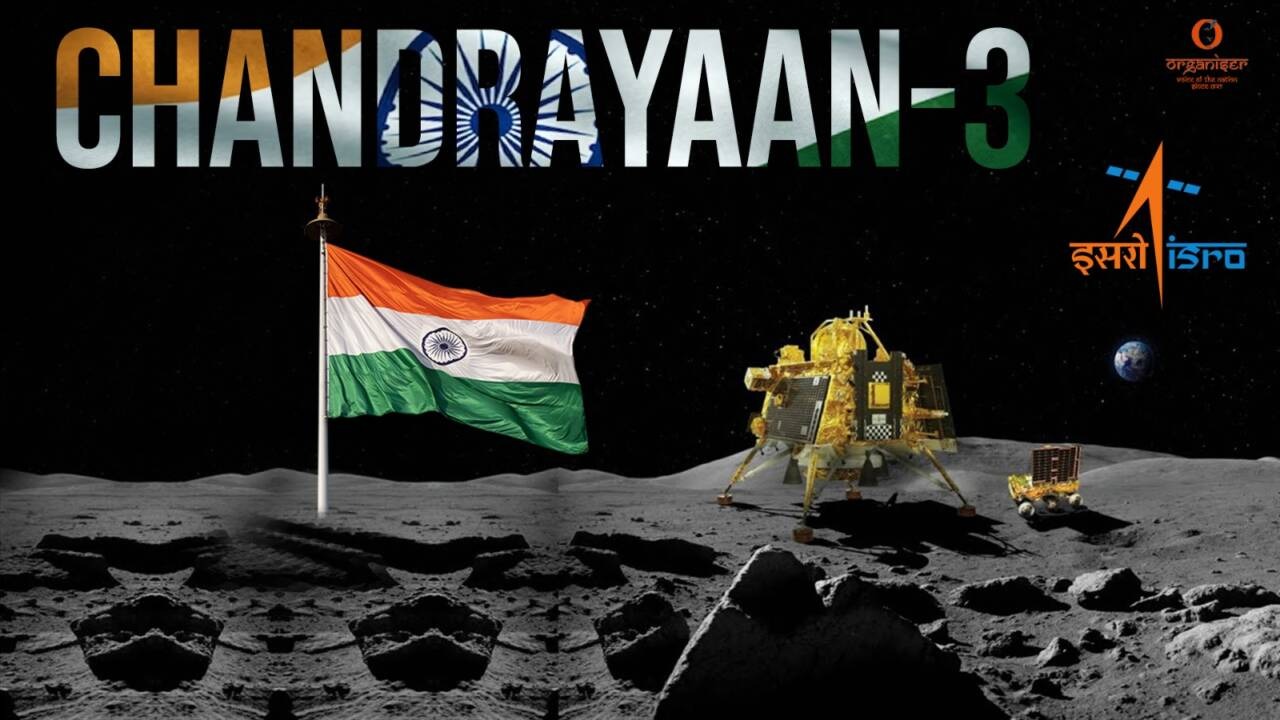
NICE — French President Emmanuel Macron cited India’s historic Chandrayaan-3 space mission as a defining example of the nation's rising technological capabilities, asserting that India is spearheading global innovation. Speaking on Sunday, June 14, 2026, alongside Indian Prime Minister Narendra Modi at the joint inauguration of the "Bharat Innovates 2026" conclave in Nice, France, President Macron emphasized that the July 2023 lunar South Pole landing reshaped international perceptions of India's research, engineering talent, and industrial scale.
The high-profile three-day event underlines the rapidly expanding technology partnership between New Delhi and Paris during the ongoing "India-France Year of Innovation". This diplomatic alignment carries deep economic weight for global investors, deep-tech startups, and academic institutions seeking alternatives to traditional Silicon Valley tech monopolies.
Chandrayaan-3 as the Benchmark for Frontier Technology
Addressing an audience of global venture capital funds, policy experts, and tech founders, President Macron singled out the Indian Space Research Organisation's (ISRO) lunar success to illustrate how India has transitioned from a consumer of global technology into an elite provider. Macron noted that the execution of the Chandrayaan-3 mission demonstrated structural strengths that modern industrial frameworks strive to replicate: rapid deployment coupled with unprecedented cost efficiency.
The French head of state noted that India's capability to safely position a rover near the lunar South Pole accomplished in record time and on a highly optimized budget serves as a blueprint for Western economies grappling with over-budget defense and aerospace projects. By marrying scientific excellence with strict industrial discipline, India demonstrated that frontier exploration does not require prohibitive fiscal expenditure.
Harnessing Demographic Dividends and Deep Tech
Beyond space exploration, the bilateral talks centered on India's vast human capital and its expanding startup ecosystem. President Macron highlighted India's massive demographic advantages, noting that the nation produces more than one million highly trained engineers annually a figure that matches the combined output of Europe and the United States. According to French state briefings, this deep talent base positions India as France’s natural innovation partner across emerging scientific sectors.
The Bharat Innovates 2026 conclave showcases more than 120 pioneering Indian deep-tech startups and 20 premier academic institutions, including various Indian Institutes of Technology (IITs). These entities are presenting advancements across 13 critical technology pillars, including:
Quantum Computing and Semiconductors
Biotechnology and Healthcare
Green Hydrogen and Advanced Battery Materials
Satellite Technology for Agricultural Optimization
Joint Stance Against Artificial Intelligence Monopolies
A core policy directive emerging from the Nice summit is a unified Franco-Indian approach to artificial intelligence (AI) governance. President Macron issued a sharp warning against growing geopolitical temptations to close off advanced AI models, turning them into restrictive tools of national power.
Building upon the foundations laid during the AI Action Summit hosted in Paris, both leaders reaffirmed their commitment to an open-source, ethical, and multilingual AI framework designed for the public good. This collaborative approach offers global businesses and consumers an alternative to centralized, proprietary corporate ecosystems.
Official Sources Section
Bilateral agreements, economic figures, and official statements delivered during the summit conform directly to joint ministerial communiqués from the [suspicious link removed], regulatory briefs from the Indian Ministry of Commerce and Industry, and project disclosures hosted by the Indian Space Research Organisation.
Quote Section
"With the Chandrayaan-3 mission, which allowed the very first moon landing on the south pole of the moon that was led in record time by ISRO with record cost, is a demonstration in terms of strengths, innovation, but also in terms of implementations at the industrial level. In every respect, a country with research innovations and frontier models is spearheading global innovation."
— Emmanuel Macron, President of the French Republic
Indian Prime Minister Narendra Modi supported this vision during his address, stating: "A decade ago, the world saw India primarily as a technology adopter. Today, however, India is rapidly emerging as a technology provider."
Why It Matters
For international investors, multinational corporations, and tech developers, the deepening strategic alliance between India and France signals a shift in where global R&D capital is deployed. By facilitating direct connections between Indian deep-tech innovators and European venture capital, the Bharat Innovates platform accelerates commercialization timelines for frontier software and hardware. Furthermore, it provides international enterprises with a highly vetted, legally secure framework to diversify their technological supply chains away from geopolitical flashpoints.
Key Facts at a Glance
Lunar Benchmark: President Macron hailed the Chandrayaan-3 mission as the ultimate proof of India’s ability to combine scientific innovation with industrial execution.
1.4 Billion Dividend: India’s population and its focus on technical education produce over one million engineers annually, matching the combined output of the US and Europe.
120 Deep-Tech Startups: The Bharat Innovates 2026 conclave in Nice features over 120 startups and 20 institutes of excellence spanning 13 frontier technology pillars.
Open-Source AI Pact: India and France rejected proprietary AI monopolies, pledging to co-develop open, ethical, and reliable multilingual AI systems.
FAQ Section
What is the primary focus of the Bharat Innovates 2026 conclave?
The three-day summit in Nice, France, focuses on bridging Indian deep-tech startups with European venture capital and research institutions. It showcases breakthroughs in quantum computing, semiconductors, green energy, and satellite technology.
Why did President Macron specifically emphasize the Chandrayaan-3 mission?
President Macron utilized the Chandrayaan-3 lunar landing to highlight India's capacity for high-precision, frontier innovation achieved at an optimized cost and within record timelines, setting a new benchmark for global industrial implementation.
How are India and France collaborating on Artificial Intelligence?
Both nations are championing an "open cooperation" model for AI. They are actively developing safe, ethical, and multilingual AI frameworks to prevent advanced technology from being restricted or monopolized as a tool of geopolitical leverage.
What economic impact does this partnership have on global tech investors?
The alliance establishes a secure, institutional channel for European capital to fund highly scalable Indian deep-tech firms. It provides investors with access to an engineer talent pool that creates cross-border tech solutions for sustainable development, aerospace, and defense.
Source: French Ministry for Europe and Foreign Affairs State Portals; Ministry of External Affairs (MEA), Government of India Media Briefings; Indian Space Research Organisation (ISRO) Mission Archives; Official Conclave Dispatches via Press Trust of India / ANI Newsroom.