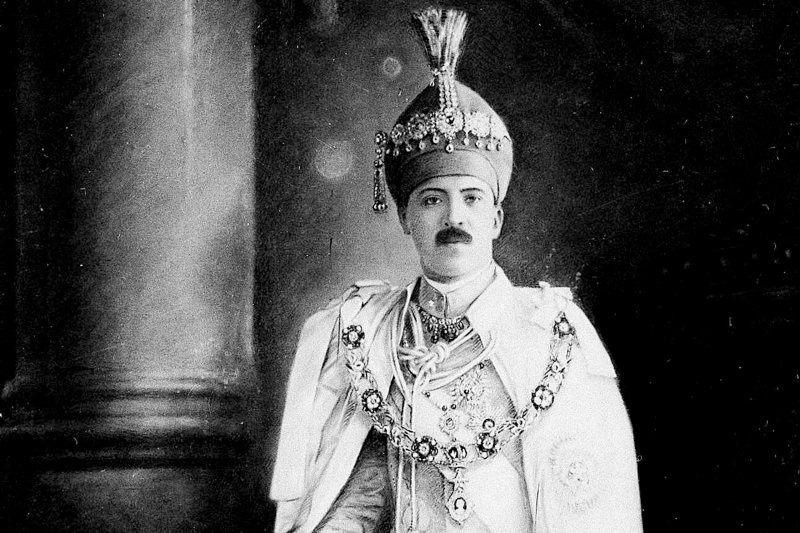
Mir Osman Ali Khan, the last Nizam of Hyderabad, was a visionary ruler who modernised his state through significant investments in education, infrastructure, and healthcare. Known for his legendary wealth and diverse philanthropic contributions, his legacy persists through major public institutions like Osmania University and vital city reservoirs.
HYDERABAD — Mir Osman Ali Khan, Asaf Jah VII, remains one of the most enigmatic and significant figures in Indian history. Ascending the throne in 1911 as the seventh and final Nizam of the Princely State of Hyderabad, his 37-year reign transformed a vast territory into a center of culture, infrastructure, and institutional development. Widely considered one of the wealthiest individuals in human history—with his personal fortune once estimated at 2% of the United States' GDP—the Nizam’s legacy continues to shape the social and physical landscape of modern-day Telangana and beyond.
A Visionary for Modern Infrastructure
The Nizam’s contribution to Hyderabad’s development is characterized by his "architectural" approach to governance. During his reign, he initiated large-scale projects that modernized the state's infrastructure. He established the Begumpet Airport in the 1930s, facilitating early domestic and international aviation, and expanded the railway network to connect the state’s far-flung districts.
His commitment to disaster mitigation and public safety led to the construction of two massive reservoirs, Osman Sagar and Himayat Sagar, following the devastating Musi River flood of 1908. These reservoirs remain vital water sources for Hyderabad today. Furthermore, his administrative reforms included the establishment of the Hyderabad State Bank in 1941, which asserted fiscal independence through the issuance of the state’s own currency, the Hyderabadi rupee.
Educational and Social Reforms
Perhaps his most enduring legacy is the foundation of Osmania University in 1918. By promoting education and setting aside nearly 11% of his annual budget for the sector, he made primary education compulsory and free for the poor. His patronage was not limited to his own subjects; he made significant financial contributions to prestigious national institutions, including Banaras Hindu University and Aligarh Muslim University, as well as the compilation of the Hindu epic, the Mahabharata.
Philanthropy and Secular Patronage
Despite the complex political climate of his era, Mir Osman Ali Khan was known for his broad-minded patronage. His philanthropy extended to numerous Hindu temples, including the restoration of the Thousand Pillar Temple and donations to the Tirupati Balaji and Sitarambagh temples. These acts, alongside his humanitarian support for diverse causes, solidified his reputation as a ruler who transcended communal boundaries.
The Final Years and Integration
Following India’s independence in 1947, the Nizam’s initial refusal to join the Indian Union led to the 1948 "Police Action," resulting in the annexation of Hyderabad. Despite this conflict, he was appointed as the Rajpramukh (Governor) of the state based on public demand. He spent his final years in retirement, passing away in 1967, and was laid to rest amidst a massive outpouring of public grief, with an estimated one million people participating in his funeral procession.
Quote Section
"According to officials and historians, the seventh Nizam’s reign represented a unique blend of absolute monarchy and progressive social reform. Organizers stated that his commitment to institutional development—ranging from healthcare to education—laid the critical foundation for the socio-economic evolution of the Deccan region."
Why It Matters
Mir Osman Ali Khan’s legacy matters today because he built the foundational architecture of the modern city of Hyderabad. His contributions to irrigation, aviation, and higher education provided the infrastructure necessary for the region's later emergence as a global IT and industrial hub. Understanding his life offers a deeper appreciation for the complex intersection of princely rule, wealth, and the integration of princely states into the modern Indian republic.
Key Facts at a Glance
Reign: 1911–1948, as the last Nizam of the Princely State of Hyderabad.
Wealth: Frequently cited as one of history's richest men; his treasury was said to contain gold, silver bullion, and jewelry worth hundreds of millions in historical values.
Major Milestone: Founded Osmania University in 1918, which was the first in India to use a regional language (Urdu) as the medium of instruction.
Public Works: Built the Osman Sagar and Himayat Sagar reservoirs to prevent flooding and established the Hyderabad State Bank.
FAQ
Was the Nizam truly the wealthiest man in the world?
Estimates often place him among the richest, with wealth derived from the Golconda mines—the world's only diamond supplier at the time—and vast landholdings. His wealth was estimated at 2% of the U.S. GDP during the 1930s.
What was his relationship with the Indian Union?
He initially resisted joining the Indian Union after 1947, which led to a military operation (Operation Polo) in 1948, resulting in Hyderabad's annexation.
What is the "Jacob Diamond" connection?
The Nizam famously possessed the Jacob Diamond, one of the largest in the world, which he reportedly used as a paperweight for years.
Official Sources