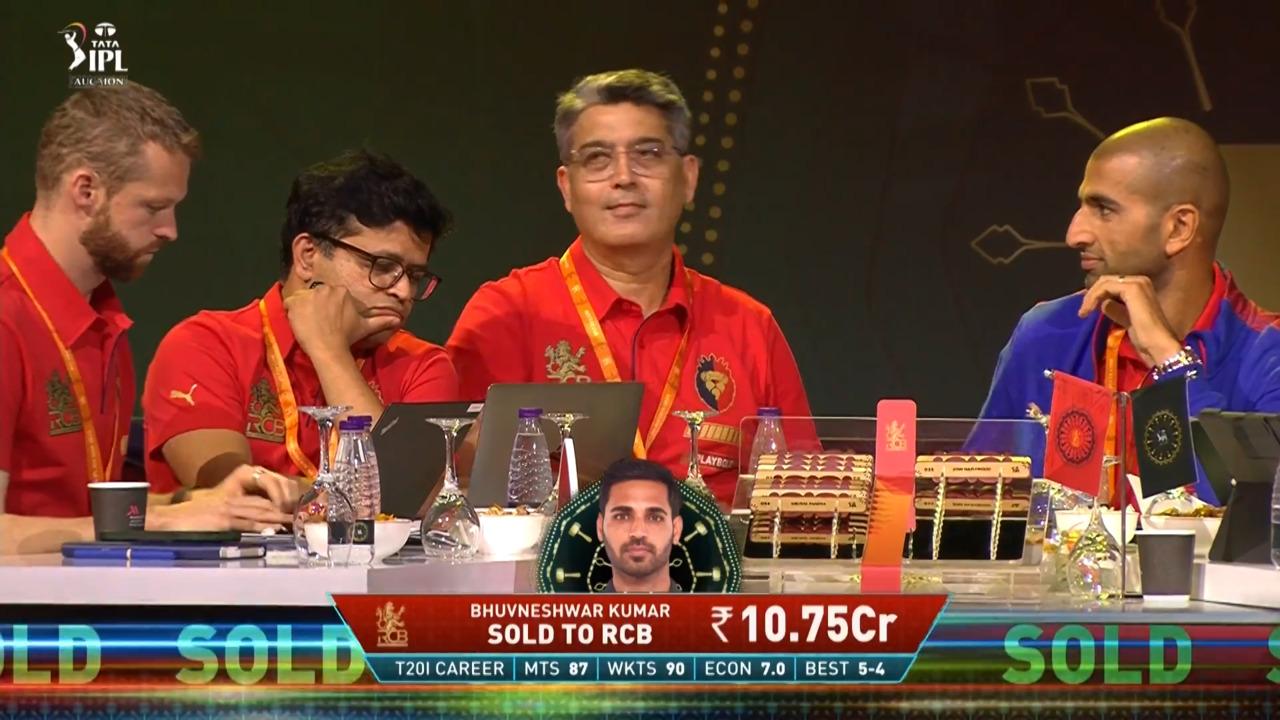
Indian fast bowler Bhuvneshwar Kumar urged the BCCI in September 2026 to phase out the IPL auction model, citing severe mental health tolls and anxiety from public valuation cycles. While the board prioritizes commercial and retention stability, the appeal reignites debate over athlete welfare in franchise cricket.
Imagine sitting in a living room with millions watching live TV, waiting for someone to flash a paddle with your name attached. One bidder goes high; another hesitates. In ten seconds, your market value is sealed—or you're stamped "unsold."
For seasoned Indian swing bowler Bhuvneshwar Kumar, that spectacle isn't just entertainment. Speaking on player dynamics, the veteran pacer dropped a raw truth that boardrooms usually whisper about: public IPL auctions exact a heavy psychological friction. It’s "not right for mentality," he argued, calling on the Board of Control for Cricket in India (BCCI) to rethink whether public bidding war rooms belong in modern sports welfare.
Inside the Waiting Room of Public Valuation
In global football or American franchise leagues, contracts move via closed drafts, private agent negotiations, or multi-year transfer windows. Athletes negotiate value behind closed doors.
The IPL mega- and mini-auction flips the script into a live-broadcast gladiatorial arena. For veterans transitioning past peak India jersey tenure, or young domestic grinders hoping for a life-changing ₹2 crore payday, the psychological tax compounds quietly:
The Binary Mirror: When a player commands ₹10 crore one year and drops to base price or unsold the next, the market treats career lifecycle phases as moral failure.
The Anticipation Loop: Weeks of social media chatter, mock drafts, and franchise retention speculation turn pre-season training camps into anxiety-management exercises.
As sports psychologists note, high-performance resilience survives physical injury recovery far better than public identity erosion. Bhuvneshwar's critique touches a raw nerve: when commerce outpaces pastoral care, athletes absorb structural anxiety that no fitness trainer can patch.
The Franchise Dilemma vs. Athlete Survival
The BCCI’s auction model is undeniably a financial juggernaut, generating record media rights and hyper-engaged fan communities. Franchises build identity around dramatic auction-table coups.
Yet, player welfare advocates point out that financial scale must evolve past rigid compliance rules (like penalties for late pull-outs) into mental-health shielding. Transitioning toward a weighted draft tier, flexible core-retention caps, or closed valuation brackets would preserve franchise liquidity while sparing athletes the televised public stock-market ticker.
Official Sources Section
Evaluations based on player public remarks by Indian international cricketer Bhuvneshwar Kumar, historical BCCI IPL operational governance guidelines, and multi-stakeholder player association briefings.
Quote Section
According to Indian pacer Bhuvneshwar Kumar addressing mental health strains tied to franchise selection mechanics, "it’s not right for mentality, it takes a toll when you go through that public valuation cycle."
Why It Matters
Re-engineering player acquisition models dictates long-term athlete retention, injury-recovery mental baseline stability, and the ethical standard of franchise cricket governance. Proactive welfare reform prevents burnout and aligns Indian domestic management with international sports-psychology benchmarks.
Key Facts at a Glance
Key Figure: Bhuvneshwar Kumar (India and franchise pacer)
Core Demand: Re-evaluate welfare and transition away from public IPL auction format
Primary Concern: Psychological anxiety, public valuation strain, and mental fatigue
Governance Body: Board of Control for Cricket in India (BCCI).
Frequently Asked Questions
Why is Bhuvneshwar Kumar critiquing the IPL auction model?
He argues that televised public bidding and valuation fluctuations inflict unnecessary psychological anxiety and mental toll on players [cite: 3.1.1].
Has the BCCI announced any move to scrap the IPL auction?
No official regulatory filing or governing council resolution has proposed abolishing the auction system as of September 2026.
What alternatives exist to open franchise auctions?
Global sports models utilize tiered salary caps, draft systems, direct bilateral transfers, or multi-year franchise core-player retentions.
Source: Bhuvneshwar Kumar player commentary dispatches; BCCI IPL regulatory governance archives; sports-psychology high-performance consensus reports.