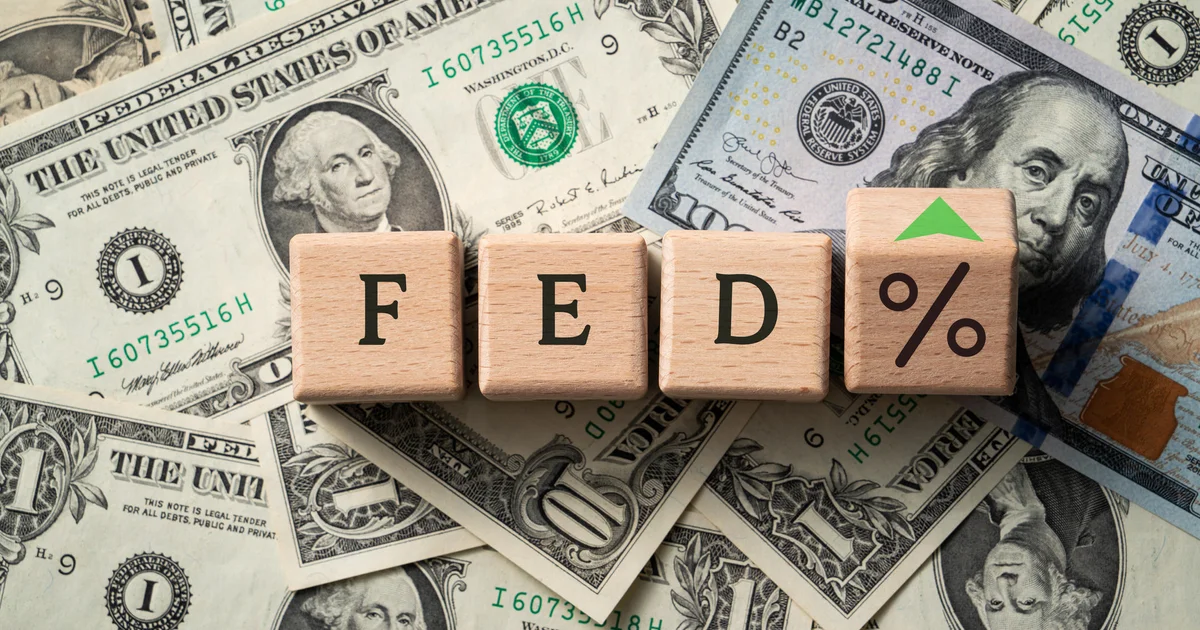
Federal rate cycles create a financial divide: high-yield savings and money market funds reward patient cash holders, while variable credit card and business loan rates compound debt friction. Effective financial health requires prioritizing high-cost debt elimination over marginal savings yields while optimizing digital banking yield competition.
Picture this: you open your mobile banking app over morning coffee. Your high-yield savings account (HYSA) flashes a cheerful 5% APY payout. Feels like a win, right? Fast-forward to midnight, you glance at your credit card app. That revolving balance—sitting north of 21% APR—just swallowed more in monthly finance charges than your savings earned all quarter.
Welcome to the Federal Reserve’s asymmetric gravity pull. As the Fed navigates core inflation, cooling payrolls, and monetary recalibration through September 2026, interest rate shifts aren't just dry macroeconomic policy. They are an aggressive invisible scalpel cleaving personal balance sheets in two.
If you’ve ever wondered why your cash feels heavy with reward while your loans feel heavier with friction, you aren't imagining things. The spread is a trap—and playing it right requires changing how you look at liquidity.
The Great Lag: Why Savings Don't Move Like Debt
Money doesn't travel through the banking plumbing at equal speeds.
When central banks shift benchmark rates, commercial banks play a clever game of asymmetrical catch-up:
The Deposit Sloth vs. Digital Hunger: Walk into a legacy brick-and-mortar branch, and your savings account still pays a bruising 0.05% floor. Why? Because lazy capital stays put. Meanwhile, digital neo-banks and money market funds fight tooth and nail for sticky retail deposits, passing through juicy yields to capture cash.
The Prime Rate Bullet Train: Variable-rate debt tied to the Prime Rate (Federal Funds rate + 3%) doesn't wait for polite market competition. Credit card issuers reprice balances within 30 to 60 days. Higher benchmarks mean compounding interest hits revolving plastic like clockwork.
The Math That Breaks Your Budget
Let’s run the real-world household ledger. Suppose you hold $10,000 in an HYSA earning 5% ($500 gross interest annually). Simultaneously, you carry a $10,000 credit card balance at 21% APR ($2,100 annual interest burn).
Net position? You are bleeding roughly $1,600 a year while convincing yourself that high-yield savings have made you a savvy investor.
Financial triage in a high-rate regime isn't about accumulation; it’s about leakage plugging. High-cost revolving debt (anything over 15%–20%) carries an implied risk-free "return" when paid down: killing a 21% APR debt puts $2,100 back in your pocket guaranteed—a hurdle rate no money market fund can touch.
Corporate Boardrooms Feel the Squeeze, Too
It’s not just household checkbooks feeling the squeeze. Small-to-medium enterprises (SMEs) running working-capital lines indexed to floating commercial rates watch inventory margins compress in real time. Yet, corporate treasuries sitting on clean cash reserves flip the script, sweeping idle operating capital into overnight commercial paper and short-duration Treasury bills to extract risk-free yield.
Official Sources Section
Policy evaluations based on Federal Reserve Open Market Committee (FOMC) statements, consumer financial protection baseline reports, and commercial banking liquidity surveys.
Quote Section
According to monetary policy analysts and Federal Reserve institutional communications tracking rate transmission lags, "interest rate adjustments act as an asymmetrical hydraulic press—tightening borrowing channels rapidly across floating portfolios while deposit competition forces selective yield relief for liquid savers."
Why It Matters
Rate cycles expose structural liquidity gaps in household and business budgets. Distinguishing between nominal yield gains on savings versus compound drag on variable debt prevents destructive cash-flow misallocations and informs smarter debt-paydown versus yield-collection sequencing.
Key Facts at a Glance
Core Dynamic: Asymmetric transmission where variable debt reprices in 30–60 days while savings yields depend on competitive digital banking pressure.
Primary Winner: Liquid cash holders utilizing HYSAs, money market mutual funds, and short-duration fixed income.
Primary Squeeze: Variable-rate credit card holders, HELOC borrowers, and floating-rate commercial SMEs.
Golden Rule of Balance: High-cost debt payoff (20%+ APR) mathematically outperforms high-yield savings (4.5–5% APY).
Frequently Asked Questions
Do all bank savings accounts earn more when the Fed raises rates?
No. Traditional big-bank legacy savings accounts often stay near floor rates (0.01%–0.25%), whereas online high-yield savings accounts and money market funds pass through rate increases closely.
How fast do credit card rates react to benchmark rate changes?
Usually within one billing cycle (30 to 60 days), because prime-rate-indexed consumer loan agreements feature automatic upward repricing clauses.
Should I stop investing in SIPs or retirement funds to pay off debt during high-rate periods?
High-cost consumer debt (credit cards above 15–20%) should generally be prioritized first because guaranteed interest expense avoidance beats uncertain market returns, though employer-matched retirement contributions should typically be preserved.
Source: Federal Reserve FOMC policy rate releases; consumer banking yield aggregate benchmarks; financial planning debt-arbitrage studies.