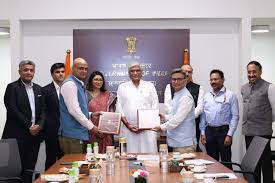
The Ministry of Tourism has signed an MoU with Google India to advance the digital promotion of tourism. The partnership targets the creation of immersive virtual tours for heritage sites, utilizes aggregated search data for infrastructure planning, and provides critical digital literacy and search marketing training to regional hospitality micro-enterprises.
NEW DELHI — The Ministry of Tourism has officially signed a Memorandum of Understanding (MoU) with Google India to strengthen the digital promotion of tourism across domestic and international markets. The bilateral agreement, finalized during an industry conference in New Delhi, establishes a strategic framework to digitize India's cultural monuments, optimize online discovery metrics for lesser-known destinations, and upskill regional hospitality operators. This development highlights the government's intensified focus on leveraging advanced cloud analytics, artificial intelligence, and interactive mapping to scale up structural tourism revenues and capture shifting global travel demographics.
Scaling Global Visibility via Interactive Mapping
A critical pillar of the partnership focuses on expanding the digital footprint of Indian heritage sites on global discovery platforms. Under the terms of the signed agreement, Google India will collaborate with the Archaeological Survey of India (ASI) to create high-resolution 360-degree virtual tours, immersive Street View imagery, and rich multimedia exhibits for prominent cultural landscapes.
According to technical briefs released by the ministry, this technical integration aims to capture the attention of prospective international travelers during their initial search and discovery phase. By providing interactive, highly detailed previews of historical monuments, the initiative seeks to lower barriers to travel planning and position India as a premium destination for heritage, eco-tourism, and spiritual travel.
Upskilling the Regional Hospitality Ecosystem
Beyond consumer-facing promotional campaigns, the strategic alliance features a structured training component managed through a joint public-private training framework. The Ministry of Tourism and Google India will launch localized workshops designed to train small and medium hospitality enterprises (SMEs), registered tour guides, and regional homestay operators in modern digital literacy.
Participants will receive direct training on managing corporate profiles, utilizing search engine optimization (SEO) tools, and deploying targeted digital promotion of tourism strategies to reach active audiences. Official tracking records from regional tourism boards suggest that a majority of rural homestay operators currently lack an active online booking mechanism; this program intends to bridge that operational gap to distribute economic travel benefits directly to grassroots communities.
Data-Driven Decision Making for Infrastructure Planning
The integration of advanced data analytics forms the operational backbone of the newly signed memorandum. Google India will provide anonymized, aggregated search data and traveler intent metrics to the ministry’s internal planning divisions.
This corporate data stream will offer real-time insights into fluctuating travel trends, preferred entry routes, and seasonal spikes across various global territories. Tourism administrators can leverage these analytical insights to design predictive marketing models, distribute promotional capital more efficiently, and manage crowd distribution patterns at highly congested heritage sites, thereby ensuring better safety metrics and preservation protocols.
Official Review and Operational Governance
According to official releases distributed by government representatives, a dedicated joint working committee will monitor the execution of the initiatives outlined in the memorandum. This administrative body will include senior tech specialists from Google India and data officers from the ministry to ensure compliance with national data privacy standards and verify that regional development metrics are met systematically each quarter.
Quote Section
"According to officials from the executive committee, the collaborative framework established under this agreement will allow the administration to move away from legacy advertising templates. By embedding advanced tracking analytics and interactive mapping directly into national marketing frameworks, the department can execute hyper-targeted campaigns that adapt dynamically to shifting international travel trends."
Why It Matters
The formalization of this public-private partnership marks an essential structural shift in how national destinations compete within the global leisure market. By integrating the algorithmic expertise of Google India into public administrative frameworks, the government secures a highly cost-effective model for the digital promotion of tourism. The long-term implications are practical: specialized visibility for smaller regional economies, minimized marketing inefficiencies within state budgets, and a streamlined digital interface for international consumers navigating the complex Indian travel ecosystem.
Key Facts at a Glance
Strategic Alliance: The Ministry of Tourism signed a comprehensive MoU with Google India to accelerate the digital promotion of tourism through cloud, AI, and mapping technologies.
Heritage Digitization: The project introduces high-resolution 360-degree virtual reality showcases and Street View expansions for key monuments.
Economic Upskilling: Micro-enterprises and local tour guides will receive direct training in cloud business management and localized search marketing.
Data Integration: Government planning departments will gain access to anonymized user intent metrics to optimize infrastructure allocations and seasonal marketing spend.
Frequently Asked Questions
What is the primary objective of the MoU signed between the Ministry of Tourism and Google India?
The agreement is structured to modernize the digital promotion of tourism across India, using global discovery platforms, advanced data analytics, and digital literacy training to increase international and domestic visitor traffic.
How will small-scale regional tour operators benefit from this public-private partnership?
Local operators, homestay owners, and guides will gain access to free, structured training workshops focused on building digital profiles, managing search visibility, and executing independent online marketing campaigns.
Will the digital tours replace physical entry to historical monuments?
No, the immersive 360-degree virtual previews are designed as exploratory tools to stimulate international travel intent and assist global travelers during their initial itinerary planning phase.
How will traveler privacy be protected under the data-sharing agreement?
Official updates from the ministry confirm that all data provided by corporate platforms will be completely anonymized and aggregated, strictly forbidding the tracking or identification of individual consumers.
Source: Strategic goals and operational frameworks verified via the formal press declarations issued by the Ministry of Tourism and the corporate public policy division of Google India.