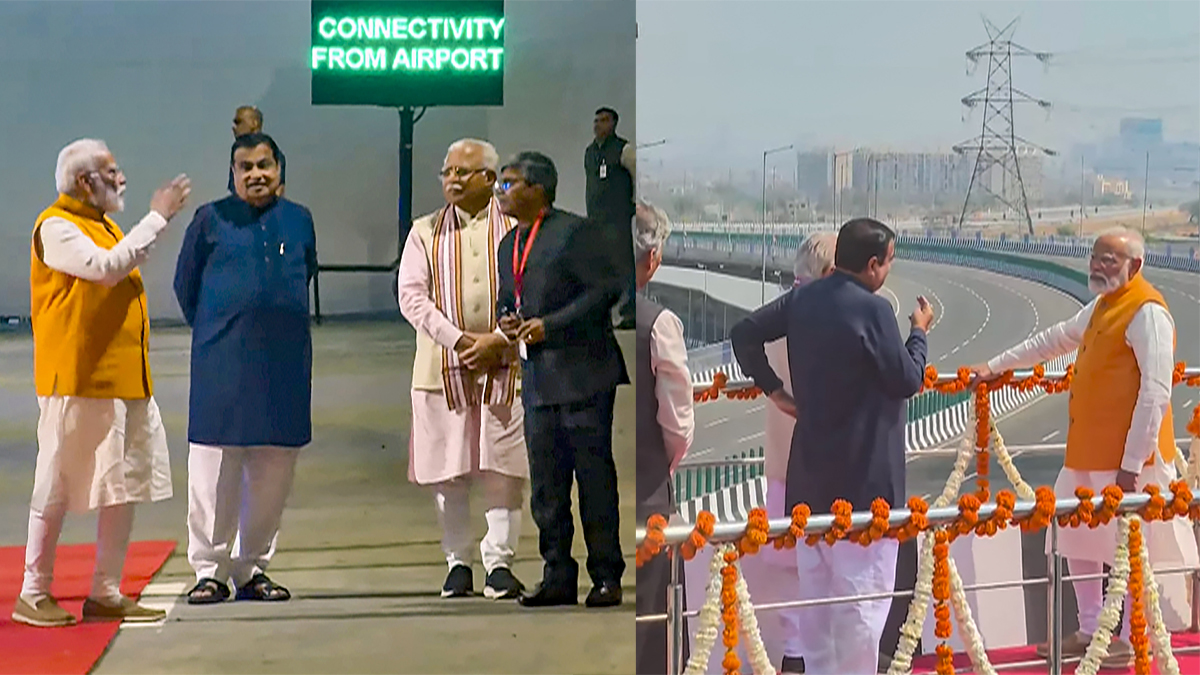
On a historic Sunday, August 17, 2025, Prime Minister Narendra Modi inaugurated two of the largest infrastructure undertakings in the Delhi-NCR region: the Urban Extension Road-II (UER-II) and the much-awaited Dwarka Expressway. Together worth nearly ₹11,000 crore, these mega highway projects pro...
On a historic Sunday, August 17, 2025, Prime Minister Narendra Modi inaugurated two of the largest infrastructure undertakings in the Delhi-NCR region: the Urban Extension Road-II (UER-II) and the much-awaited Dwarka Expressway. Together worth nearly ₹11,000 crore, these mega highway projects promise to usher in a new era of connectivity, combatting Delhi’s persistent traffic woes, boosting economic growth, and redefining the urban landscape for millions.
A New Web of Connectivity for Delhi-NCR
The UER-II and Dwarka Expressway are positioned as the backbone of high-speed connectivity, not only for Delhi but for the entire northern region. The 76km-long UER-II, dubbed Delhi’s third ring road, weaves through Alipur (NH-44), traversing Bawana, Rohini, Mundka, Bakkarwala, Najafgarh, and Dwarka before culminating near Mahipalpur at NH-48. Of its total length, 54.2km runs through Delhi, while 21.5km stretches into Haryana, creating direct links with the Western and Eastern Peripheral Expressways and the new Dwarka Expressway.
For Delhiites and NCR citizens, the significance is immense: the corridor offers an alternative to the often-congested NH-48 and Sohna Road, effectively cutting travel time between Gurugram, outer Delhi, and the Indira Gandhi International Airport. Officials anticipate that with freight traffic now routed away from city centers, central Delhi can finally breathe easier, enjoying decongested roads and lower emissions.
The expressway’s enhanced safety features set a new benchmark, with 190 surveillance cameras and AI-driven incident detection systems. An automated enforcement system is under trial and will begin issuing fines shortly.
The Dwarka Expressway: India’s Engineering Icon
Parallelly, PM Modi opened the 29km-long Dwarka Expressway, an engineering marvel that bridges Delhi and Gurugram. Of this length, 10.1km lies within Delhi—now officially inaugurated—while the Haryana segment (19km) was launched in March 2024. The expressway is being celebrated for boasting India’s first eight-lane elevated road with an eight-lane shallow tunnel built on a single-pier structure. The final 10km Delhi portion incurred a ₹5,360 crore investment.
Spread across four interchanges, the highway’s service roads and linkages prioritize smooth traffic flows. The expressway delivers unprecedented multi-modal access: it connects seamlessly to Delhi Metro’s Blue and Orange lines, the upcoming Bijwasan railway station, bus depots, and even a dedicated airport tunnel simplifying the route to IGI Airport.
For the bustling suburb of Dwarka and adjoining areas, this unlocks new investment, employment, and real estate opportunities. Nearly 45,000 housing units have launched along the corridor in recent years, evidence of the transformative power the infrastructure wields.
Bold Vision and Environmental Impact
Delhi Chief Minister Rekha Gupta called the projects “a historic gift” for the capital, lauding the UER-II’s potential to make Delhi cleaner, healthier, and less gridlocked. The expressways target notorious choke points like Mukarba Chowk, Dhaula Kuan, and NH-09, which have long been synonyms for rush-hour chaos. Route planners say journey times to destinations as far as Chandigarh, Jaipur, and even Mumbai will shorten drastically.
Beyond mobility, the projects are expected to slash vehicular emissions as fewer vehicles idle in jams, furthering the city’s clean air goals. By giving heavy vehicles a direct bypass, Delhi’s inner sanctum is relieved of constant freight congestion.
Inauguration Ceremony Highlights
The grand opening was held in Rohini, with PM Modi emphasizing the government’s focus on constructing world-class infrastructure and supporting the everyday needs of the public. “Today, we’re not just building roads; we’re paving new avenues for growth, job creation, and a better quality of life for millions,” the Prime Minister announced during his address.
Local residents, real estate developers, and industry leaders have all welcomed the move as a turning point for NCR. Deputy convener of the Dwarka Expressway Group Development Authority, Sunil Sareen, echoed the optimism: “For residents, it means safer roads, rising property values, and a leap toward international-standard living”.
What Comes Next?
Even as commuters prepare to experience smoother, faster journeys, city planners are setting sights on further enhancements. A proposed five-kilometer signal-free tunnel from Nelson Mandela Road to Shiv Murti-Mahipalpur on the Dwarka Expressway is already in the pipeline, promising an even more integrated network in the near future.
For now, Delhi stands transformed—a city on the move, redefining urban mobility for India.
Sources: Hindustan Times, Indian Express, News18, Business Standard, Times of India, NewsBytes, DD News