State-run miner MOIL Limited reported a manganese ore production volume of 508,000 MT and total sales of 368,000 MT for the first quarter of FY 2026–27. Headquartered in Nagpur, the company’s high extraction rate secures domestic raw material lines, supporting a steel market seeing an 8.3% jump in consumption.
NAGPUR, India — State-run miniratna mining enterprise MOIL Limited officially announced Tuesday, July 7, 2026, that it achieved a robust manganese ore production volume of 508,000 metric tonnes (MT) for the first quarter of the 2026–27 fiscal year ended June 30, 2026.
The operational performance update, submitted via mandatory regulatory filings to BSE Limited and the National Stock Exchange of India (NSE), highlights an accelerating trend in domestic raw material extraction. Alongside the milestone production pool, the company reported total manganese ore sales of 368,000 MT for the same April–June period. This synchronized deployment of inventory provides immediate stability to India's domestic ferroalloy manufacturers and crude steel producers as industrial manufacturing activity reaches record levels nationwide.
Enhanced Mine Extraction and Structural Production Output
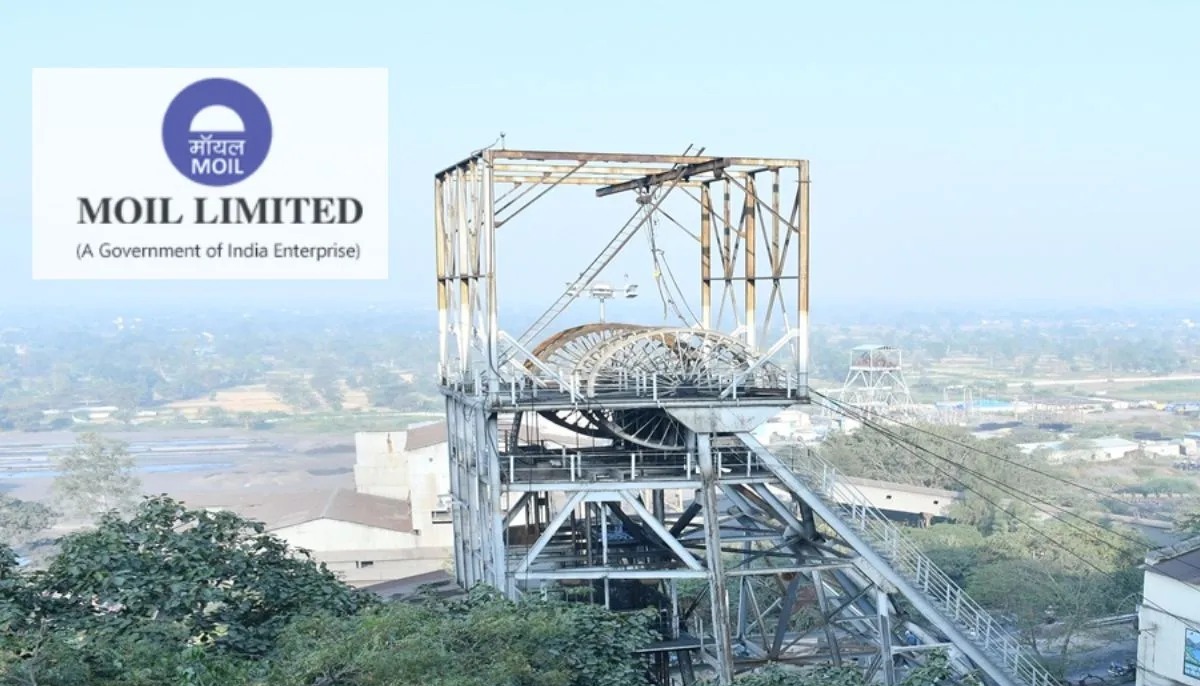
The Nagpur-headquartered public sector undertaking (PSU) achieved its 508,000 MT production benchmark by maximizing capacity across its core underground and open-cast mining networks spanning Maharashtra and Madhya Pradesh. Heavy excavation blocks were spearheaded by its deep underground operations at the Balaghat and Kandri sites, combined with high-volume output at the Dongri Buzurg open-cast facilities.
The 508,000 MT extraction metric represents a significant volume enhancement, reflecting the operational success of MOIL’s recent multi-million rupee deep-core exploratory drilling campaigns. By shifting its operational focus toward high-grade ores, the company has managed to maintain continuous output volumes even during the initial onset of the southwest monsoon season, which traditionally triggers water-logging and drops extraction rates across open-cast mining pits.
Price Revisions and Alignment With the Steel Market
The surge in production arrives at a time of deliberate market adjustments. In compliance with its standard monthly review parameters, MOIL adjusted its manganese ore base pricing matrix at the start of the quarter, including a 4% uniform reduction across all Ferro, SMGR, Fines, and Chemical grades. This pricing strategy was executed to support domestic downstream metallurgical plants dealing with brief compressions in international alloy premiums.
Manganese ore is a vital raw material used to remove impurities and increase strength during the production of crude steel. Because MOIL controls a dominant 53% market share over India's total domestic manganese mining output, its ability to deliver 368,000 MT directly to domestic steel mills limits their reliance on expensive imported ores from South Africa and Gabon. This localized supply buffer is critical as provisional data from the Joint Plant Committee (JPC) reveals that India's total finished steel consumption expanded by 8.3% during the same April–June quarter, reaching 41.6 million tonnes.
Official Sources Section
The underlying production statistics, physical sales volumes, and regional infrastructure details referenced in this report match the formal corporate performance declarations filed by MOIL Limited under listing guidelines managed by the Securities and Exchange Board of India (SEBI).
Quote Section
"According to officials and formal production disclosures released on Tuesday morning, the company's mining operations have sustained an optimal extraction velocity, placing the enterprise on track to fulfill its long-term strategic target of doubling annual production to meet evolving industrial requirements," noted the compliance registry tracking documents.
Why It Matters
For structural engineers, heavy infrastructure firms, and automotive manufacturers, a stable supply of domestic manganese ore keeps input costs for reinforcement bars (TMT) and structural sheets predictable. For public stock market investors, MOIL's strong Q1 operational data shows solid asset utilization under newly appointed Chairman and Managing Director Vishwanath Suresh. This efficiency helps protect the company’s dividend-paying capacity and cash-rich balance sheet from global mining shocks.
Key Facts at a Glance
Production Volume: MOIL produced 508,000 MT of manganese ore from April to June 2026.
Sales Execution: The company successfully shipped 368,000 MT of raw ore to industrial buyers.
Market Dominance: The company maintains a 53% share of India's domestic manganese mining sector.
Steel Synergies: This high output supports a domestic steel market where consumption grew 8.3% this quarter.
Frequently Asked Questions
Why is manganese ore considered a critical mineral for India’s economy?
Manganese ore is irreplaceable in steel manufacturing, acting as a crucial hardening and deoxidizing agent. Without it, factories cannot produce high-strength steel for railways, buildings, and automotive components.
Where are MOIL’s primary mining operations located in India?
The company operates 11 major mines, with core underground and open-cast sites situated across neighboring industrial zones in Maharashtra and Madhya Pradesh.
How do MOIL's production numbers affect retail commodity prices?
High domestic production allows local steel plants to secure raw materials reliably at steady rates, reducing their vulnerability to global supply chain shocks and high ocean freight costs.
Source: Operational and performance logs published by MOIL Limited, transactional compliance databases at BSE Limited, and the Q1 infrastructure index sheets issued by the Ministry of Steel.