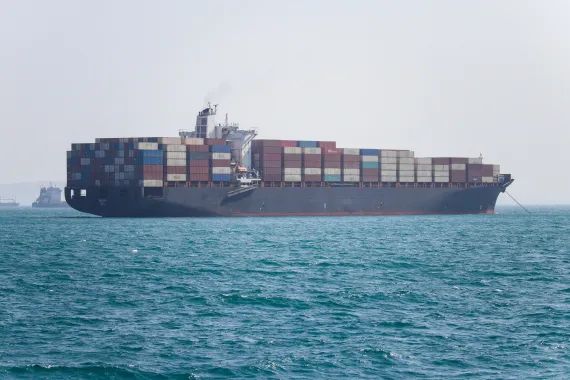
As the US Iran war grinds on, Iran’s state television says the Revolutionary Guards Navy is now allowing more commercial ships to transit the Strait of Hormuz under new Iranian protocols. Tehran portrays this as a controlled reopening of a route it largely blocked after February strikes, while Washington warns any Iranian attempt to dictate rules in international waters remains unacceptable.
The Strait of Hormuz remains the most potent pressure point in the US Iran confrontation, with both sides using it to project strength and test red lines. After weeks of near shutdowns, ship seizures and competing blockades, Iran’s state media now claims a gradual increase in vessel traffic coordinated with the Revolutionary Guards Navy. The move is being read as both a signal of tactical flexibility and a reminder that Tehran still holds a powerful lever over global energy flows.
What Iran State Tv Is Claiming
Iran’s English and Persian language state outlets reported on Friday that naval forces of the Islamic Revolutionary Guard Corps are “allowing more ships to pass” through Hormuz after an earlier closure.
A reporter in Bandar Abbas said this shows many countries have accepted new “legal protocols” set by Iran and the IRGC for the waterway, with more than 30 ships reportedly cleared over recent days and about 15 in a 24 hour window in one News18 Hindi update.
Blockades Seizures And A Battle Of Narratives
Since war erupted on 28 February, Iran has largely blocked commercial shipping through Hormuz and seized several foreign flagged tankers and container ships, accusing them of lacking proper permits or tampering with navigation systems.
The United States responded by imposing its own naval blockade of Iranian ports and launching a mission dubbed Project Freedom to escort or assist stranded vessels, though Washington has denied Iranian claims that US warships were hit by missile fire in recent incidents.
Pressure, Diplomacy And Energy Risks
Analysts following the conflict say Iran’s partial easing may reflect pressure from key oil buyers, back channel talks involving Russia and China, and Tehran’s desire to show it can calibrate rather than permanently strangle the world’s energy artery.
Even a modest increase in transits matters because in peacetime roughly one fifth of global oil and liquefied natural gas trade moves through Hormuz, and extended disruption would amplify price spikes already triggered by strikes and counter strikes across West Asia.
Trump’s Warnings And Allied Concerns
US President Donald Trump has publicly warned that if Iran uses Hormuz as a long term choke point or refuses a broader settlement, the US is prepared to carry out large scale attacks on Iranian military infrastructure.
Russia and China have both cautioned Washington against deeper intervention, calling instead for reopening the strait under international rules and de escalation, even as they criticise Israeli and US strikes on Iranian targets.
Hormuz War Highlights
- Iran’s Revolutionary Guards say they are now allowing more ships through the Strait of Hormuz under new Iranian protocols
- Since late February Iran has seized multiple vessels and largely blocked shipping, while the US has enforced a naval blockade of Iranian ports
- In peacetime about one fifth of global oil and LNG trade passes through Hormuz, magnifying the global impact of any disruption
- Trump has warned of further large scale strikes if there is no deal, while Russia and China urge a diplomatic solution and restoration of freedom of navigation
Sources: Al Jazeera, Reuters, Youtube, thenews