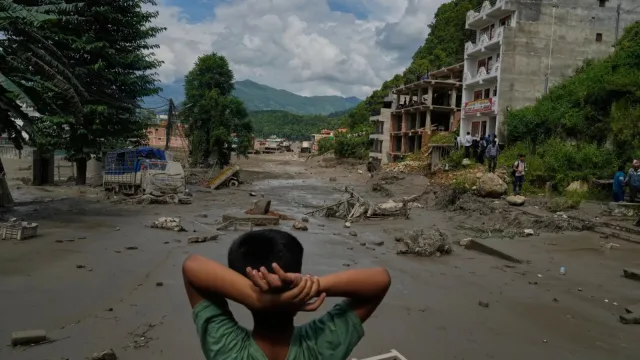
Nepalese search and rescue teams have located approximately 100 missing Indian visitors and 25 Chinese workers stranded by severe flash floods along the Himalayan border. The breakthrough comes amid large-scale emergency operations by military and disaster authorities to clear severed mountain routes, deliver medical relief, and evacuate affected travelers.
KATHMANDU — Search and rescue personnel in Nepal have successfully located approximately 100 missing Indian visitors and 25 Chinese workers following catastrophic flash floods and landslides triggered along the Himalayan border with Tibet. Nepalese authorities confirmed the breakthrough on Thursday as military and civilian disaster response units intensified localized relief missions across the hardest-hit mountainous corridors. The development marks a major step forward in a wider humanitarian emergency that has disrupted regional transport infrastructure, displaced riverside communities, and prompted multi-agency cross-border coordination.
Cross-Border Emergency and Rescue Mobilization
The high-altitude disaster unfolded after massive debris flows, rockslides, and glacial collapses blocked tributaries feeding into the Bhote Koshi, Trishuli, and Narayani river systems. The resulting deluge swept through remote mountain settlements and transit hubs, severing primary roadways and cutting off power and communications.
Nepalese emergency teams, operating alongside military aviation units, deployed utility helicopters and ground forces to reach isolated pockets in Rasuwa, Nuwakot, and adjacent districts. Officials confirmed that the located group of around 100 Indian nationals consisted primarily of pilgrims and travelers heading along routes toward Mount Kailash and high-altitude trekking destinations. Simultaneously, rescue squads established contact with 25 Chinese personnel who had been working on regional infrastructure and hydropower installations near the border boundary.
Specialized medical teams have established forward triage facilities to evaluate the condition of those located, providing water, emergency rations, and emergency first aid before planning phased evacuations down to regional administrative centers.
Impact on Regional Infrastructure and Pilgrimage Routes
The devastation from the Nepal floods has severely damaged vital surface connectivity connecting Kathmandu to northern border checkpoints, including key stretches leading toward the Rasuwagadhi immigration corridor. Bridges and arterial roads sustained extensive structural damage from raging floodwaters and heavy silt deposits, temporarily stranding hundreds of transit vehicles and commercial trucks.
Local authorities reported widespread disruptions to telecommunication towers and power transmission lines, which initially complicated real-time tracking and emergency roll calls. For families, travel operators, and local logistics firms, the ongoing operations remain urgent as search teams comb through riverbank mudflats and debris fields to locate remaining unaccounted-for persons across the trans-Himalayan corridor.
Regional Relief Coordination and Bilateral Support
The humanitarian crisis has triggered immediate regional mobilization. Indian authorities dispatched emergency relief materials and activated disaster monitoring protocols across downstream states, including Bihar and Uttar Pradesh, where river water levels are being monitored continuously. Consular support desks set up by the Indian Embassy in Kathmandu and diplomatic channels in Beijing are actively collaborating with Nepal’s disaster response command to verify passenger manifests and establish direct contact with affected citizens.
Disaster management authorities emphasized that heavy equipment, earthmoving machinery, and specialized alpine rescue teams are being concentrated in high-risk zones to clear debris from river channels and prevent secondary flash flooding events.
Official Sources
According to official releases from the Nepal Police, the Nepal Tourism Board, and regional disaster management authorities, emergency teams are maintaining round-the-clock air and ground operations to secure all stranded travelers and local residents.
Quote Section
According to officials coordinating the disaster relief desk in Kathmandu:
"Search and rescue personnel have successfully established contact with and located approximately 100 Indian visitors and 25 Chinese workers in affected sectors. Operations continue without interruption to ensure safe evacuation, medical triage, and transport to secure facilities."
Why It Matters
The rapid location of stranded travelers highlights the effectiveness of coordinated alpine disaster response protocols during severe climate-induced emergencies. The ongoing Nepal floods underscore the acute vulnerability of Himalayan transit corridors to sudden glacial movements and flash surges, emphasizing the necessity of cross-border emergency communications, resilient mountain infrastructure, and real-time early warning mechanisms for travelers, logistical networks, and regional commerce.
Key Facts at a Glance
Locating Breakthrough: Rescuers located around 100 Indian visitors and 25 Chinese workers in northern border sectors.
Cause of Flooding: Flash floods and debris flows along the Bhote Koshi and Trishuli river networks.
Affected Cohorts: Mountain pilgrims, high-altitude trekkers, and localized infrastructure project workers.
Emergency Response: Joint operations by the Nepal Army, Armed Police Force, civilian aviation units, and diplomatic consular teams.
Frequently Asked Questions
Where were the Indian visitors and Chinese workers located?
They were located in isolated mountainous sectors of northern Nepal near the border with Tibet, where flash floods had severed main transport links.
What caused the sudden flash floods in Nepal?
The floods were triggered by high-altitude glacial collapse, mudslides, and heavy debris flows blocking and then swelling major river tributaries, including the Bhote Koshi.
What relief operations are currently underway?
Nepalese military and civilian rescue units are utilizing helicopters and ground squads to conduct medical triage, airlifts, and provide emergency relief supplies across impacted districts.
Source: Nepal Tourism Board | Ministry of Home Affairs Nepal | Nepal Police Headquarters | Ministry of External Affairs India