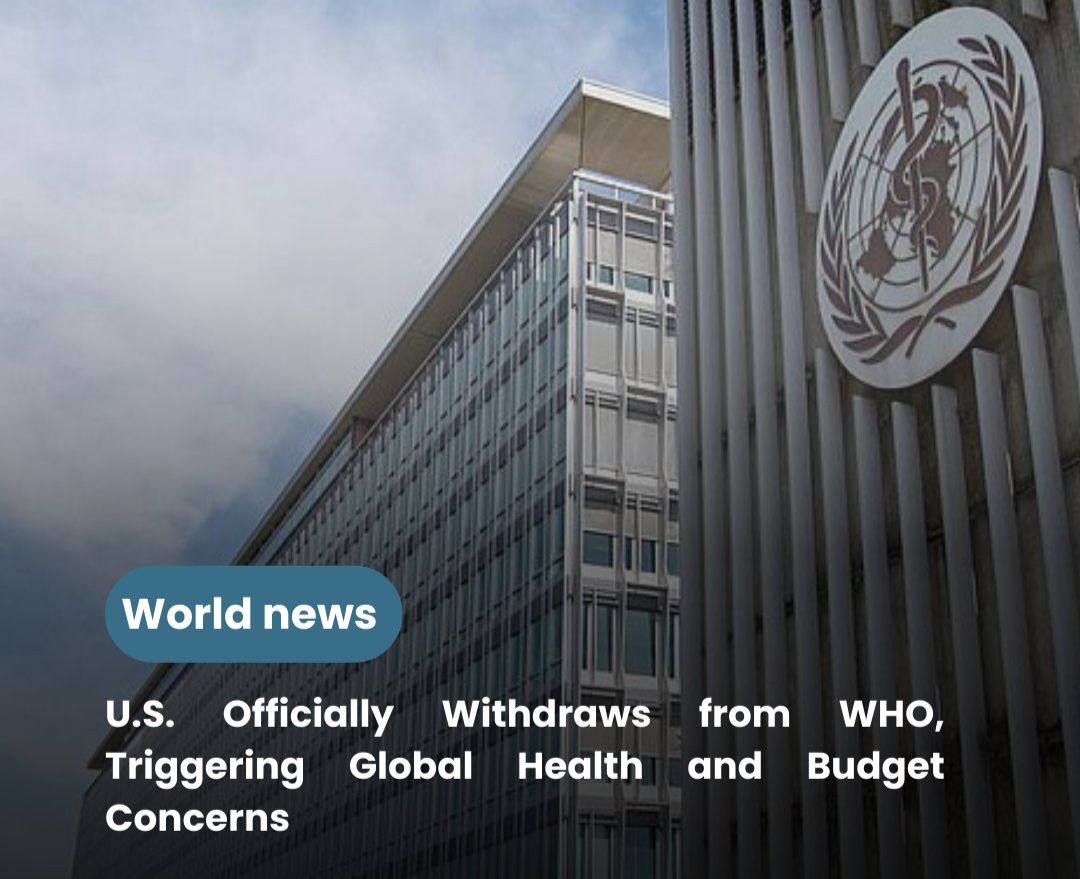

The United States has officially withdrawn from the World Health Organization (WHO), ending a membership that began in 1948. Citing the WHO’s alleged failures during the COVID‑19 pandemic, lack of reforms, and political influence, Washington has halted funding and limited future engagement—raising serious concerns about global health coordination and pandemic preparedness.
In a historic and highly controversial move, the US has formally completed its withdrawal from the World Health Organization, effective January 22, 2026. The decision follows Executive Order 14155, signed by President Donald Trump in January 2025, which restarted the withdrawal process and revoked earlier attempts to rejoin the agency.
US Health Secretary Robert F. Kennedy Jr. and Secretary of State Marco Rubio jointly announced that the country will no longer be a WHO member for the first time since 1948. They accused the WHO of mishandling the COVID‑19 pandemic, failing to implement urgent reforms, and being vulnerable to “inappropriate political influence” from certain member states.
Public health experts and international partners have warned that the move could undermine global disease surveillance, vaccine coordination, and emergency response, given that the US historically contributed nearly a fifth of the WHO’s budget. The US has said it will instead work bilaterally and through alternative mechanisms to pursue its global health goals.
Key highlights / Major takeaways
Membership ends after 78 years: First time the US is outside the WHO since 1948.
Executive order–driven exit: EO 14155 initiated withdrawal, citing WHO’s COVID‑19 response and governance failures.
Funding halted: US contributions—previously around 18–20% of WHO’s budget—have ceased.
Limited future engagement: US will only interact with WHO to “effectuate withdrawal,” with no plans to rejoin or even observe.
Global concern: Experts warn of weakened pandemic preparedness and coordinated health responses worldwide.
Sources: X, Al Jazeera