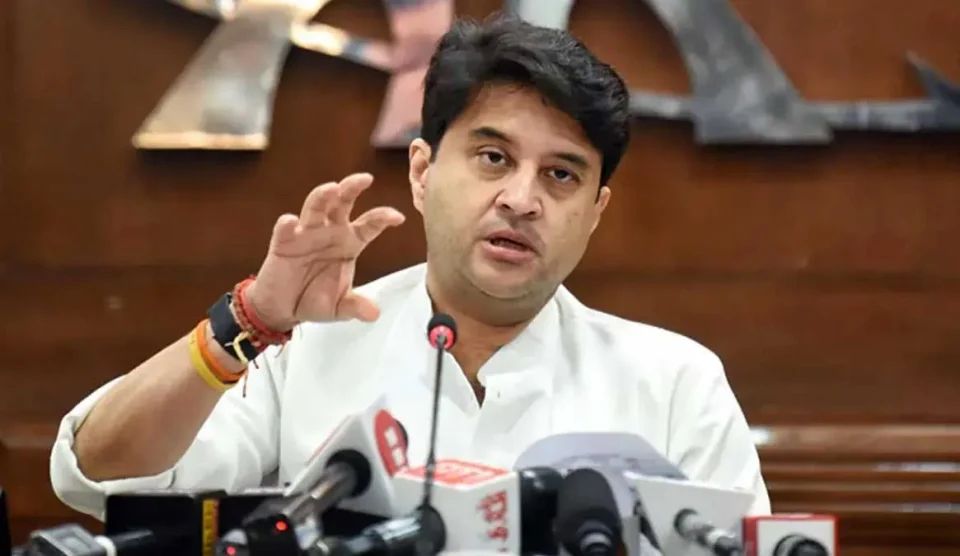






Union Minister Jyotiraditya Scindia announced that 2.14 lakh gram panchayats have been connected under BharatNet, India’s flagship rural broadband program. With an investment of ₹42,000 crore, the initiative aims to bridge the digital divide. Under NBM 2.0, the government targets 2.7 lakh villages by 2030, ensuring universal broadband access.
India’s ambitious BharatNet project, the world’s largest rural broadband rollout, has achieved a major milestone by connecting 2.14 lakh gram panchayats through optical fibre cable under Phases I and II.
Communications Minister Jyotiraditya Scindia highlighted that the project has already crossed one billion internet users in India, reflecting the transformative impact of digital connectivity. The government has streamlined Right of Way (RoW) clearances, reducing approval time from 455 days to just 30.4 days, accelerating implementation.
The next phase, NBM 2.0, aims to extend coverage to 2.7 lakh villages by 2030, ensuring affordable and reliable broadband access across rural India. This expansion is expected to boost education, healthcare, e-governance, and entrepreneurship in underserved regions.
Major Takeaways
-
Connected so far: 2.14 lakh gram panchayats under BharatNet
-
Total sanctioned: 2.56 lakh gram panchayats targeted in Phases I & II
-
Investment: ₹42,000 crore allocated
-
RoW clearance: Reduced from 455 days to 30.4 days
-
Future goal: Universal broadband for 2.7 lakh villages by 2030
-
Impact: Strengthening rural education, healthcare, and digital governance
Conclusion
The progress of BharatNet underscores India’s commitment to bridging the digital divide. By expanding rural broadband, the government is laying the foundation for inclusive growth, empowering communities, and positioning India as a global leader in digital transformation.
Sources: IANS, The Hindu BusinessLine, Global Governance News