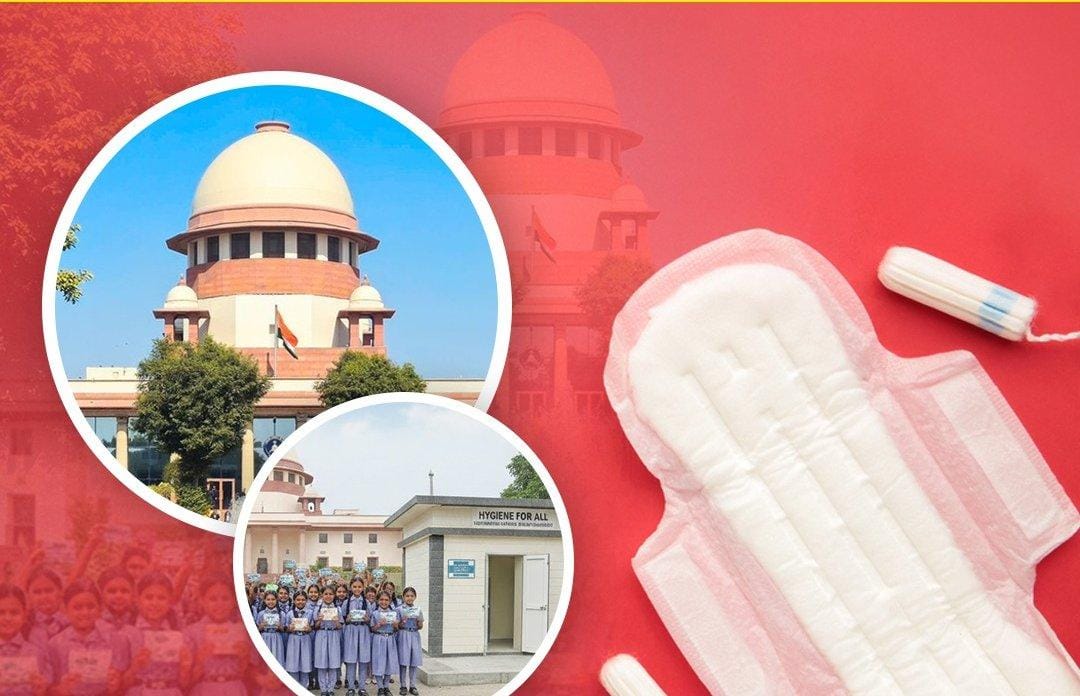

The Supreme Court of India has ruled that menstrual hygiene is integral to the right to life under Article 21, mandating free biodegradable sanitary napkins, gender-segregated toilets, and awareness programs in all schools. This landmark decision by Justices JB Pardiwala and R Mahadevan addresses period poverty, stigma, and school dropouts, ensuring dignity and equality for adolescent girls nationwide.
Ruling Overview:
In a comprehensive 127-page judgment dated January 30, 2026, the Supreme Court recognized menstrual health as part of Article 21's right to life, dignity, privacy, and health. The bench emphasized that inaccessibility to menstrual hygiene management undermines girls' education and well-being, linking it to substantive equality under Article 14 and free education under Article 21A. Arising from a petition by Dr. Jaya Thakur, the ruling responds to issues like period-shaming incidents and infrastructure gaps in schools.
Key Court Directives
-
All states and UTs must provide free oxo-biodegradable sanitary napkins compliant with ASTM D-6954 standards in every school, urban or rural, government or private.
-
Schools require functional gender-segregated toilets with water, handwashing, soap, and accessibility for disabled children, plus MHM corners stocked with spare innerwear, uniforms, and disposal bags.
-
Safe sanitary waste disposal per Solid Waste Management Rules, with covered bins and regular maintenance in all toilet units.
-
NCERT and SCERT to integrate gender-responsive curricula on menstruation, puberty, and conditions like PCOS; train all teachers, including males, and sensitize boys to end stigma.
-
Periodic inspections by District Education Officers, anonymous student surveys, oversight by NCPCR/SCPCR, and continuing mandamus for compliance; non-compliant private schools risk derecognition.
Broader Impact
This decision enforces the Union’s Menstrual Hygiene Policy pan-India, combating absenteeism—where girls miss school due to unhygienic alternatives like rags—and dropout rates. Experts hail it as transformative for reducing health risks and promoting stigma-free education. The court stressed shared responsibility: "A period should end a sentence—not a girl's education."
Sources: Newsonair, SCCOnline, LiveLaw, NDTV, Times of India