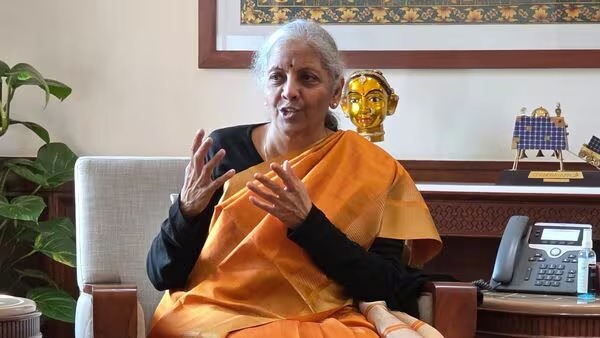

Finance Minister Nirmala Sitharaman’s Union Budget 2026–27 reaffirmed major relief for India’s middle class. Under the new tax regime, income up to ₹12 lakh (₹12.75 lakh for salaried taxpayers with standard deduction) remains tax-free. While slabs remain unchanged, reforms in compliance, TCS, and exemptions aim to ease financial pressure for households.
The Union Budget 2026–27, presented on February 1, 2026, brought continued relief for India’s middle class. Finance Minister Nirmala Sitharaman announced that under the new tax regime, annual income up to ₹12 lakh remains tax-free, extended to ₹12.75 lakh for salaried taxpayers after standard deduction. This measure, first introduced in Budget 2025, has been retained to boost disposable income and ease household financial stress.
While no new slab changes were introduced, the Budget focused on transaction-level reforms and compliance simplification. Key measures include reduced Tax Collected at Source (TCS) rates on overseas travel, education, and medical remittances, exemptions on insurance interest, and extended deadlines for revised ITR filings. The government also unveiled a new Income Tax Act effective April 1, 2026, replacing the 1961 law to modernize and streamline tax administration.
Major Takeaways
-
Zero tax benefit: Income up to ₹12 lakh exempt; salaried taxpayers enjoy ₹12.75 lakh relief.
-
Policy continuity: No new slab changes, but relief through compliance simplification.
-
New law: Income Tax Act 2026 replaces the 1961 framework from April 1.
-
Transaction relief: Reduced TCS on overseas travel, education, and medical remittances.
-
Compliance ease: Extended ITR deadlines and simplified filing norms.
The Budget underscores the government’s focus on middle-class relief, simplified taxation, and fiscal prudence, ensuring higher take-home pay and reduced financial stress for households.
Sources: Economic Times, Firstpost, Financial Express, ET Now, Business Standard