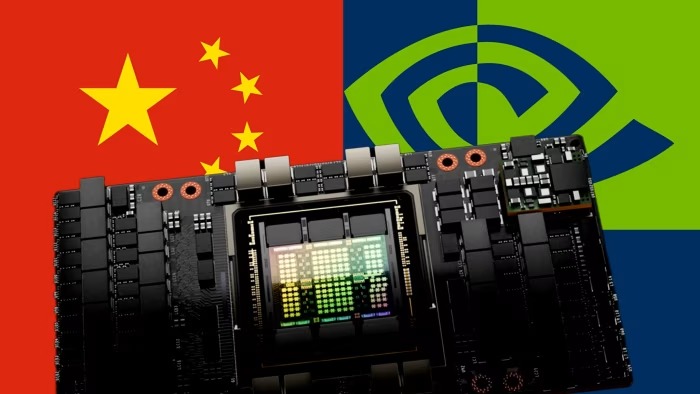
In a striking escalation of tech tensions, China’s internet regulator has reportedly instructed the country’s largest technology companies to immediately stop purchasing artificial intelligence chips from US-based Nvidia Corp. The directive, revealed by the Financial Times on September 17, 2025, comes amid a broader regulatory crackdown and trade standoff between Beijing and Washington, with Nvidia caught squarely in the crossfire.
The move follows a preliminary ruling by China’s State Administration for Market Regulation (SAMR), which found Nvidia in violation of the country’s anti-monopoly laws. The regulator cited non-compliance with conditions tied to Nvidia’s 2020 acquisition of Mellanox Technologies, a networking firm whose products are critical to high-performance computing. The timing of the announcement coincides with ongoing trade negotiations in Madrid and is widely interpreted as a strategic lever in China’s broader push to reduce reliance on US-origin technology.
Key Highlights From The Regulatory Action
- China’s internet regulator instructs major tech firms to halt all Nvidia AI chip purchases
- SAMR finds Nvidia violated antitrust conditions linked to its Mellanox acquisition
- Directive affects Tencent, ByteDance, Alibaba, and other top-tier Chinese platforms
- Nvidia’s H20 chip, designed for China under US export controls, faces scrutiny over data security risks
- Announcement coincides with US-China trade talks and looming tariff deadlines
- Nvidia’s China sales accounted for 13 percent of global revenue last year
Antitrust Ruling And Strategic Timing
The SAMR ruling stems from a months-long investigation into Nvidia’s business practices following its $6.9 billion acquisition of Mellanox Technologies. Regulators allege that Nvidia failed to honor specific conditions related to market competition and operational transparency. The findings were released just days before high-level trade discussions between US and Chinese officials, suggesting a deliberate attempt to gain leverage.
The regulator’s statement also follows the Trump administration’s decision to blacklist 23 Chinese companies and impose tighter export controls on high-bandwidth memory chips and semiconductor equipment. Analysts believe China’s move is a retaliatory signal that it will not hesitate to target US firms operating within its borders.
Impact On Chinese Tech Giants
The directive to halt Nvidia chip purchases affects a wide swath of China’s digital economy. Companies such as Tencent, Alibaba, and ByteDance rely heavily on Nvidia’s GPUs to power AI workloads, train large language models, and scale cloud infrastructure. The ban is expected to disrupt ongoing projects and force firms to seek alternative suppliers or accelerate domestic chip development.
Key implications include:
- Delay in AI model training and deployment across consumer platforms
- Increased demand for domestic alternatives such as Huawei’s Ascend chips
- Risk of performance degradation due to reliance on less advanced processors
- Potential rise in black-market imports of restricted Nvidia chips
Market Response And Nvidia’s Position
Nvidia’s stock dipped following the announcement, reflecting investor concerns over its exposure to Chinese regulatory risk. The company has made repeated efforts to comply with US export restrictions while maintaining a presence in China, including the development of watered-down chips like the H20. However, Beijing’s recent scrutiny of the H20’s architecture and potential backdoor vulnerabilities has further complicated its position.
CEO Jensen Huang has visited China multiple times this year to reassure stakeholders and signal commitment to the market, but the latest developments suggest that diplomatic efforts may not be enough to shield Nvidia from geopolitical fallout.
Outlook And Strategic Implications
The directive marks a turning point in China’s tech policy, signaling a shift from passive compliance to active disengagement from US-origin AI infrastructure. It also underscores the urgency of building a self-reliant semiconductor ecosystem, with increased investment in domestic chip design, fabrication, and AI research.
For global markets, the move raises questions about supply chain resilience, cross-border tech collaboration, and the future of AI innovation in a bifurcated world. As trade talks continue, both sides will need to navigate a delicate balance between national security, economic interests, and technological progress.
Sources: Financial Times, Ars Technica, Al Jazeera, Fortune