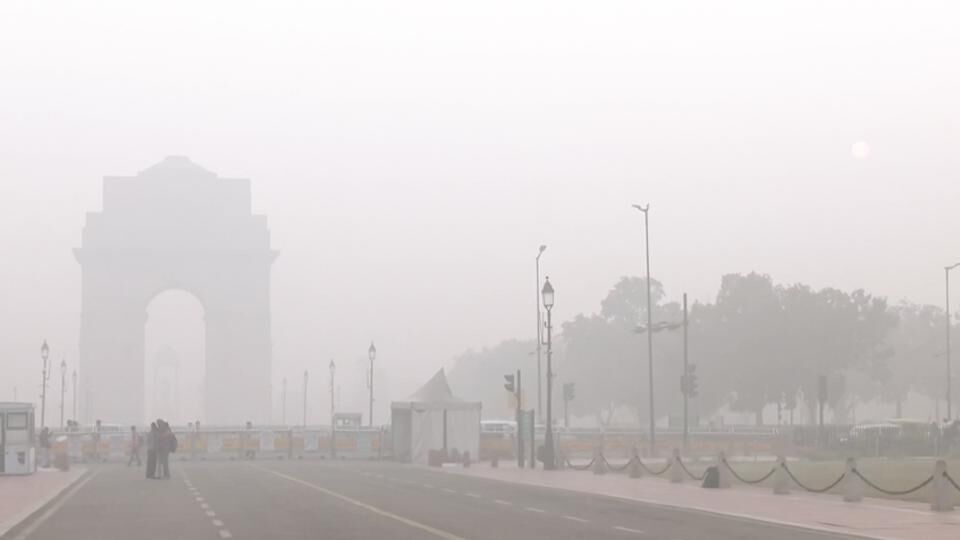

The Ministry of Environment, Forests and Climate Change released its 2025 perspective on Delhi’s air quality, noting significant improvements compared to previous years. Average AQI dropped to 164 (Jan–Sep), the best since 2018, with fewer “severe” days. However, officials stressed continued vigilance, citing winter pollution spikes and the need for sustained policy action.
The Commission for Air Quality Management (CAQM), under the Ministry of Environment, Forests and Climate Change, presented its 2025 air quality assessment for Delhi-NCR. The report highlighted notable progress, attributing improvements to stricter enforcement of the Graded Response Action Plan (GRAP), curbs on industrial emissions, and enhanced monitoring systems.
Officials reported that Delhi recorded its best January–September air quality since 2018, with an average AQI of 164 and no “severe” days during this period. Levels of PM2.5 and PM10 were also the lowest in years, excluding pandemic-related anomalies in 2020.
Despite these gains, the Ministry emphasized that winter months continue to pose challenges, with pollution spikes linked to stubble burning, vehicular emissions, and weather conditions. Authorities reiterated the importance of sustained public cooperation, cleaner fuels, and technology-driven interventions to maintain momentum.
Key Highlights And Major Takeaways
Average AQI 164 (Jan–Sep 2025) – best since 2018.
No “severe” AQI days recorded in this period.
PM2.5 and PM10 levels at multi-year lows.
GRAP enforcement and CAQM measures credited for improvements.
Winter pollution spikes remain a major concern.
Call for sustained vigilance and public participation.
Conclusion
Delhi’s 2025 air quality perspective reflects measurable progress but persistent challenges. With continued policy enforcement and citizen engagement, the capital can aim for cleaner, healthier air in the years ahead.
Sources: PublicNow – Ministry of Environment Press Release, PIB India, Business Standard