
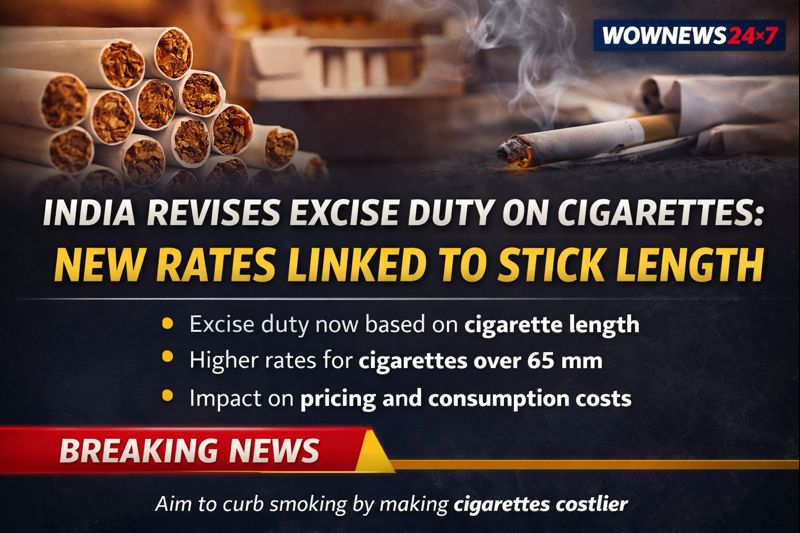
The Government of India has imposed a revised excise duty on cigarettes, calculated per thousand sticks and based on their length. The measure aims to streamline taxation, curb consumption, and boost revenue. Industry watchers note that the duty structure could impact pricing strategies of tobacco companies and consumer demand dynamics.
Policy Update on Tobacco Taxation
India’s Ministry of Finance has issued an order revising excise duty on cigarettes, setting rates per thousand sticks depending on length categories. This move aligns with the government’s broader public health and fiscal objectives—discouraging tobacco consumption while ensuring steady revenue inflows.
The new duty structure introduces a tiered system, where longer cigarettes attract higher excise rates compared to shorter ones. Analysts highlight that tobacco manufacturers may need to recalibrate product pricing and portfolio strategies to absorb the impact. Public health advocates view the measure as part of India’s ongoing efforts to reduce smoking prevalence and align with global anti-tobacco commitments.
Notable Updates / Major Takeaways
-
Duty Basis: Excise duty imposed per thousand sticks, linked to cigarette length.
-
Policy Objective: Discourage consumption and enhance government revenue.
-
Industry Impact: Tobacco firms may adjust pricing and product mix.
-
Public Health Angle: Supports India’s anti-tobacco initiatives and WHO commitments.
-
Fiscal Context: Strengthens excise collections amid broader tax reforms.
Sources: Reuters trade news; Ministry of Finance order; Business Standard taxation coverage; Economic Times industry desk.