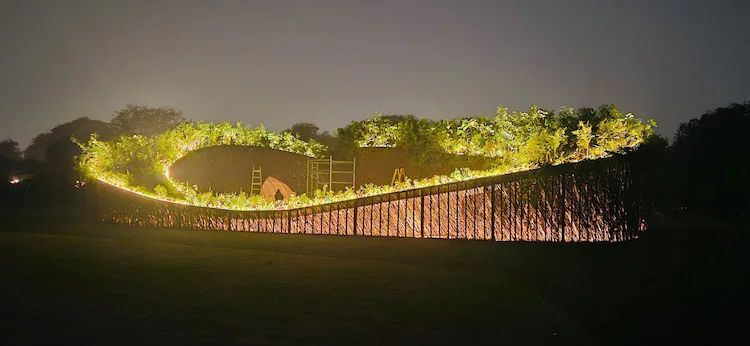







The Aranyani Pavilion, unveiled at Sunder Nursery, New Delhi, blends sacred forest traditions with contemporary sustainable architecture. Designed by Tara Lal and T_M.space, the spiral-shaped pavilion uses upcycled materials and native plants, offering immersive experiences that reconnect urban communities with ecology, indigenous knowledge, and cultural heritage.
Delhi has welcomed the Aranyani Pavilion, a striking spiral structure rooted in India’s sacred forest traditions. Named after Aranyani, the forest goddess of the Rigveda, the pavilion was inaugurated on February 4, 2026, as part of South Asia’s most ambitious ecological art and architecture initiative.
Built from upcycled lantana wood and topped with native plants, the pavilion embodies sustainability while celebrating India’s cultural reverence for forests. It hosts interactive programs, including a community breakfast inspired by Meghalaya, workshops, and exhibitions that highlight the intersection of architecture, ecology, and indigenous wisdom.
The pavilion’s spiral geometry symbolizes growth and continuity, inviting visitors to reflect on the urgent need for ecological balance in urban spaces.
Notable Updates
-
Location: Sunder Nursery, New Delhi
-
Designers: Tara Lal + T_M.space
-
Concept: Inspired by sacred groves and Rigvedic goddess Aranyani
-
Materials: Upcycled lantana wood, native plants canopy
-
Programs: Workshops, exhibitions, community meals promoting ecological dialogue
-
Theme: Reconnecting cities with land, culture, and sustainability
Conclusion
The Aranyani Pavilion is more than an architectural marvel—it’s a cultural and ecological statement. By merging sacred traditions with modern sustainability, it redefines how urban communities engage with nature and heritage.
Sources: ArchDaily, India Today, Designboom