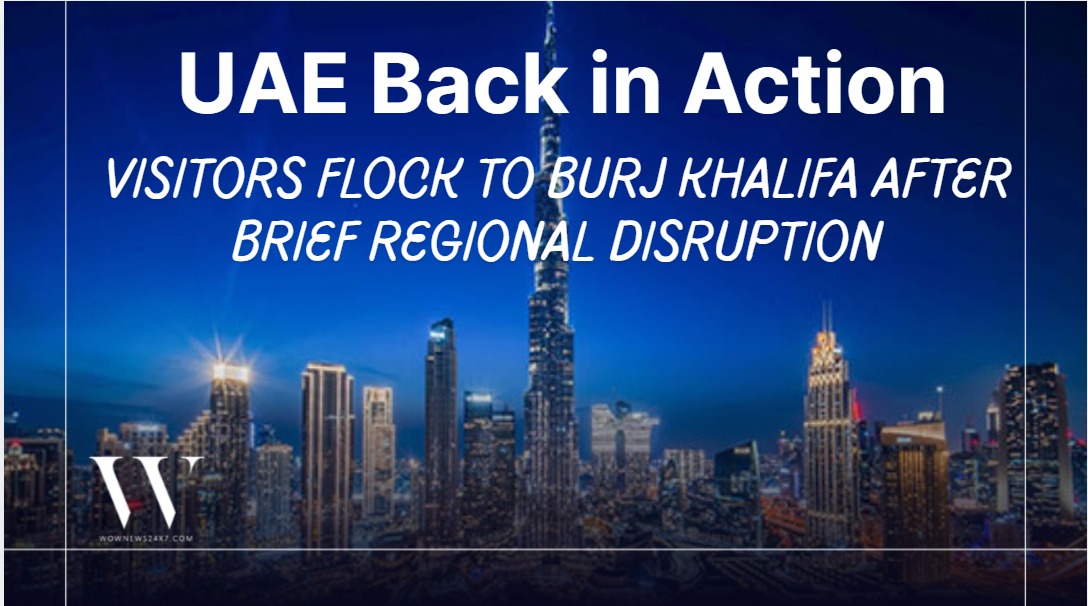





On March 2–3, 2026, normalcy returned to the United Arab Emirates after regional tensions briefly disrupted activity. Tourists resumed visits to landmarks like the Burj Khalifa, while residents reported restored confidence. Authorities ensured safety with precautionary measures, though minor flight disruptions lingered. The UAE showcased resilience in the face of regional uncertainty.
After a tense weekend marked by regional air strikes and precautionary closures, the UAE has returned to normalcy, with tourists once again thronging iconic landmarks such as the Burj Khalifa in Dubai. The swift restoration of public confidence highlights the country’s resilience and ability to maintain stability despite external pressures.
Key Highlights
-
Tourist Activities Resume: Visitors were seen clicking photos, enjoying guided tours, and resuming travel plans across Dubai, particularly at the Burj Khalifa and other attractions.
-
Regional Context: The return to normalcy comes amid Iranian air strikes in parts of West Asia, which had briefly raised concerns in the UAE.
-
Precautionary Measures: Authorities implemented temporary closures and heightened security on Sunday, ensuring public safety before reopening major attractions.
-
Public Confidence Restored: Residents and tourists reported that initial fear subsided quickly, with life in Dubai regaining its usual rhythm.
-
Flight Concerns: While city life has normalized, some uncertainty remains regarding flight schedules and travel disruptions, with airlines monitoring the situation closely.
-
Regional Impact: Neighboring Saudi Arabia’s Ras Tanura refinery operations were briefly halted after a drone strike, underscoring the broader regional tensions.
Why It Matters
The UAE’s ability to swiftly restore normalcy amid regional instability reinforces its reputation as a safe and resilient global tourism hub. For visitors, the reopening of attractions like the Burj Khalifa signals confidence in the country’s preparedness, while for businesses, it highlights Dubai’s determination to safeguard its economic and cultural lifelines.
Sources: ET TravelWorld, Free Press Journal, NewKerala.com