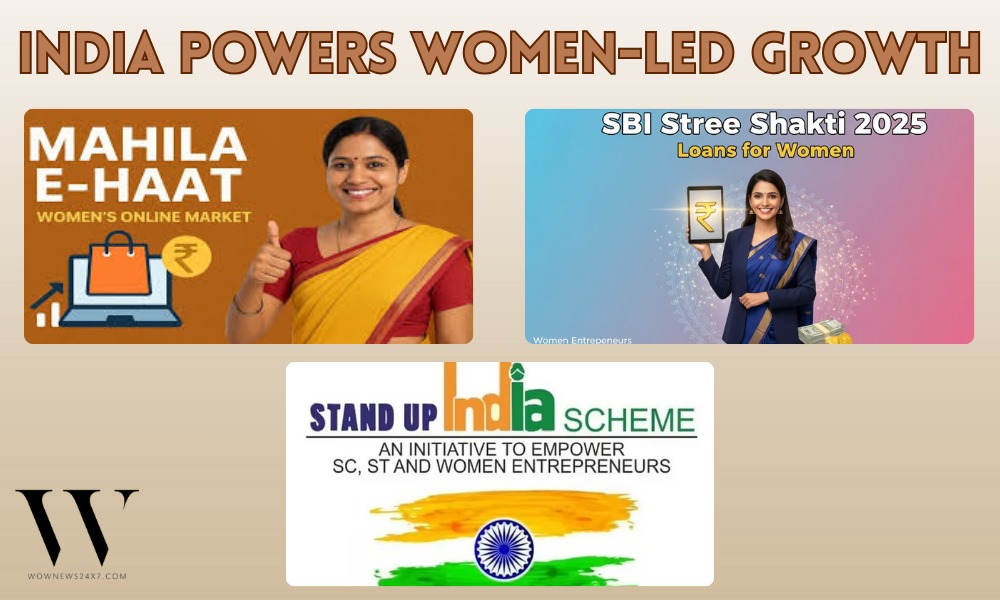
India is empowering women entrepreneurs through Mahila E-Haat, Stree Shakti Yojana, and Stand Up India. These initiatives provide digital marketplaces, concessional loans, and access to bank credit for new ventures. Together, they enhance financial independence, market access, and inclusivity, driving gender equality and sustainable economic growth across the country.
India continues to strengthen its commitment to women’s empowerment and entrepreneurship through three landmark initiatives—Mahila E-Haat, Stree Shakti Yojana, and the Stand Up India Scheme. Together, these programs are reshaping opportunities for women by providing digital platforms, financial support, and access to credit for new ventures.
Mahila E-Haat: Launched by the Ministry of Women and Child Development, this online marketplace allows women to directly showcase and sell handmade products, clothing, jewellery, art, and more. It eliminates middlemen, giving women artisans and entrepreneurs direct access to buyers nationwide. The platform is part of the Digital India and Stand Up India initiatives, ensuring inclusivity and visibility for women-led businesses.
Stree Shakti Yojana: Introduced by the State Bank of India (SBI), this scheme provides business loans to women entrepreneurs. Eligibility requires women to hold at least 51% ownership in a business or cooperative society. The program supports both new ventures and expansion of existing businesses, offering concessional interest rates and simplified loan processes.
Stand Up India Scheme: This initiative enables women and SC/ST entrepreneurs to access bank loans between ₹10 lakh and ₹1 crore for setting up new enterprises. By mandating at least one woman borrower per bank branch, the scheme ensures wider financial inclusion and support for grassroots entrepreneurship.
Impact and Significance
These initiatives collectively address three critical barriers for women entrepreneurs: market access, financial support, and credit availability. Mahila E-Haat empowers women to monetize their skills and creativity, Stree Shakti Yojana provides the capital needed for scaling businesses, and Stand Up India ensures that women can access formal credit channels to launch new ventures.
Analysts highlight that these programs are not only fostering economic independence for women but also contributing to India’s broader goals of inclusive growth and sustainable development. By integrating digital platforms with financial schemes, the government is creating a holistic ecosystem for women-led entrepreneurship.
Challenges Ahead
While progress is evident, challenges remain in terms of awareness, digital literacy, and rural outreach. Experts suggest that stronger collaboration between government agencies, banks, and NGOs will be essential to maximize the impact of these schemes.
Conclusion
India’s focus on empowering women through Mahila E-Haat, Stree Shakti Yojana, and Stand Up India reflects a transformative approach to entrepreneurship. These initiatives are not just financial or digital tools—they are pathways to self-reliance, innovation, and gender equality in business.
Sources: Press Information Bureau, Bajaj Finserv – Mahila E-Haat Scheme, Fincash – Stree Shakti Scheme 2025