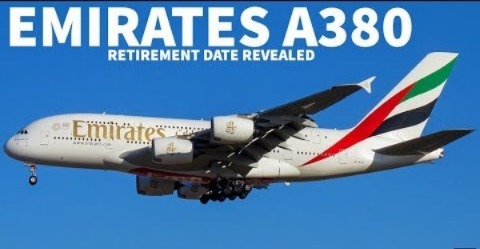






Emirates has confirmed it will retire its ultra-dense Airbus A380 configuration, seating 615 passengers. The airline operated 15 of these two-class aircraft, but by November 2026, all will be converted to a three-class layout with 569 seats, marking the end of the world’s largest-capacity passenger jet.
Emirates’ Airbus A380 fleet has long been admired for its scale and variety, but none more striking than the 615-seat version. This two-class layout eliminated first class entirely, offering 58 business seats and 557 economy seats. Designed for leisure-heavy routes, it became the densest passenger aircraft in service.
Shifting demand patterns and evolving fleet strategies have now led Emirates to phase out this configuration. By late 2026, all 15 aircraft will be reconfigured into a three-class layout with 569 seats, restoring balance between premium and economy offerings. Earlier this year, Emirates had already reduced flights operated by the 615-seat A380 by 20 percent, signaling the transition.
The retirement marks the end of an aviation era. The 615-seat A380 was not only a symbol of Emirates’ scale but also the world’s largest operational passenger aircraft. Its departure reflects the industry’s shift toward efficiency, yield discipline, and diversified cabin offerings.
Key Highlights
-
Emirates operated 15 Airbus A380s in 615-seat configuration
-
Layout featured 58 business and 557 economy seats, no first class
-
World’s densest passenger aircraft in service
-
All aircraft to be converted to 569-seat, three-class layout by November 2026
-
Reflects shifting demand and fleet recalibration across Emirates’ network
Sources: Simple Flying, Aviation A2Z, Bolt Flight News