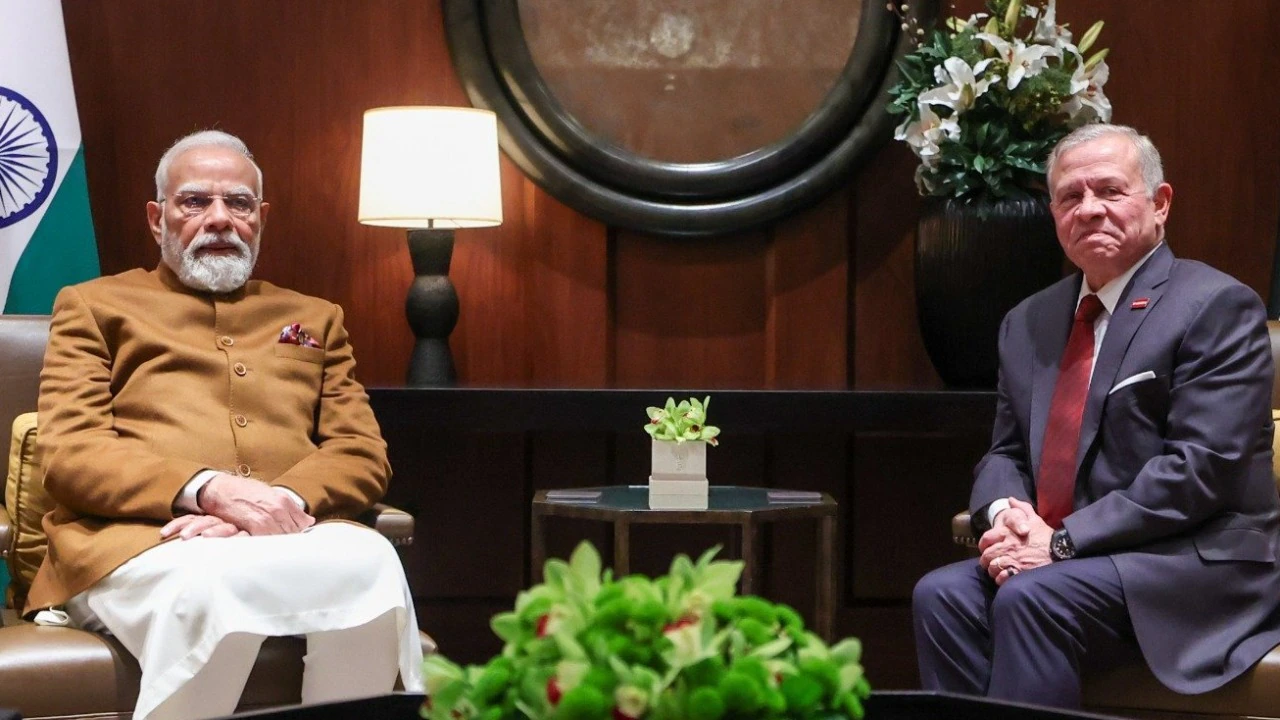






During his Jordan visit, PM Modi hailed bilateral ties as five pacts were signed, covering renewable energy, water management, cultural exchange, heritage cooperation, and digital transformation. The agreements mark a significant expansion of India-Jordan relations, reinforcing shared goals in sustainability, innovation, and cultural collaboration while strengthening India’s footprint in West Asia.
Diplomatic Breakthrough
Prime Minister Narendra Modi’s official visit to Jordan has marked a significant milestone in bilateral relations, with both nations signing five key agreements aimed at deepening cooperation across renewable energy, water management, cultural exchange, heritage preservation, and digital transformation. Modi hailed the outcomes as a “meaningful expansion of friendship,” underscoring India’s commitment to building stronger ties with West Asia.
Key Highlights
-
Renewable Energy Collaboration: India and Jordan signed a pact on technical cooperation in new and renewable energy, reinforcing shared goals in sustainability and climate action.
-
Water Resources Development: A crucial agreement on water management will enable both countries to exchange expertise in conservation and efficient resource utilization.
-
Cultural Exchange Programme: Renewal of the India-Jordan Cultural Exchange Programme (2025–2029) will foster deeper people-to-people connections through art, education, and cultural initiatives.
-
Heritage Linkages: A Twinning Agreement between Petra (Jordan) and Ellora (India) was signed to promote tourism, heritage conservation, and academic collaboration.
-
Digital Transformation: A Letter of Intent was inked to share India’s successful digital solutions for large-scale governance and transformation projects.
Strategic Context
The agreements come just weeks after India co-hosted the Men’s T20 World Cup with Sri Lanka, highlighting New Delhi’s growing global engagement. Modi’s visit also emphasized Jordan’s interest in joining the International Solar Alliance, a move that could accelerate regional cooperation in renewable energy.
The overlap of cultural and technological initiatives reflects a holistic approach to diplomacy—where heritage, sustainability, and innovation converge to strengthen bilateral ties. Analysts note that these pacts not only enhance India’s footprint in West Asia but also provide Jordan with access to India’s expertise in digital governance and renewable energy.
Why It Matters
For India, the agreements reinforce its role as a global leader in sustainable development and digital innovation. For Jordan, they represent opportunities to modernize infrastructure, preserve cultural heritage, and strengthen economic ties with one of the world’s fastest-growing economies. Together, the nations are charting a path toward shared prosperity.
Sources: Daily Excelsior, UNI India, Mint, India Today, MEA Outcomes Document