









Follow WOWNEWS 24x7 on:


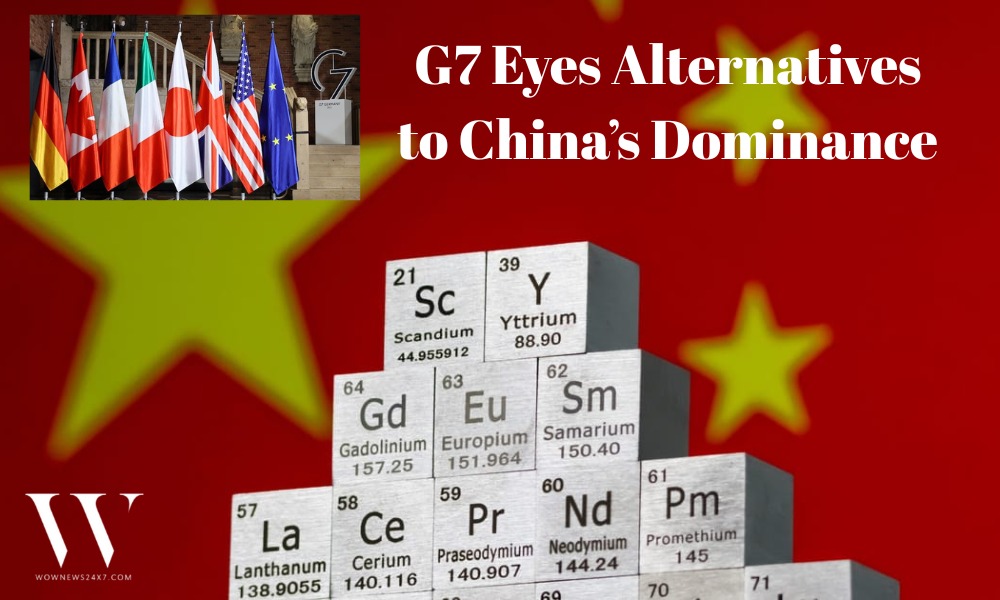
Finance ministers from the G7 and other major economies met in Washington to discuss strategies to reduce reliance on Chinese rare earths. Proposals included setting price floors, forging new supply partnerships, and diversifying critical mineral sources. The talks highlight urgency as China controls the majority of global rare earth supply.
Show moreStay Ahead – Explore Now! US-Israel Strikes on Iran Escalate: Trump Confirms Khamenei's Death Amid Tel Aviv Missile Barrage



Updated: March 03, 2026 19:07

Updated: March 02, 2026 20:39

Updated: March 01, 2026 20:47











Follow WOWNEWS 24x7 on:





Copyright 2024 WOWNEWS 24x7. All rights reserved. The WOWNEWS 24x7 is not responsible for the content of external sites. Read about our approach to external linking.
Powered By Just Imagine
