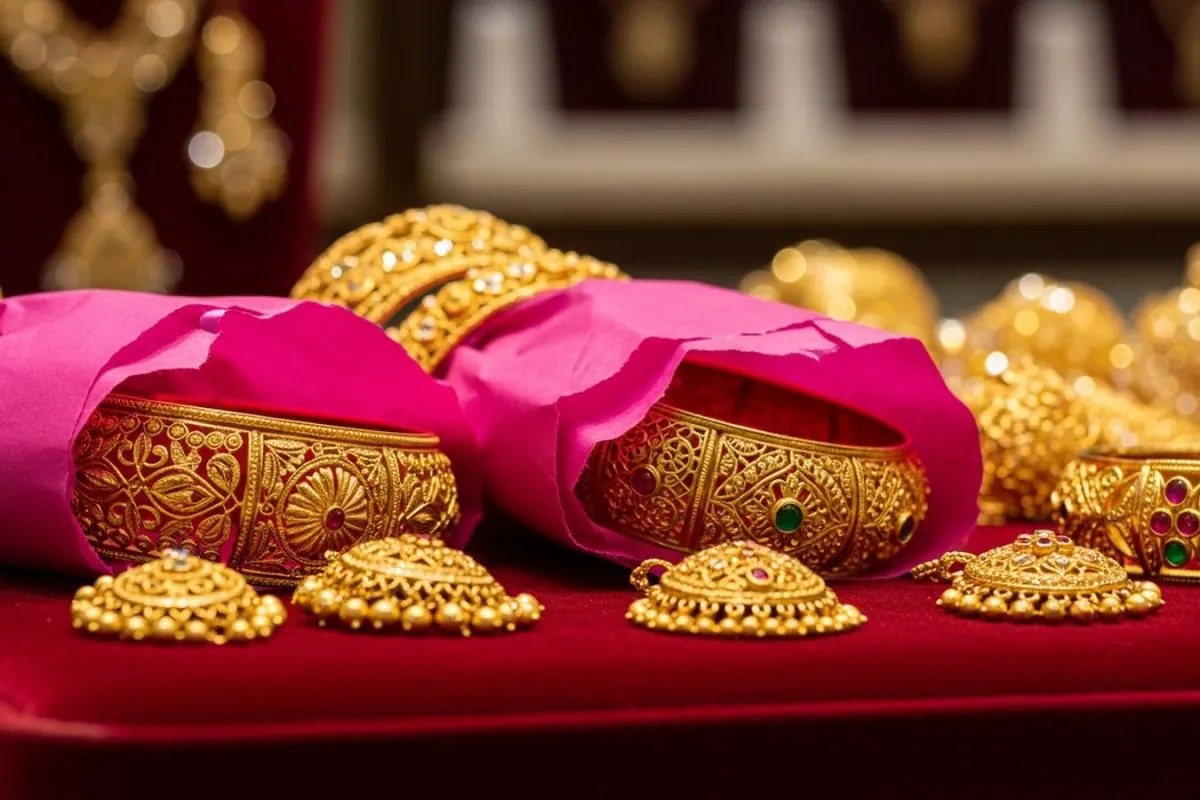




Jewellery shops in India traditionally wrapped gold ornaments in pink paper, a practice rooted in aesthetics, psychology, and cultural symbolism. The pink wrapping enhanced the shine of gold, conveyed positivity, and created a sense of occasion. Today, modern branding, packaging innovations, and changing consumer preferences have reduced its prevalence.
For decades, jewellery shops across India followed a distinctive tradition—wrapping gold ornaments in pink paper. This practice, though simple, carried layers of meaning that blended cultural symbolism, customer psychology, and business aesthetics.
The choice of pink was not accidental. Retailers believed the color enhanced the brilliance of gold, making ornaments appear more attractive and luxurious. Pink also conveyed warmth, positivity, and celebration, aligning perfectly with the emotional significance of buying gold, often tied to weddings, festivals, and milestones.
Beyond aesthetics, the wrapping created a sense of exclusivity and ritual. Receiving gold in pink paper became part of the buying experience, adding emotional value to the purchase. For many families, it symbolized prosperity and security, reinforcing gold’s cultural importance in India.
However, the practice has declined in recent years. Modern jewellery brands now emphasize sleek packaging, branded boxes, and eco-friendly materials. With changing consumer preferences and the rise of global retail standards, pink paper wrapping has gradually faded, though it remains a nostalgic memory for many.
Key highlights from the announcement include
-
Pink paper wrapping enhanced the shine and appeal of gold
-
Color symbolized positivity, warmth, and celebration
-
Practice created emotional value and exclusivity in purchases
-
Linked to cultural traditions of weddings and festivals
-
Decline due to modern branding, eco-friendly packaging, and global retail trends
-
Now remembered as a nostalgic tradition in Indian jewellery culture
Analysts note that while packaging trends evolve, the pink paper tradition reflects how small details can shape consumer experiences and cultural memory. It remains a reminder of the intimate connection between commerce and tradition in India’s jewellery industry.
Sources: News18, Steel.com, Gallery Lifestyle