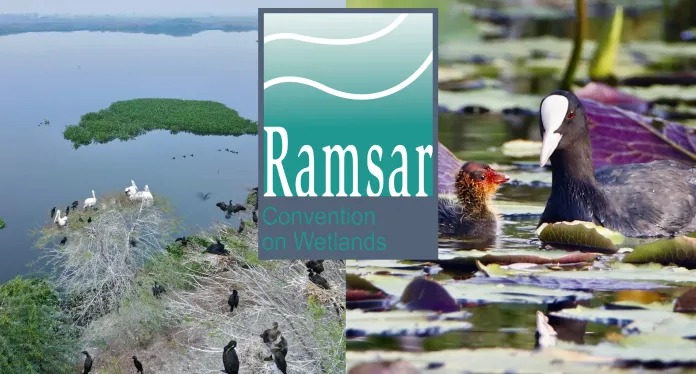
The Government of India has upgraded two additional wetland sites to the Ramsar list, taking the country’s total tally to 98. This move strengthens India’s commitment to biodiversity conservation, sustainable ecosystem management, and global environmental responsibility under the Ramsar Convention.
India has reaffirmed its dedication to wetland conservation by announcing the inclusion of two more sites under the Ramsar Convention, raising the total number of Ramsar-recognized wetlands in the country to 98. The Ramsar designation is globally significant, as it identifies wetlands of international importance, ensuring their protection and sustainable management.
The newly added wetlands are expected to enhance ecological resilience, support migratory bird populations, and provide critical ecosystem services such as groundwater recharge, flood control, and carbon sequestration. With this expansion, India continues to strengthen its position as one of the leading nations in wetland conservation, reflecting its proactive approach to environmental sustainability.
Key highlights from the announcement include
-
India’s Ramsar wetlands tally rises to 98 with two new additions.
-
Designation ensures international recognition and protection of these sites.
-
Wetlands play a vital role in biodiversity conservation and climate resilience.
-
Sites provide ecosystem services including flood control, water purification, and carbon storage.
-
Move aligns with India’s commitments under global environmental agreements.
-
Experts emphasize the importance of community participation in wetland management.
Industry experts note that wetlands are among the most productive ecosystems, supporting diverse flora and fauna while benefiting local communities through fisheries, agriculture, and tourism. The Ramsar recognition not only boosts conservation efforts but also enhances India’s global standing in environmental stewardship.
The government’s announcement highlights the need for continued awareness, research, and sustainable practices to safeguard these fragile ecosystems. With climate change and urbanization posing increasing threats, Ramsar recognition provides a framework for balancing ecological preservation with developmental needs.
Sources: The Hindu, Times of India, Hindustan Times